Get Full Government Meeting Transcripts, Videos, & Alerts Forever!
Get email alerts on the Cognitive Rehabilitation topic
No spam. Unsubscribe anytime.
Survivors and clinicians press for mandatory insurance coverage of cognitive rehabilitation after brain injury
Summary
The Brain Injury Association, clinicians and survivors urged the committee to require private insurers to cover after‑hospital cognitive rehabilitation for acquired brain injury, arguing it reduces long‑term institutionalization and saves public dollars.
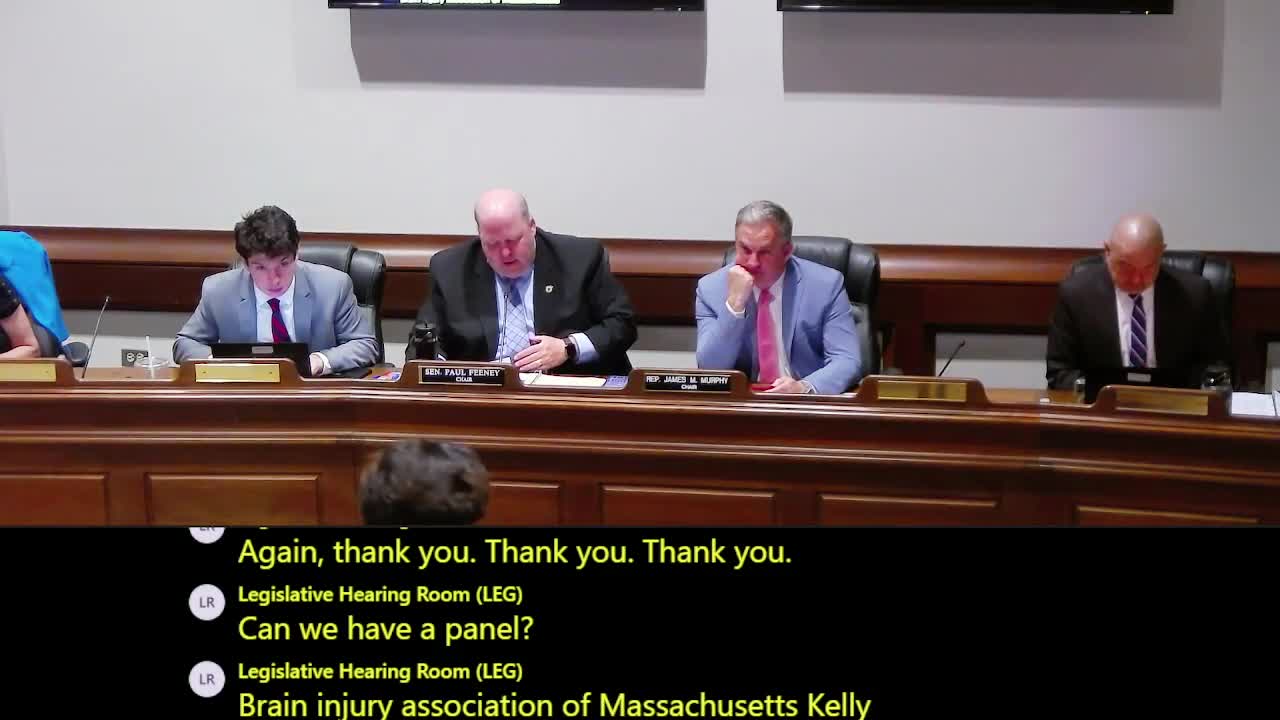
Survivors, neurologists and rehabilitation program directors urged the Joint Committee on Financial Services to require commercial insurers to cover comprehensive cognitive rehabilitation following acquired brain injury, saying after‑hospital programs frequently enable people to return home and avoid long‑term skilled‑nursing placements.
Kelly Budilleri of the Brain Injury Association of Massachusetts said more than 71,000 traumatic brain injuries require emergency or inpatient care each year in the Commonwealth and that legislation (H 11 51 / S 742) would ensure coverage for speech, occupational and cognitive therapies in outpatient and residential post‑acute settings. ‘‘I've submitted my personal testimony,’’ Budilleri said, ‘‘cognitive rehabilitation made a critical difference for my recovery.’’
Clinicians described multi‑disciplinary after‑hospital programs that provide speech, occupational and physical therapy two to five times weekly and intensive medical oversight. Dr. Mel Glenn, a physiatrist and former brain injury division chief, said such programs are cost‑effective in preventing long‑term nursing home placement and cited controlled studies over the past 25 years documenting benefit. ‘‘There is no longer any justification for denying payment for after‑hospital rehabilitation,’’ Glenn said.
Dr. Victoria Lower Mills, a speech‑language pathologist and board member of the Brain Injury Association, told the committee that timely rehabilitation reduces workforce loss and reliance on public benefits. Advocates proposed explicit coverage standards, the use of qualified clinical peer reviewers, and expedited appeals processes for denials.
Witnesses said Arkansas and Texas have passed related laws and asked Massachusetts to follow. The committee did not vote on the bill. Supporters asked lawmakers to report it favorably and to consider the fiscal tradeoffs between short‑term program costs and long‑term savings from reduced institutionalization.