Get Full Government Meeting Transcripts, Videos, & Alerts Forever!
Get email alerts on the Maternal Health topic
No spam. Unsubscribe anytime.
Massachusetts hearing spotlights maternal health bills: doulas, midwives, full‑spectrum care and breast pump access
Summary
The Joint Committee on Financial Services heard wide testimony supporting expansion of doula coverage to private insurers, parity payment for certified nurse‑midwives, insurance coverage for full‑spectrum pregnancy care and improved breast‑pump access, with advocates stressing racial disparities and cost savings.
A large coalition of clinicians, community groups and patients asked the Joint Committee on Financial Services to expand insurance coverage of maternal health services — specifically private‑payer coverage for doulas, equal reimbursement for certified nurse‑midwives (CNMs), elimination of cost‑sharing for full‑spectrum pregnancy care and guaranteed access to hospital‑grade breast pumps.
Sen. Liz Miranda and other sponsors framed the doula bill (S 789 / H 13 12) as a step to address racial disparities in maternal outcomes. ‘‘Doulas save lives. They save money, and they help families thrive,’’ Miranda said. The draft would require private insurers to cover a baseline package of doula services, create a doula advisory committee to guide implementation, and add a patient right to have a chosen doula present during labor and delivery.
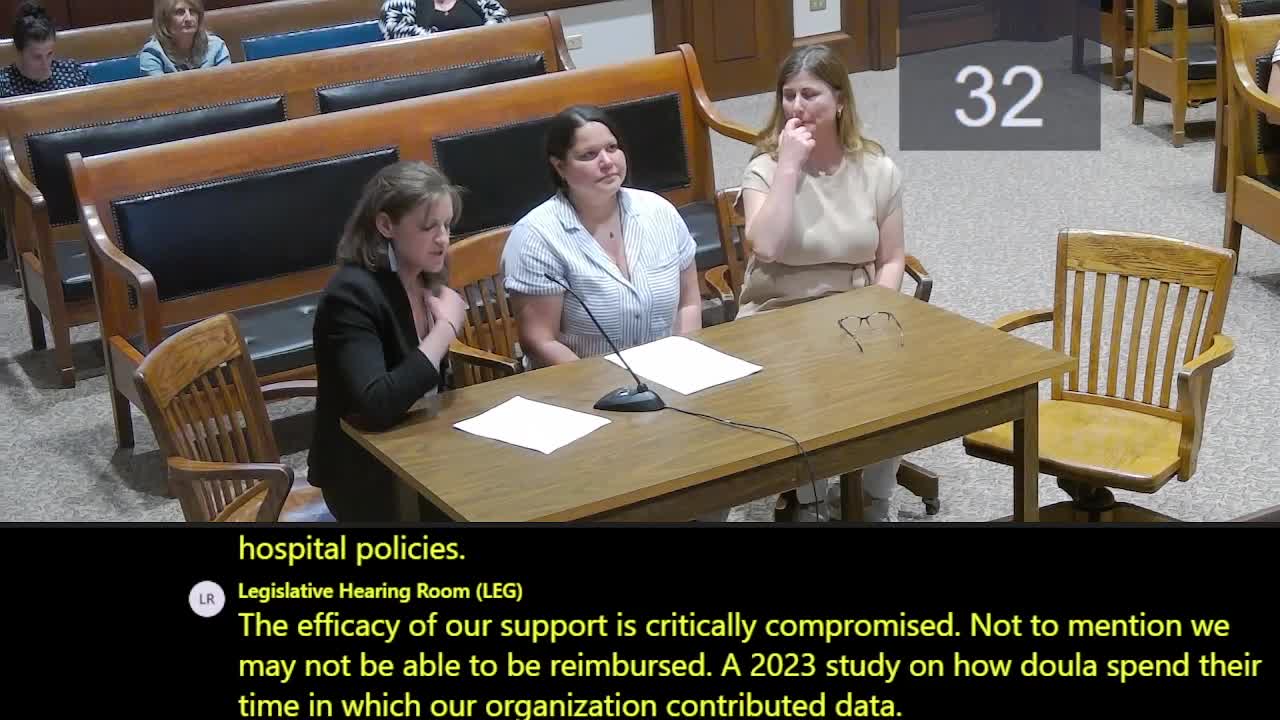
Doulas and community organizations testified about logistical barriers and inconsistent hospital policies that sometimes prevent doulas from entering delivery rooms. Witnesses said MassHealth’s recent coverage launch was a necessary first step but that private‑insurance coverage is required to close an access gap for middle‑income families who earn too much for MassHealth but cannot afford doula fees out of pocket.
Midwifery advocates asked the committee to extend parity the legislature enacted for MassHealth — calling for commercial insurers to reimburse certified nurse‑midwives at the same rate as physicians (H 11 27 / S 69 7). ‘‘Midwives save lives,’’ said Catherine Rushworth of the Massachusetts Affiliate of the American College of Nurse‑Midwives; testimony cited a CHIA estimate that parity would raise annual premiums by cents per member while improving access and lowering overall system costs.
Other proposals heard included an act to ensure access to full‑spectrum pregnancy care (including prenatal, childbirth, postpartum and miscarriage care) with no cost‑sharing, testimony from reproductive‑health advocates about families burdened by surprise postpartum bills, and a bill to improve access to breast pumps (S 682 / H 13 17). Experts told the committee that premature infants and NICU patients rely on hospital‑grade multi‑user pumps and replacement parts and that wider coverage would shorten hospital stays and reduce downstream costs.
Hospital and birth‑center leaders described the practical effects: midwife‑led models are associated with lower cesarean rates and higher rates of vaginal birth after cesarean, while doulas reduce preterm birth and postpartum mental‑health problems. Advocates urged the committee to adopt structural language — a doula advisory committee, standardized reimbursement levels, and patient‑bill‑of‑rights language to prevent ad‑hoc denials of doula presence in clinical settings.
Lawmakers did not vote on the bills at the hearing. Supporters promised follow‑up written testimony and data. Committee chairs asked for continued engagement with MassHealth, the health policy commission and hospital systems to craft implementable reimbursement language.