Get Full Government Meeting Transcripts, Videos, & Alerts Forever!
Get email alerts on the Apprenticeship Policy topic
No spam. Unsubscribe anytime.
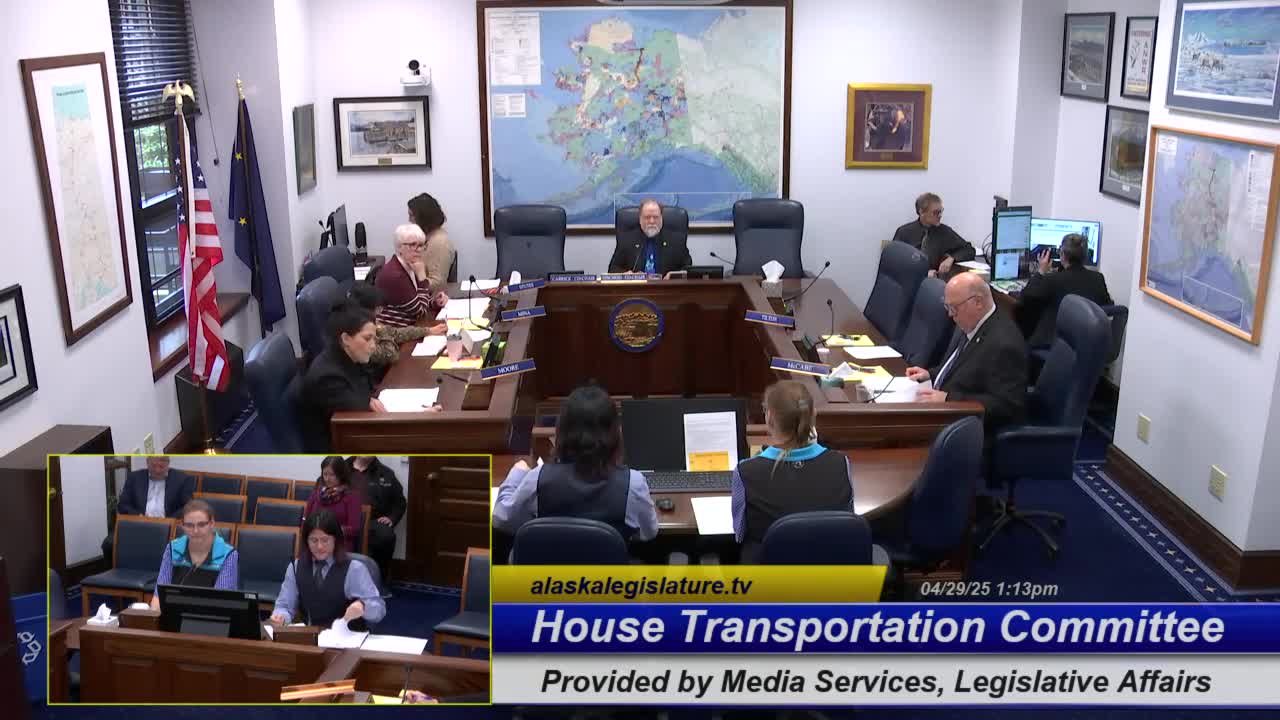
Committee hears bill to set 15% apprenticeship target on large public construction projects; Associated General Contractors voices opposition
Summary
Representative Kerrick told the House Transportation Committee that House Bill 186 would set a 15% apprentice labor target on DOT- and DOA-administered construction contracts valued at $2,500,000 or more, to the extent practicable, and require reporting. DOT staff said most DOT capital projects exceed the threshold; the Associated General
Representative Kerrick, sponsor of House Bill 186 and co-chair of the House Transportation Committee, told the panel the bill "simply states that to the extent practicable, each construction contract for DOT and or Department of Administration administering a contract amount in the award of, 2,500,000.0 or more must, attempt to have not less than 15% of labor hours on the project performed by apprentices."
The sponsor said the measure aims to increase apprenticeship utilization and to gather data on how apprentices are being employed in Alaska so the state can better retain apprenticeship-trained workers. The bill text, as described in committee, sets the 2,500,000 threshold and the 15% target "to the extent practicable," not as a strict mandate. Representative Kerrick said the numeric floor is intended to reinstate an earlier administrative policy that had been rescinded.
Andy Mills, special assistant and liaison at the Department of Transportation and Public Facilities (DOTPF), told the committee that "virtually, at least for the purpose of the DOT, it applies to the vast majority of the work that we do. Almost everything in substance that we do on our capital projects is over the $2,500,000 threshold." Mills also described practical concerns DOT staff have identified: higher apprentice percentages can increase the supervisory ratio required on jobs and could affect project costs and program throughput, though DOT had not quantified the aggregate impact.
Representative McCabe and others questioned how the bill would interact with collective bargaining agreements. Sponsor Kerrick and staff said the bill is not intended to supplant collective bargaining and that both union and nonunion apprentices exist in Alaska; the legislation was described as setting a floor where no uniform target currently exists. Committee staff said the Department of Labor and Workforce Development was unable to retroactively track apprenticeship utilization after the previous administrative order was rescinded, which is one reason the bill includes reporting requirements; staff summarized that reporting would begin in statute with data collection requirements and annual reports (a committee staff comment noted reporting beginning in 2030).
Alicia Amberg, executive director of the Associated General Contractors of Alaska (AGC), testified in opposition. Amberg said AGC "strongly supports apprenticeship programs as a means to develop skilled construction workers, [but] we do not believe or to be how this mandate will strengthen and or solidify Alaska's construction workforce." She told the committee AGC's concerns include project variability, impacts on cost and schedules, safety and supervision burdens in remote areas, and potential loss of contractor flexibility; she warned the bill could be altered in the future from "practicable" language to a stricter mandate.
Committee members asked several operational questions: whether the 2.5 million threshold is still appropriate and whether individual collective bargaining agreements already set apprenticeship targets for particular trades or municipalities. Mills said DOT could run additional analyses to identify alternative thresholds (committee discussion mentioned $10 million to $20 million as a conversation point for where a median project size might fall). Mills also noted existing contract language can include apprentice-to-journeyman oversight ratios that affect supervision needs as apprenticeship percentages change. Representative McCabe asked DOT to check whether state contracts with unions include explicit apprenticeship targets.
Public testimony closed after AGC's remarks. The committee set an amendment deadline for April 30 at 5:00 p.m. and scheduled continued consideration of HB 186 at a subsequent meeting. The committee did not take a final vote on the bill during this session.