Get Full Government Meeting Transcripts, Videos, & Alerts Forever!
Get email alerts on the Traffic Signs Led topic
No spam. Unsubscribe anytime.
Historic commission backs limits on LED speed/message signs proposed for town bylaw
Summary
The Nantucket Historic District Commission voted to support a proposed Article 71 amendment that would permit some LED speed-feedback and changeable message signs, while urging size, quantity and process guardrails and clearer responsibility for placement.
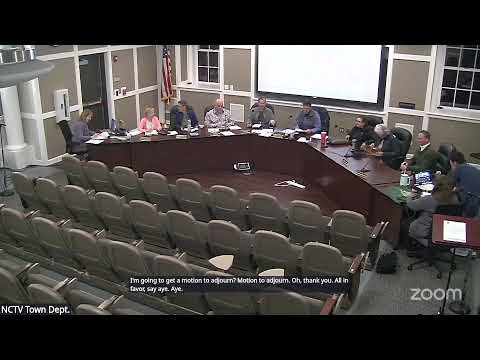
The Nantucket Historic District Commission on April 29 voted to support a proposed Article 71 amendment that would allow LED traffic-control devices and portable changeable message signs on town-owned ways, while asking Town officials to add limits on size, quantity and placement procedures.
Commissioners said the amendment as written would create a broad exception to the town’s current bylaw protecting the historic character of roads, and that voters approving the article at Town Meeting should expect guardrails to reduce visual clutter. Sign Advisory Committee chair Chris Young, who presented the amendment to the commission, said the proposal would allow speed feedback signs and portable message signs but currently “has no limitation. In other words, they’re basically saying that LED signage ... are now going to be allowed. There’s no limit to the quantity, to the size, to the reason.”
The commission’s motion of support asked the sponsor to accept several changes before or at Town Meeting: limit individual speed-feedback units to the minimum size defined by the Massachusetts Manual on Uniform Traffic Control Devices (MUTCD) (cited in the draft as 24 by 30 inches for speed-limit-type signs); cap the total number of LED devices island-wide (the draft suggested a population basis of one sign per 5,000 residents, which commissioners discussed as a possible metric); and require that signs placed on state roads be counted against the town-wide total. Commissioners also urged clearer identification of which town department or official would authorize installations so residents would have a named point of accountability.
Why it matters: proponents say LED speed devices and changeable-message signs improve safety and let the town communicate temporary road and construction conditions. Opponents worry unconstrained LED use would erode the roads’ historic visual character and create intrusive, redundant signage. The commission noted the select board’s earlier comment that placements should consider neighborhood character and be aimed at “increasing vehicular and pedestrian safety on a case-by-case basis,” and asked for that standard to be turned into enforceable language rather than advisory commentary.
At the meeting, commissioners volunteered additional guardrails they want considered: a size restriction for speed-feedback displays matching MUTCD minimums; explicit language requiring placements to be justified by documented safety need; a requirement that a town traffic planner or DPW official present evidence and siting rationale for each installation; and an option to treat the new allowance as a pilot with a sunset or review date so voters can reassess impacts. Several commissioners suggested measuring permit capacity by area (square mileage) rather than only population, so distributed needs in low-density parts of town win appropriate consideration.
Sign Advisory Committee chair Chris Young said he planned to speak for the amendment at Town Meeting and welcomed the commission’s suggested limits. Young told commissioners he had notified town administration so they were not blindsided and that he had not yet reached the traffic planner (Mike Burns) but expected municipal staff representation at Town Meeting.
The commission’s endorsement is advisory to Town Meeting voters; it does not change the bylaw. The Article 71 amendment must still be voted on at Town Meeting, where residents will consider the final text and any floor amendments.