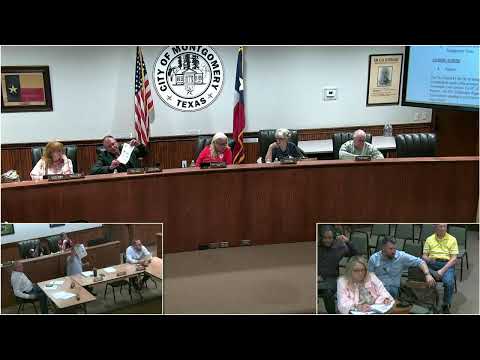
Council debates $4 million incentive package, questions taxpayer exposure in BCS Capital development
Loading...
Summary
City council members discussed terms of a proposed development agreement with BCS Capital on April 29, 2025, focusing on a roughly $4 million incentive request, a $1.5 million example component, reimbursement rules for public infrastructure and the potential risk to taxpayers; no formal vote was taken.
City council members spent the bulk of a special April 29 meeting debating a proposed development agreement with BCS Capital that includes an illustrative $4,000,000 incentive package and questions about how much of the city’s public infrastructure costs would be reimbursed.
Council members and staff focused on how the incentive would be structured, including a $1,500,000 example line item that several speakers described as part of the developer’s request for reimbursement rather than a direct construction cost. Mary Anne, the city’s finance director, said the developer “needs an additional 1,500,000.0 in incentives to be able to make that deal work” and noted “the only way they get their money is by us getting their money first.”
The debate hinged on who bears upfront cost and who ultimately benefits. One council member summarized the concern bluntly: “we are developing this property for them. 100%. The taxpayer is developing this property for them. We are reimbursing 100% plus every dime that they're putting into it other than the purchase price. This is not a great deal for taxpayers.” That speaker warned the city’s contribution appeared to be larger than the public return unless the project fully builds out and captures anticipated sales-tax revenue.
Supporters on the dais said the development could attract higher-revenue businesses and additional patrons to nearby retailers, potentially boosting local sales tax receipts and ancillary spending at restaurants and other stores. One participant noted that new tenants “could be spending money in other establishments here,” arguing that the project might drive broader economic activity.
Council and staff also discussed specific program mechanics. Participants described a structure in which the developer advances some construction costs and the city would reimburse expenses after receipts are presented. “We wanna see your receipt so we can pay you back enough. You don't get $4,000,000 … as free money because we wanna see where you spent it,” a staff speaker said, describing the intent to require documentation of expenditures before payments are made.
The Montgomery Economic Development Corporation (MEDC) was asked which incentive option it preferred among small, medium and large alternatives; a MEDC representative (Casey) indicated preference consistent with a smaller option in the discussion. Council members repeatedly asked the developer to “sharpen their pencils” and return with tighter cost estimates and clear caps on reimbursable amounts.
Speakers raised other specifics the council said it would want clarified before action: whether the city would pay for public roads used by the development, how retention/detention credits would be applied, how the incentive would interact with existing Chapter 380-style agreements and whether new requests might follow after the initial reimbursement (one council member cited concern about the developer returning later for additional road funding).
No formal motion or final vote on the BCS Capital development agreement was recorded at the meeting. Council members directed staff and the MEDC to continue negotiation, to require receipts and payroll/performance triggers for reimbursement, and to return with refined costs and a more concrete cap on the city’s exposure.
Why it matters: the council is weighing a multi‑million‑dollar incentive that would require the city to advance money for infrastructure and later reimburse a developer; the final terms will determine how much financial risk Montgomery taxpayers assume versus the potential economic benefits if the project is fully built out.