Get Full Government Meeting Transcripts, Videos, & Alerts Forever!
Get email alerts on the Operating Levy topic
No spam. Unsubscribe anytime.
Board begins planning for possible operating levy; debates amount, inflation adjustment and outreach
Summary
Trustees began a months‑long discussion about whether to place an operating levy on the ballot this November, weighing levy amounts, an inflationary adjustment, election costs, outreach and whether to present one or multiple questions to voters.
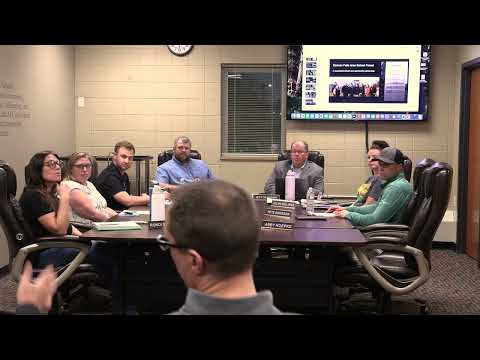
The Cannon Falls School Board opened detailed planning on a possible operating levy, discussing timelines, likely ballot language and outreach strategies ahead of a probable November vote.
Board members said they must move quickly to meet resolution deadlines and marketing timelines for a levy in the fall. "Due to the timelines ... we need to start having those discussions right now because we need to need to pass resolutions and get some marketing stuff ready for this fall," Jeff (board member) said. Staff and trustees identified July as the deadline for final levy language and noted they would likely finalize the levy by December when the district adopts final levy figures.
Participants reviewed prior levy numbers and impacts. Trustees said the district last set its operating levy roughly 20 years ago and discussed figures referred to during the meeting: "Last time we asked for $7.50 increase," a board member said, and staff later observed that a $7.50 rate increase had previously been explained using a $300,000 assessed‑value example. Staff also said a $7.50 rate change had been discussed in revenue terms: "a $750,000 increase to the district in revenue," one participant said. The board asked staff and its financial advisor to calculate specific tax impacts for different proposed levy levels.
The group debated whether to include an automatic inflationary adjustment on the ballot. Board members said some districts adopt an inflation factor to protect levy value over time; others warned voters find an open, inflation‑adjusting question confusing. Meeting participants noted state aid rules limit the state aid inflation adjustment (discussed in the meeting as roughly a 2% floor and 3% ceiling for state aid inflation indexing) and that an operating levy can follow the CPI if the board chooses.
Trustees discussed election logistics and costs—staff estimated $10,000–$15,000 for election administration, judges and machines—and outreach options including targeted door‑knocking in townships that voted against prior levies, community conversations, booths at summer events, and direct mail. The board agreed to convene the finance committee within weeks to model levy scenarios, produce tax‑impact examples and recommend a final number for the board to consider at upcoming meetings.
No formal ballot question or dollar figure was approved at the meeting; trustees asked staff and district financial advisers to return with specific tax‑impact scenarios and a proposed outreach plan.