Get Full Government Meeting Transcripts, Videos, & Alerts Forever!
Get email alerts on the Zoning Warrant Articles topic
No spam. Unsubscribe anytime.
Planning board declines to recommend broad citizen petitions on regulated technologies, approves floodplain bylaw update
Summary
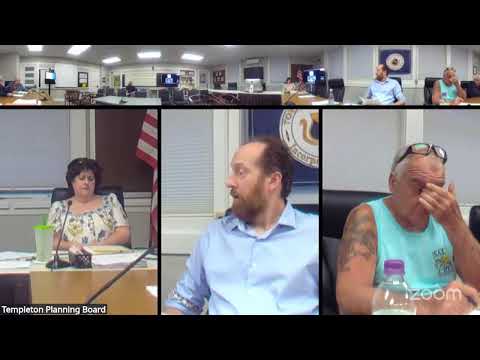
On April 29 the Templeton Planning Board voted to not recommend two citizen petitions (articles 25 and 26) that would broadly restrict 'regulated technologies' and certain handling/processing uses, citing vague definitions and potential overreach; the board recommended replacing the floodplain overlay district with state‑recommended language.
The Templeton Planning Board on April 29 voted not to recommend two citizen petitions that would amend zoning provisions related to regulated technologies and related handling, processing and treatment activities (articles 25 and 26 on the warrant), citing concerns that the petitions’ definitions are overly broad and could unintentionally restrict commonplace businesses.
Board members raised practical examples during discussion, noting the proposed language mentions categories such as handling of liquid fuels and other materials that planners said could sweep in everyday commercial and household activities—gas stations, small recycling efforts, or artisanal operations such as candle making—and could force many permit decisions to town meeting rather than through the usual planning and permitting process. Several board members said that requiring special permits on the town meeting floor for a broad set of uses would create substantial delay for routine businesses and could discourage local economic activity.
After extended discussion, a member moved and a second supported a recommendation to the select board that the planning board not endorse articles 25 and 26 in their current form, citing vague definitions and lack of detail on permitted thresholds or technology definitions. The motion carried; the board instructed staff to encourage petitioners to refine language and suggested involving town council and other stakeholders in drafting tighter, site‑appropriate language if the petitioners wish to proceed.
Separately, the board voted to recommend an update to the floodplain overlay district and its mapping using the state‑recommended verbiage. Development Services staff said the revised wording follows state guidance, has been reviewed by town counsel and by a floodplain specialist at the Department of Conservation and Recreation (DCR), and will help the town manage floodplain issues and maintain National Flood Insurance Program eligibility. The board approved recommending the floodplain update to the annual town meeting.
The board also reviewed an article (article 27) that would allow storage of commercial vehicles and heavy equipment in residential A‑1 districts; board members expressed concern the article is broad and could allow large commercial vehicles to be parked in residential neighborhoods without appropriate screening or site standards. The planning board moved not to recommend that article as drafted and to encourage petitioners to return with more specific standards.