Get Full Government Meeting Transcripts, Videos, & Alerts Forever!
Get email alerts on the Budget topic
No spam. Unsubscribe anytime.
Middlesex supervisors adopt FY2026 budget with $700 one-time bonus, set aside sheriff staffing funds and contingency
Summary
The Middlesex County Board of Supervisors approved the fiscal year 2026 operating budget after hours of debate over sheriff staffing, a one-time employee bonus and use of fund balance. The final vote was 3–2.
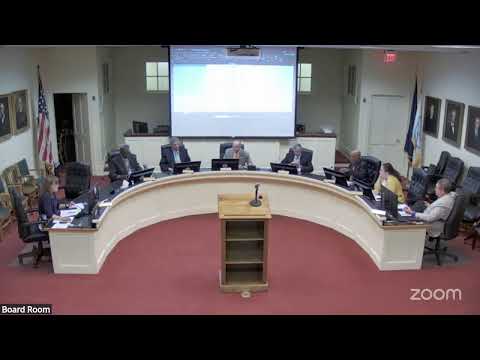
The Middlesex County Board of Supervisors approved its fiscal year 2026 operating budget after extended discussion over sheriff staffing and a one-time employee payment, leaving tax rates unchanged.
By a 3–2 vote, supervisors approved the advertised budget with two immediate changes: $20,000 left in the Sheriff’s Office personnel line and $78,000 moved to a countywide contingency; and a one-time payment for county employees set at $700 or the Compensation Board 1.5% payment for state-funded positions, whichever is greater. The motion passed with Supervisors Crittendon, Jesse and Don Harris voting yes; Supervisors Williams and Bill Harris voted no.
The vote followed several hours of debate that centered on whether to include funding now for positions tied to a possible body-camera program in the Sheriff’s Office, how to treat state-funded (Compensation Board) positions versus county-funded staff, and how much fund balance to use to balance the budget. Supporters said the changes preserved a balanced budget while allowing the county to hold contingency funds for near-term personnel needs and to deliver a one-time payment to lower-paid employees; dissenting supervisors objected to the size and timing of withdrawals from fund balance and to process issues.
Most important details
- Budget outcome: Board approved FY2026 operating budget as advertised, with the modifications above; tax rates remain as advertised (no change).
- Employee payment: The board approved a one-time county payment of $700 for county-funded employees; Compensation Board–funded positions will receive the state 1.5% payment, if and when that is finalized, and the ordinance authorizing any county bonus must still be drafted by the county attorney before funds may be transferred and paid.
- Sheriff staffing and body cameras: Supervisors debated three sheriff staffing requests that had been discussed earlier in the budget process — a records clerk (about $53,000), a records manager (about $58,000) and a body-camera clerk (roughly $53–55,000 in staff discussion). County staff said two positions had been double-counted earlier, producing a $98,000 error in the advertised totals. The board left $20,000 in the sheriff’s budget to help the sheriff make an immediate personnel transition while directing $78,000 into contingency for later transfer if needed.
- Fund balance and contingency: County staff and several supervisors described planned uses of fund balance and contingency in the adopted budget. The board advertised the budget as balanced but acknowledged draws from fund balance and adjustments to a “capital reserve” line that had been used in prior years to build set-asides for projects. Supervisors discussed a $216,000 draw for operating needs and a $200,000 set-aside for a future reassessment; staff also identified a prior transfer of approximately $262,000 connected with an enterprise account for wastewater (Cook’s Corner) debt service.
Why it matters
The budget vote resolves the county’s spending plan for FY2026 while leaving reserves set aside for uncertain items — notably decisions about the sheriff’s proposed body-camera program and a countywide approach to one-time employee payments that must be authorized by ordinance. The outcome affects county employees across departments, how the county will manage near-term personnel transitions in public safety, and how much of the county’s fund balance is available for future priorities such as reassessment, capital projects or unforeseen needs.
Details from the debate
Sheriff staffing and body-camera staffing: Board members described a confusing set of requests from the sheriff’s office that included promotion of a current dispatcher into a records role, hiring to fill the dispatcher vacancy, and one or more new positions to administer body-camera data. Staff said the sheriff reported he could fund roughly $44,000 of the request and needed about $20,000 from the county to complete a near-term staffing move; the records clerk role was cited repeatedly as the position the sheriff needs to staff his records room when he moves into a new facility. Supervisors discussed accreditation expectations for a records manager but did not adopt separate full funding for all the positions the sheriff requested.
Employee payment options: The board considered several approaches after the General Assembly action and Compensation Board guidance created a state-funded 1.5% payment for Compensation Board positions. County staff presented a plan to give a $750 one-time payment to non-Compensation-Board county staff; supervisors debated whether to fund that amount, a smaller amount, or leave the matter until a later supplemental appropriation. The final approved motion set the one-time county payment at $700 for county-funded employees, with Compensation Board–funded positions to receive the 1.5% state payment when available.
Fund balance, sewer funding and capital reserve line: County staff explained that the budget’s advertised balanced position reflects prior decisions about a capital-reserve line that had been used to build fund balance and to cover debt service for a Cook’s Corner sewer-related financing. Supervisors asked for clearer presentation on transfers and the origin of the $262,000 sewer-related transfer so they could evaluate how much of the county’s fund balance was truly available versus already earmarked for projects or debt service. Several supervisors cited concerns about both transparency and the process for making late, substantive adjustments after the budget had been advertised.
Next steps and process items
- County attorney: Staff said a county attorney-drafted ordinance is required before any one-time bonus can be paid; if the board wants the payment, the attorney must prepare enabling language and the board must approve the transfer from contingency/fund balance.
- Appropriations resolution: Staff indicated they will prepare an appropriations resolution for a subsequent meeting (May or June) to finalize transfers and line-item changes required by the board’s direction.
- Follow-up work: Board members asked staff to provide clearer accounting of the wastewater debt service transfer and recommended the budget-and-finance or joint budget committee meet with school representatives to discuss teacher pay and other staffing priorities in more detail.
Where this came from
Budget deliberations began with staff presentations of revenues and expenditures and continued through questions and motions by board members. The budget was debated in public session and ultimately approved after multiple motions and roll-call votes that produced a final 3–2 decision.
Ending
Supervisors adjourned after adopting the budget and agreed to continue committee-level work on school compensation and presentation refinements for future budgets. The board scheduled additional work sessions and asked staff to prepare the ordinance and appropriations resolution needed to implement the board’s direction.