Get Full Government Meeting Transcripts, Videos, & Alerts Forever!
Get email alerts on the Zoning Variance topic
No spam. Unsubscribe anytime.
Board approves larger lot and exempts open church pavilion from masonry wainscot with conditions
Summary
The Board of Zoning Appeals approved increasing the maximum lot size for a Stones Crossing parcel and granted an exemption from a 36-inch masonry wainscot for an open church pavilion, subject to completing permitting and a condition that the variance becomes void if the pavilion is enclosed.
The Board of Zoning Appeals on April 28 approved two variances for property at 1640 Stones Crossing, allowing one lot to exceed the zoning maximum and exempting an existing open pavilion from the code——requirement for a 36-inch masonry wainscot, both by 5-0 votes.
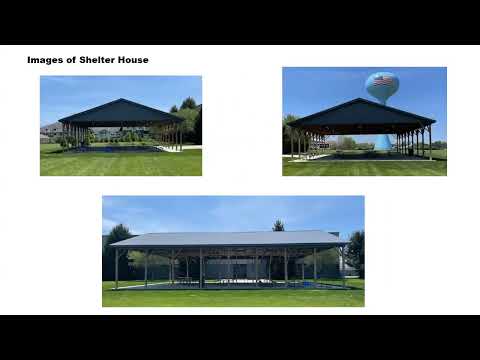
The measures matter because the lot-size change permits a remaining parcel to stay with a church campus rather than be subdivided, and the masonry exemption preserves the pavilion in its current open form used for children—9s summer activities.
Tom Leggaren, attorney at the Baylor Law Firm representing the petitioner, told the board the church had acquired and reconfigured adjoining parcels when a water tower was built and that Lots 2 and 3 would meet ordinance standards while Lot 4 would exceed the maximum. "We believe that we've met all the statutory criteria," Leggaren said, adding the pavilion is intended as an open, seasonal structure used for a church camp that serves about "600 kids." City planning staff told the board they were "favorable for number 1" (the lot-size variance) but found it difficult to show the practical difficulty required to justify the masonry exemption because the structure was built without a permit.
Board member Mr. King moved approval of the lot-size variance to increase the maximum from 100,000 square feet to 273,102 square feet; that motion passed 5-0. On the masonry request to allow an accessory structure over 300 square feet to be exempt from the 36-inch masonry wainscot, the board approved the variance 5-0 with two conditions: the applicant must complete the city permitting process, and the variance will be void if the building is ever enclosed. "I move that we approve the request with 2 conditions. 1, that the applicant shall complete the permitting process with the city. 2, should the building ever be enclosed, this variance will no longer be applicable," King said when making the motion.
The board admitted all evidence into the record, including the petitioner's application, staff report, maps and photographs, and directed the corporation counsel to draft written findings of fact incorporating the staff report and evidence for the board's final decision.
Board members asked staff about how the structure was discovered and noted that the building team typically catches unpermitted work during the building-permit review; staff said the building department and legal were working with the church and that permitting needed to be completed. Staff also noted some uncertainty about the structure's construction date (referred to as 2022 in staff comments and 2024 in petitioner materials). The board conditioned approval on completing the permitting process and on voiding the variance if the pavilion is later enclosed.
The board's action leaves the pavilion in place for now but requires the petitioner to finish required permitting and prevents a permanent waiver if the structure's use or enclosure status changes.