Get Full Government Meeting Transcripts, Videos, & Alerts Forever!
Get email alerts on the Public Safety Police Services topic
No spam. Unsubscribe anytime.
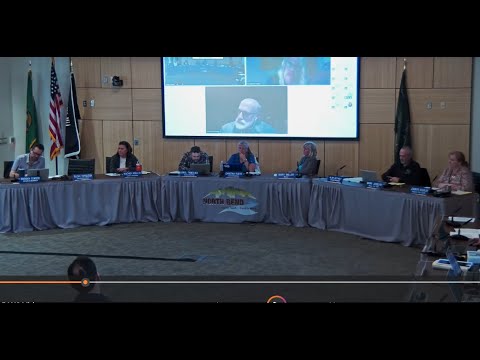
North Bend council hears scoring, cost and coverage details for two police-service proposals; no decision made
Summary
Staff presented comparative scoring, cost breakdowns and Q&A for proposals from the City of Snoqualmie and King County; council members raised concerns about staffing, transparency, liability and contract terms and asked for time to review draft contracts prior to a May 6 decision.
North Bend City Council spent extensive time reviewing two competing proposals for police services: a renewal/extension with the City of Snoqualmie and a new contract with the King County Sheriff’s Office. Martin Shaw, the city’s finance director, presented updated scoring and cost materials showing a small difference in evaluator totals (Snoqualmie: 121.25 points; King County: 117.25 points) and clarified cost presentations to include dispatch in the Snoqualmie figures.
Staff presented comparable annual cost figures with dispatch included: Snoqualmie’s proposal was shown at about $3,980,000 and King County’s at about $4,100,000; staff also noted a one-time cost (transition/amortizable expense) of approximately $1,220,000 that may be amortized up to five years. Shaw said slides showing “two North Bend officers and a shared sergeant 24/7” correspond to a staffing level that would be achievable only when the Snoqualmie department is fully staffed; he and council members also pointed out Snoqualmie reported being fully staffed only one month in the last 60 months.
Council members asked detailed operational and budget questions. Differences in proposed patrol schedules were noted: Snoqualmie proposed 12-hour shifts while King County proposed 10-hour overlapping shifts. Council member Jocelyn and others pressed staff and Snoqualmie representatives about whether the slide language promising 24/7 coverage with two officers was reflected in Snoqualmie’s written contract; staff confirmed the written draft includes a minimum sworn-officer level but does not contractually guarantee the 24/7 two-officer coverage shown on slides.
Other Q&A items included body-worn camera cost estimates, funding splits for a school resource officer (SRO) and a mental-health professional, and how specialty or mutual-aid units are handled. Shaw summarized answers in a supplemental Q&A packet; he and other staff noted some numbers in Snoqualmie’s materials and in councilmember questions did not reconcile and would require follow-up. Joel Kane of the King County Sheriff’s Office (Community Programs/Services division) addressed federal-grant funding for mental-health positions and said the county expects to fund core response services through county mid-tax revenue when short-term federal grants expire in 2026–27.
Council discussion focused on qualitative issues—transparency, reliability and the ability of North Bend to influence leadership, staffing and operational priorities under each model. Several council members said Snoqualmie’s approach and communications had eroded trust, pointing to a letter and public materials from Snoqualmie that, in council members’ view, framed North Bend as failing to meet legal obligations; others said the differences between proposals were not determinative and favored moving to a decision at the May 6 meeting after final contract review and possible negotiation.
City attorney and staff guidance: the council was reminded that final contract terms are typically subject to negotiation; if council picks a provider it would generally authorize the mayor to negotiate final language and return the final contract for council approval. Staff offered three alternatives for a draft agenda bill: (1) award services to Snoqualmie; (2) award services to King County (which would require termination of the Snoqualmie arrangement); or (3) negotiate and extend the existing Snoqualmie ILA to a short extension while council continues deliberations. Some council members objected to alternative (3) as inconsistent with the RFP process; staff offered to remove that option if council preferred.
No formal vote was taken at the work study. Staff said draft contracts were included with the written proposals and urged council members to submit any additional questions to staff so they could be addressed before the May 6 decision meeting; council scheduled an executive session immediately following the work study to continue negotiations in closed session per cited RCW provisions.
No decision was made at the work study.