Get Full Government Meeting Transcripts, Videos, & Alerts Forever!
Get email alerts on the Emergency Management topic
No spam. Unsubscribe anytime.
Delray Beach emergency officials brief commission on NIMS, unified command and 2025 hurricane outlook
Summary
Fire Rescue and emergency management staff gave commissioners an overview of the National Incident Management System, unified command structure, communication options and a brief 2025 hurricane‑season outlook, and urged elected officials to be prepared for a potential major storm.
Delray Beach Fire Rescue and city emergency management staff gave the City Commission a condensed briefing on April 29 covering the National Incident Management System (NIMS), unified command, emergency operations center functions and communication redundancies ahead of the 2025 hurricane season.
Why it matters: The presentation outlined the roles commissioners and city leadership play in disaster response, how local incident management coordinates with county and state partners for resource and funding flows, and what tools city officials can use if communications networks are overloaded during an event.
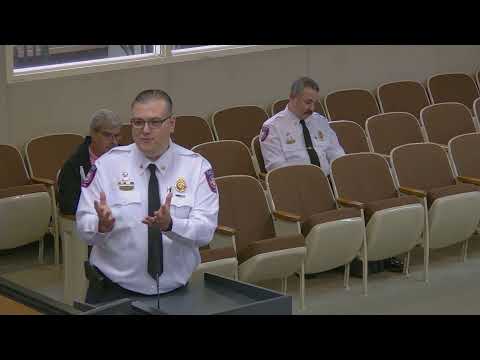
Fire Rescue Chief Ronald Martin told commissioners elected officials would receive routine briefings in an event and that leadership would be expected to make high‑level policy decisions to support operations. Chief Martin said, “You will be briefed. You will have routine briefings on what our current situational conditions are at the time.” Assistant Fire Rescue Chief David Garcia and the emergency management team summarized NIMS components used in multiagency responses, including the Incident Command System (ICS), the Emergency Operations Center (EOC) role, multi‑agency coordination groups and the joint information system.
Stephanie Crainy, the city’s special events and planning official working in emergency management, explained the unified command approach — bringing fire, police, public works and other department leads together to jointly set incident objectives and coordinate resources — and listed typical EOC functions such as evacuation messaging, shelter locations, damage assessments and resource requests to the county and state.
Communication resilience was a focus. Staff described multiple options: priority cellular access through the Department of Homeland Security program (GATS/FirstNet priority access), satellite phones and other redundant systems intended to preserve communications when commercial networks are overwhelmed. Staff said these programs can issue priority credentials to designated city leaders.
On the seasonal outlook, the city’s emergency planners noted sea surface temperatures remain above long‑term averages but somewhat less extreme than 2024. Early forecasts cited by staff (Colorado State University’s early outlook was mentioned) projected an above‑average Atlantic season, but staff emphasized that preparedness matters whether one storm or many form: if one storm impacts Delray Beach, local readiness will determine outcomes.
What commissioners asked: Commissioners asked how non‑governmental organizations such as the American Red Cross coordinate with local response and how communications would function if phone networks fail. Staff said NGOs are coordinated through the county VOAD structure and reiterated the city’s use of FirstNet, DHS priority credentials and satellite communications to maintain operations.
Next steps: Staff asked commissioners to be prepared to support delegated authority in a declared emergency, to participate in briefings and to promote coordinated public messaging. The presentation concluded with an offer to continue training and exercises and to refine mutual‑aid and resource inventories with county partners.