Get Full Government Meeting Transcripts, Videos, & Alerts Forever!
Get email alerts on the Fire Department Budget topic
No spam. Unsubscribe anytime.
Santa Fe Fire Department seeks to sustain retention, add minimum staffing as calls rise
Summary
Fire officials told the Finance Committee they used vacancy savings to add units and staffing, highlighted a large overtime line driven by holidays and event coverage, and flagged an upcoming wave of retirements and facility needs including station expansion and generators.
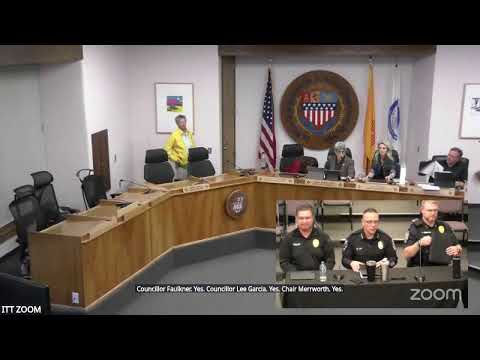
Santa Fe’s Fire Department presented a budget and operations update to the Finance Committee on April 29, reporting steps to strengthen staffing and training while flagging multi‑year risks including a wave of retirements and the need for expanded facility capacity.
Fire leaders said the department has kept vacancy levels low and used that to add minimum staffing for certain apparatus without a net budget increase. The department also plans to put an extra person at the airport and to staff another ambulance (Medic 44) full time, moves the chief said would ease sustained high call volumes.
“We put a lot of money into these people,” the chief said, describing recent class‑and‑comp raises that helped retention. The department noted it currently had about eight vacancies across roughly 208 positions; the chief said low vacancy rates helped add staffing but warned 40–50 employees will become eligible for retirement within the next three years.
Committee members pressed on overtime: the chief said the department’s overtime budget for the coming year had increased to about $3.5 million to reflect holiday pay, special event staffing (Zozobra, Spanish Market, Code Blue nights) and federal deployments that later were largely reimbursed. The chief explained a holiday‑pay practice by contract: firefighters receive a straight‑time payment for holidays whether they work and double pay if they do, and that payroll structure materially raises the department’s overtime line.
Fire leaders described other priorities: reducing occupational exposures (new “clean cab” trucks and relocating bunker gear), procuring PFAS‑free foam for airport rescue trucks, upgrading training and joint exercises with the county, maintaining an aggressive push to improve the city’s ISO (Insurance Services Office) rating and launching a drone capability for faster wildfire and smoke checks.
Capital and facilities needs were repeatedly raised: the department has an expansion and storage project planned at Station 5, and the chief said the city’s last new fire station was built in 1999; he said $4.5 million in set‑aside funds could be applied to remodel a station or start planning a new facility on the south side. Generators for key facilities remain a priority; one large generator for a major facility (G Triple C) was described as a roughly $1,000,000 investment and the city has not yet approved funding.
Councilors and the chief also discussed mutual aid and regional response: fire officials described recent interstate and statewide deployments that brought reimbursements, saying reimbursements offset some overtime costs but underscoring the city routinely supports neighboring jurisdictions during large incidents.
Ending: The committee gave preliminary approval for the fire department budget at the meeting. Fire leaders requested follow‑up on station planning, generator funding and continued investment in retention and training to mitigate the upcoming retirement wave.