Get Full Government Meeting Transcripts, Videos, & Alerts Forever!
Get email alerts on the Facility Rental Policy topic
No spam. Unsubscribe anytime.
Maricopa council directs staff to combine resident and nonprofit rental rates, recalculate nonresident surcharge
Summary
At a July 25 work session the Maricopa City Council discussed a proposed facility rental policy and gave staff direction to merge resident and nonprofit discounts, keep a commercial base rate, and return with recalculated nonresident fees and implementation details.
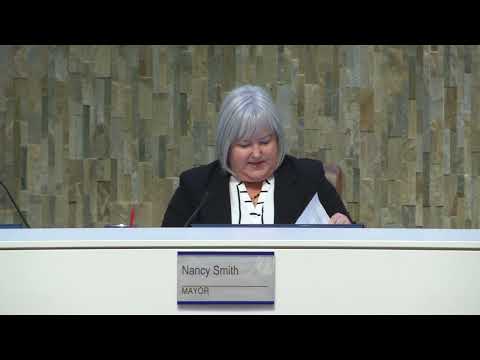
Mayor Smith led a city council work session July 25 during which staff and council members spent more than an hour debating changes to the proposed Maricopa facility rental policy, including who qualifies for discounts and how far in advance spaces can be reserved.
Shane Stone, the police executive administrator and the staff presenter, said the draft is “intended to be an iterative policy” and is meant to govern routine facility rentals when a contract or memorandum of understanding is not in place. Stone summarized the draft’s main points: discounted rates for residents and qualifying 501(c)(3) nonprofits, a proposed nonresident surcharge set at 125% of the base rate, and standard administrative requirements such as insurance, deposits and liability for damages.
Council discussion centered on three questions: whether nonprofits should receive discounts only for public events; whether businesses that pay city taxes should receive the same discount as residents and nonprofits; and whether the 125% nonresident rate was high enough to shift costs off city taxpayers.
Councilmember Manfredi said the policy could be simplified to two rates. “For me it’s simple — there’s 2 rates in my opinion: a resident rate and a nonresident rate,” he said, adding that nonprofits could generally qualify under the resident rate. Several council members agreed that simplifying the structure would be easier for staff and the public to administer.
Other council members urged care on how the commercial category is defined. Council members raised scenarios — a resident manager of a national chain holding an employee party, a local franchise hiring for open positions, or home-based service businesses — and asked staff to clarify whether these uses would be treated as resident or commercial for rate purposes. Council members repeatedly said they wanted staff discretion to review ambiguous cases.
On the nonresident surcharge, opinions ranged from keeping the proposed 125% to increasing it substantially. Councilmember Marsh suggested raising the nonresident rate to 150% or higher; Councilmember Manfredi proposed 175% as a working figure. Council direction: staff was asked to recalculate the nonresident surcharge and report back with a recommended rate and the cost-recovery impact on resident/nonprofit discounts.
The council also discussed scheduling rules intended to protect local access. The draft requires one-time bookings to be available at least six months in advance and recurring bookings to be made no more than one month at a time. Council consensus was to allow one-time events to be scheduled up to one year in advance (weddings, annual tournaments and fundraisers were cited as examples) while keeping recurring scheduling windows short so recurring users do not monopolize limited space. Council members asked staff to include reasonable staff discretion and frequency limits to avoid inadvertent long-term encumbrance of space by single users.
On smaller, first-come-first-served library spaces (study rooms, conference rooms), council gave direction that those free or low-cost spaces should be prioritized for city residents.
Council did not take a formal vote on an ordinance or fee schedule at the session. Instead, members settled on a direction for staff: combine resident and nonprofit discounting into a single discounted rate (the council favored preserving a distinct commercial/base rate), raise and recalculate the nonresident surcharge to better protect resident cost burdens, formalize a one-year advance booking allowance for one-time events, keep short recurring booking windows with staff discretion, and report back with updated fee tables and implementation details.
What’s next: staff will rework the fee schedule and return to the council with recalculated nonresident rates, an updated fee table showing the effect on resident/nonprofit discounts and examples of how business uses will be classified. Councilmembers asked staff to provide the data needed to assess availability and frequency impacts before the policy is finalized.
Ending: The item concluded with thank-yous to staff and direction for a follow-up presentation; no final ordinance or fee change was adopted at the July 25 meeting.