Get Full Government Meeting Transcripts, Videos, & Alerts Forever!
Get email alerts on the Museum topic
No spam. Unsubscribe anytime.
Museum of Casa Grande tells council about collections, education and volunteer operations
Summary
The Museum of Casa Grande presented to the city council study session on its history, exhibits, educational outreach and heavy reliance on volunteers. The museum highlighted its collections, free school programming, partnerships and recent community events.
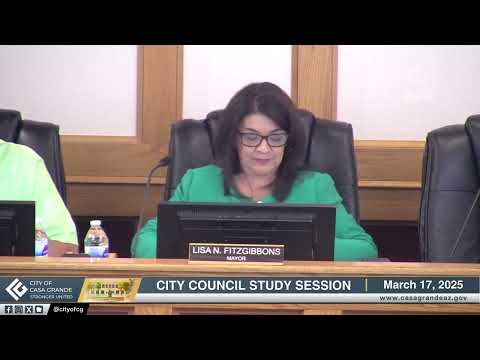
The Museum of Casa Grande summarized its collections, educational programs and volunteer-run operations during a presentation at the Casa Grande City Council study session.
Director Michael Sirota told the council the museum “was founded in 1964” and that the main museum property is “42,000 square feet.” He said the organization’s mission is to “preserve, interpret and disseminate the history of the Casa Grande region” and described a range of exhibits and outreach programs that the museum operates.
The museum reported nearly 18,000 artifacts and 24,000 photographs and documents focused on the Casa Grande Valley, with exhibit topics that include Sonoran animals, local architecture, mining, railroads and Native artifacts. Sirota said the native exhibit includes items he described as “nearly 2,000 years old” and that it was assembled in partnership with the Gila River Indian Community. He also listed off-site changing galleries maintained at the city finance and administration building and at the Casa Grande Airport.
Sirota described the museum’s education work, saying school tours and outreach are offered at no charge to students or teachers and that museum staff “will go to schools.” He said the museum runs a free monthly speaker series, History Speaks, in partnership with Arizona Humanities and the Dorothy Powell Senior Center.
The museum described additional historic assets it manages: Heritage Hall (built by Michael Sullivan and listed on the National Register of Historic Places in 1978), the Rebecca Dallas Schoolhouse (the former Southside Colored Grammar School teacher’s classroom), a reproduction Treckle Barn and the Weaver Pioneer Cemetery. Sirota said the Weaver cemetery was deeded to the museum in February 2006 and that the earliest burial recorded there dates to 1889.
Sirota also outlined staffing and volunteer capacity: he identified himself as the only full-time staff member, one part-time staff member, and a volunteer base that provided more than 2,400 hours of service last year. The museum’s volunteers and part-time staff cover tours, marketing, collections work, gift shop operations and grant assistance, he said.
Council members and attendees responded with personal recollections and thanks. A council participant who identified themselves as having been a teacher said they had taken students on field trips and praised the museum programs.
The museum posted admission prices in the presentation: $7 for adults, $6 for seniors and free admission for children; Sirota emphasized the museum’s goal of affordability and family access.
The council discussion included questions about pronunciation of the city name; Sirota described the historical origin and said he did not correct local usage but noted the Spanish-language origin tied to Father Kino.
The presentation closed after council members thanked the museum and its board for the work and volunteer contributions.