Get Full Government Meeting Transcripts, Videos, & Alerts Forever!
Get email alerts on the Animal Services topic
No spam. Unsubscribe anytime.
Lake Havasu City Council approves five-year sheltering contract amid calls for investigation
Summary
Council voted 6-1 to approve a five‑year contract with the Western Arizona Humane Society to provide animal care and shelter services, while dozens of residents and some former board members urged independent review of the nonprofit's operations and personnel practices.
Lake Havasu City Council on Tuesday approved a five‑year contract with the Western Arizona Humane Society (WAHS) to provide animal care and shelter services for the city, voting 6‑1 to authorize the city manager to sign an agreement running July 1, 2019, through June 30, 2024.
The vote followed nearly three hours of public comment and extended council discussion. Chief of Police John Doyle presented the contract terms and said the city sought the renewal to secure sheltering services the department relies on for stray and seized animals.
The contract reduces the city's annual payment from $250,000 to $225,000 for the first two years and $200,000 for each of the final three years, Doyle said. He described logistics the city considered—including whether to operate an in‑house shelter—and told the council the cost and regulatory burdens made that alternative less feasible.
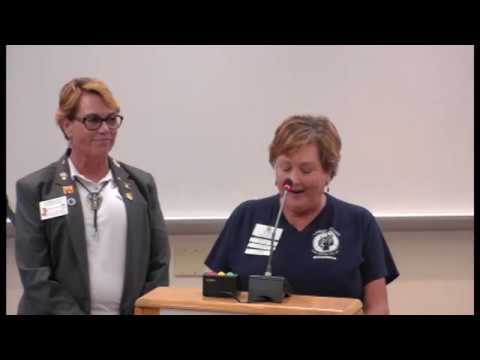
Supporters of WAHS, including veterans groups and long‑time volunteers, told the council the nonprofit has upgraded facilities and medical capacity and that staff and volunteers care deeply for animals. Steve Jenkins, administrative manager for WAHS, described recent facility improvements — new kennels, isolation rooms, in‑house lab systems and enhanced cleaning protocols — and said the organization hoped for continued partnership.
But a large group of residents, several former and current WAHS board members, and some past employees urged the council to require an investigation of the nonprofit before or during the contract. Speakers alleged a range of problems at WAHS, including procurement and governance lapses, personnel and training failures, handling of euthanasia and other medical procedures, and problematic behavior by specific employees. Several people provided written resignation letters from former board members and other documents to the council.
Frankie Lyons of Veterans United Arizona urged the council not to close WAHS off from serving veterans and described programs that pair animals with veterans. Cheryl Domm, who identified herself as a trainer and former volunteer, described incidents she called unethical and asked for review. Others, including current WAHS employees such as Julie Crocker and Brandy Engler, defended the organization and said they had not observed the misconduct alleged.
Councilmembers acknowledged the competing concerns. Councilmember Jim Dolan said the board has a fiduciary obligation to investigate complaints and that the council’s role is to ensure the city’s contract is in the public interest. Vice Mayor David Lane said criminal allegations should be reported to police. Several councilmembers said the city’s contract contains a 30‑day termination clause and indemnity protections, allowing the city to act if WAHS fails to meet contract obligations.
Chief Doyle supplied context on service volume and cost: in fiscal year 2017–18 the department delivered 392 animals to WAHS, 208 of which were impounds by the public, and he estimated the city’s cost per animal delivered was about $637 when using those figures. He also said approximately 65 percent of animals the department brings in are returned to owners.
After discussion, Councilmember Dolan moved to approve the five‑year contract and Vice Mayor Lane seconded. The motion passed 6‑1.
The council did not open a separate, formal investigation in the meeting. Several councilmembers said they expect WAHS’s board and leadership to address the allegations and for the city to monitor compliance with contract reporting requirements; they also said city staff will follow up on specific regulatory or legal concerns as appropriate.
The contract takes effect July 1, 2019. The council directed that city staff continue to receive and review documentation WAHS provides under the contract and that the city use its contractual remedies if the nonprofit fails to meet its obligations.