Get Full Government Meeting Transcripts, Videos, & Alerts Forever!
Get email alerts on the Long Range Financial Forecast topic
No spam. Unsubscribe anytime.
Tempe warns of tightened finances as sales and state revenues slow; staff recommends reserve drawdowns
Summary
City staff told council Feb. 24 that local sales tax and state shared revenues are below budget, outlined the impacts of recent state actions and proposed legislation, and recommended short‑term measures including pausing supplementals and drawing down pension and OPEB reserves while monitoring options.
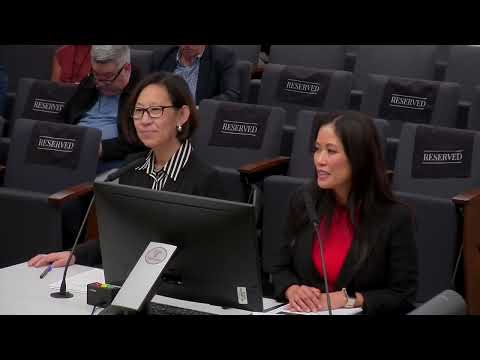
Tempe City Council on Feb. 24 heard a long‑range financial forecast from Deputy City Manager Lisette Camacho and Interim Budget Director Julie Heider that showed weaker local sales tax and lower state shared revenues and recommended a set of budget balancing measures to protect the city's financial stability.
Camacho and Heider told council the city has seen a slowdown in local tax revenue beginning in fiscal 2024 Q3 and stressed that recent and potential state policy changes create material downside risk. Heider said the forecast directly aligns with the council’s strategic priority of financial stability and noted staff’s goal of maintaining the city’s high general obligation bond rating.
Staff highlighted two revenue risks: the enacted repeal of the residential rental sales tax (Senate Bill 1131, effective Jan. 1, 2025) and evolving proposed legislation to eliminate or cap local food‑for‑home sales taxes. Camacho said the rental tax repeal reduced revenue in fiscal 2025 by an estimated $10,000,000 (half year) across three operating funds and will reduce annual revenues by about $21,000,000 beginning in fiscal 2026—about $14,000,000 to the general fund, $6,000,000 to the transit fund and $1,000,000 to the arts and culture fund.
Staff presented a set of recommended measures to bridge near‑term gaps while preserving long‑term flexibility: pausing recurring and nonrecurring supplementals for two years, suspending cash funding of capital projects, using a portion of the Public Safety Personnel Retirement System (PSPRS) reserves to cover pension contributions, and drawing down some OPEB reserves to fund post‑employment health costs. Heider said the PSPRS reserves total about $25,000,000 and the staff proposal uses about $4,000,000; OPEB reserves total about $20,000,000 with a suggested use of about $2,000,000.
Heider also outlined estimated impacts if the proposed food‑tax elimination passed under one scenario: a roughly $12,500,000 annual loss across the three funds (about 5.3% of sales tax revenue), including an $8,300,000 general fund impact that staff said is equivalent to the annual salary of about 113 firefighters or 99 police officers. Combined with the rental tax repeal, staff showed a potential annual revenue loss in fiscal 2028 of roughly $35,000,000 across funds ($23,000,000 general fund; about $10,000,000 transit; $2,000,000 arts and culture) under the worst‑case assumptions presented.
Council members asked clarifying questions about definitions (for example, “food for home consumption” as grocery purchases), vote thresholds for voter approval of tax rate increases and whether use of reserves would harm the city’s bond rating. Heider and Camacho said the drawdown is planned, reserves remain above policy targets, and staff expect revenues to recover; they also noted additional balancing options such as position freezes or eventual revenue measures if necessary. Staff recommended continued monitoring and returning with additional options; no formal council vote was taken on the recommendations during the Feb. 24 session.