Citizen Portal

Downtown Mesa micro‑mobility and parking plan recommends street re‑striping, signage standardization and expanded parking app pilot

3153650 · April 30, 2025

Get AI-powered insights, summaries, and transcripts

Subscribe
AI-Generated Content: All content on this page was generated by AI to highlight key points from the meeting. For complete details and context, we recommend watching the full video. so we can fix them.

Summary

City urban transformation staff and consultants presented a draft Downtown Mesa micro‑mobility and parking plan recommending rightsizing streets, adding protected bike lanes and standardizing parking signage while expanding a live parking‑availability app pilot.

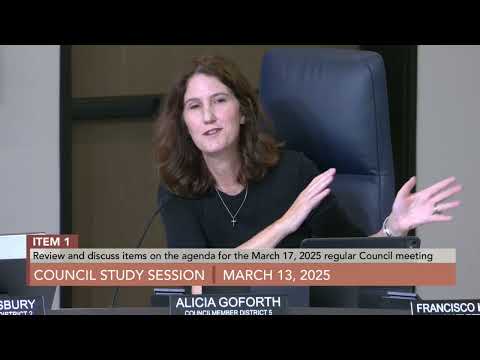
City urban transformation staff and Stantec consultants presented a draft Downtown Mesa micro‑mobility and parking plan during a council study session, laying out steps to make downtown more walkable, add protected bicycle facilities, reduce street widths where appropriate and improve how the city manages and signs public parking.

Jeff McVay, manager of urban transformation, introduced the project and said the office’s work focuses on downtown activation and easing development processes. He was followed by Anthony Rodriguez and Ralph Denizchio of Stantec, who summarized public outreach and the study’s findings.

The plan’s headline data point is the parking inventory and utilization analysis. Stantec reported roughly 12,000–13,000 public parking spaces (on‑street and off‑street) in the downtown study area and said field counts at observed times showed no total public parking inventory exceeding approximately 50% occupancy. "At no time was the parking more than 50% full," the consultant told council, noting that pockets of higher use exist near popular anchors. That pattern, the consultants said, indicates availability exists but that wayfinding, time limits, permit rules and the walking environment create the perception of scarcity.

Recommendations the consultants presented include: standardizing public parking signage; converting some on‑street parallel parking to angled stalls on streets such as West First Avenue while adding protected bike lanes on both sides; re‑striping several downtown streets to reduce multiple travel lanes (where volumes do not require them) and lower vehicle speeds; and creating a network of lower traffic‑stress bicycle routes so casual cyclists will feel safe. The team estimated reconfigured on‑street layouts could add roughly 200–300 parking spaces in downtown while also improving the pedestrian and bicycle environment.

Scott Conn, who leads the city’s smart parking work, told council the parking app is in beta, currently covering three garages and one street; he said the system is about 95% accurate in identifying available spaces and that staff are working to expand coverage. The beta app uses live availability counts to route drivers to open public garages and, in the future, could show reserve‑permit availability depending on data and enforcement capabilities.

Council members asked several implementation questions. Transportation Department staff indicated a pavement preservation program will repave downtown in the coming years (a multi‑year mill-and-overlay plan to address the mile between University and Broadway and Country Club to Mesa Drive) and that striping changes are best coordinated with pavement work. Council directed staff to develop a prioritized implementation plan coordinated with Transportation’s resurfacing schedule and to continue work on the parking app and signage standardization.

Other implementation items discussed were design details (sight lines at intersections where signals might be reduced or replaced by stop signs), park‑and‑ride/drop‑off locations for ride‑hail, defined and geofenced scooter/bike parking, and tree and shade planting priorities to improve pedestrian comfort during hot months. Consultants also emphasized that many suggested changes — restriping, adding protected bike lanes and converting some parking to angled stalls — can be accomplished with pavement‑marking work tied to the city’s resurfacing schedule.

Ending: Staff will finalize the plan after incorporating feedback, provide a street‑by‑street implementation priority tied to Transportation’s paving schedule, and return with specifics about timing, budget estimates and next steps for the beta parking app expansion and signage roll‑out.