Get Full Government Meeting Transcripts, Videos, & Alerts Forever!
Get email alerts on the Medication Reimbursement topic
No spam. Unsubscribe anytime.
Industry, states back bill to reimburse high-cost medications for veterans in state homes; VA signaled technical concerns
Summary
State veterans‑home officials and their association urged Congress to approve legislation that would reimburse state homes for high‑cost medications for veterans; VA said it raised technical concerns but has taken steps to improve oversight.
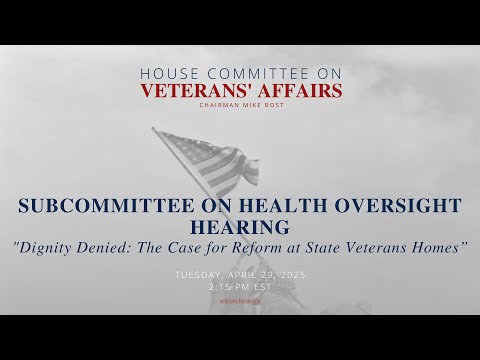
Representative Miller Meeks and other members told the subcommittee they introduced legislation to expand medication reimbursement for state veterans homes, arguing current rules shift the cost of high‑price drugs to facilities and can deter admissions.
“That's why I've introduced a bill to provide veterans with more access to essential medications,” the chair said, explaining the proposed measure would reimburse state veterans homes for medication costs that now are often paid outside the facility. The problem was described as most acute for high‑cost specialty drugs, including cancer therapies, which state homes may not be able to absorb under the current per diem structure.
Ed Harries, president of the National Association of State Veterans Homes, told the committee his members strongly support the Providing Veterans Essential Medications Act and were “surprised and disappointed that the VA testified in opposition to your bill.” Harries said technical objections from the VA could be resolved through clarifications and added that failing to reimburse state homes for certain specialty medications can force facilities to refuse admissions or shift resources away from direct care.
VA witnesses said they had raised technical concerns about the bill, and VA officials described existing mechanisms for specialty care and medical‑sharing agreements with local VA medical centers. Dr. Hartreeff said VA covers primary‑level care through per diem and works with state homes and local VAMCs to coordinate specialty care, but that specialty care often requires coordination beyond what per diem covers.
Committee members and witnesses also discussed the distributional effects of medication costs. Industry and state witnesses said the current mismatch—VA per diem covering routine care but not some high‑cost medications—creates financial pressure on state homes. “We're doing it for one party but we're not doing it for another,” Harries said, referring to differences in how VA covers medications for some settings but not others.
There was no vote on the draft legislation at the hearing. Several members urged bipartisan negotiation to address VA technical concerns while ensuring state homes can continue to admit veterans who need high‑cost therapies.
Ending: The committee recorded support from state homes and advocacy groups for the Providing Veterans Essential Medications Act and asked VA to provide technical clarifications and options for resolving the reimbursement gap.