Get Full Government Meeting Transcripts, Videos, & Alerts Forever!
Get email alerts on the Party Election Integrity topic
No spam. Unsubscribe anytime.
Phil Lyman says Utah GOP should assert party autonomy, challenge signature path and push election transparency
Summary
At a Utah County Republican Party podcast, Phil Lyman, a candidate for Utah Republican Party chair, said the party should reclaim authority over candidate selection, push back on the signature-path provisions known as SB 54, and demand greater transparency from the lieutenant governor’s office about primary records.
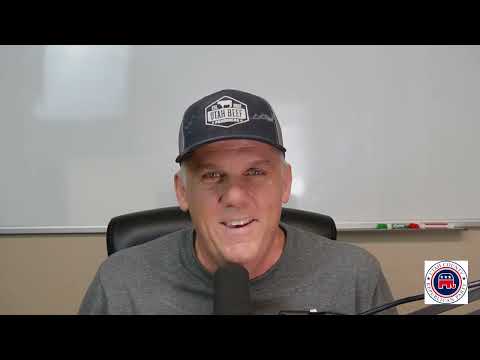
Phil Lyman, a candidate for chair of the Utah Republican Party, told a Utah County Republican Party podcast audience he wants the party to “step back in” and use its institutional power to assert independence from state officeholders and laws that he said have diminished party control.
Lyman framed his campaign around what he called three priorities: election integrity, transparency and stronger party influence. “We don’t have to follow SB 54,” Lyman said in the interview, arguing the party could refuse to treat a signature-path primary winner as the party’s nominee if party rules or the delegates designate a convention winner.
Why it matters: Lyman argued the party lost influence after recent gubernatorial nomination disputes and should be willing to run its own internal process — even if that risks a legal fight with the lieutenant governor’s office. He said the party’s bylaws, which he described as providing a 60% convention threshold that can make a convention winner the party’s nominee, must be enforced so delegates’ decisions are meaningful.
Lyman said the party should demand access to records he described as necessary for independent verification of past primary elections, including voter rolls and cast-vote records. “The Republican Party owns their voter rolls. Those are the Republican Party’s cast vote records,” he said, adding that he pressed the legislature to perform a legislative audit after concerns arose about a recent primary.
Lyman disputed the sufficiency of the current signature-path approach and suggested the party could run its own primary at the precinct level if the state’s universal mail ballot process proved insufficiently transparent. He offered contrasting cost estimates for a party-run primary — telling the hosts he and U.S. Sen. Mike Lee discussed figures as low as $300,000, while others have suggested several million dollars — and said the actual number would depend on choices the party made.
The candidate repeatedly framed the issue as one of political will. He said the problem was not Democratic opposition but divisions within Republicans, and that the party must stop treating the legislature and statewide officials as if they “are in charge” of party processes.
During the conversation, Utah County Republican Party Chair Christy Henshaw and podcast host Chuck (Utah County vice chair and state delegate) questioned how Lyman would balance a signature-path fight with other party responsibilities. Lyman said he is “inclusive” by temperament but insisted he would press election-transparency reforms while also supporting outreach and other party functions.
Discussion versus decision: The podcast was an interview and did not include any formal party motions or votes. Lyman described strategies he would pursue as chair, but he did not announce formal party actions or prerogatives that had been adopted.
Ending note: Lyman asked delegates and listeners to follow his campaign and said his campaign website and social channels would carry more detail on next steps if he is elected state chair.