Get Full Government Meeting Transcripts, Videos, & Alerts Forever!
Get email alerts on the Homelessness Operations topic
No spam. Unsubscribe anytime.
Mayor’s homelessness task force issues 45‑day update; proposes tightened SOPs for encampment closures
Summary
The city’s homelessness task force reported steps to standardize outreach and encampment decommissioning, including day-of checks with outreach teams and APD, tent tagging, thermal sensors and final mayoral sign-off. The task force will refine recommendations ahead of a 90‑day report.
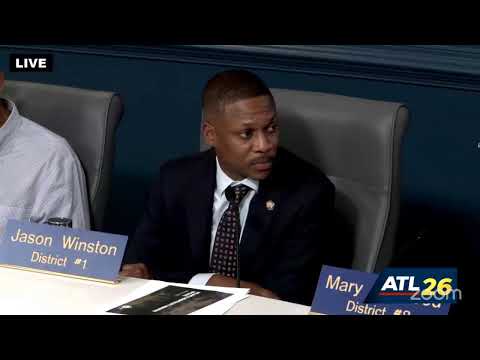
The city’s homelessness task force gave a 45‑day update to the council, reporting new standard operating procedures intended to reduce safety risks during encampment decommissioning and improve interagency coordination.
Chateka Ellison, presenting the report, said the task force — composed of some 36 organizations across city departments, service providers, clergy and grassroots groups — identified gaps in shelter capacity, coordination and resource distribution. ‘‘The current homelessness strategy lacks holistic oversight and coordination,’’ Ellison said.
Among the operational changes the task force proposed are a multilayered, day‑of clearance process: an outreach visual confirmation followed by an outreach knock check accompanied by an Atlanta Police Department officer; tent tagging to show a knock check occurred; use of thermal sensors by fire recruits to confirm vacancy without opening tents; removal of tents by hand or with smaller equipment where possible; then a DPW/contractor clearance of larger debris and a final mayor’s‑office sign‑off.
Ellison said the team is aiming to produce a final SOP for adoption at the 90‑day report and that the task force will continue subcommittee meetings on standards, medical and mental‑health needs, prevention and diversion, and alternative shelter models. ‘‘It is our hope that by the 90 day, we have a final document that can be approved by you all to be implemented with the city,’’ she said.
Council members pressed for more inclusion of council offices representing affected districts and asked about resource constraints. Deputy Chief of Staff Theo Pace said the administration welcomes participation from any council member and noted the legislation that formed the task force identified the council’s CDHS chair as the council representative. Ellison acknowledged resource limitations across the provider network and said the task force will prioritize feasible, sustainable measures and ‘‘stand up what is here before starting too many new programs.’’
The task force scheduled further core meetings, with one publicized for May 6 at the MLK Recreation Center, and plans to deliver a full 90‑day report in June.
The report contains no binding funding decisions; it sets operational direction and recommends further study and coordination to build an implementation plan.