Get Full Government Meeting Transcripts, Videos, & Alerts Forever!
Get email alerts on the Utv Regulation topic
No spam. Unsubscribe anytime.
Panel hears UTV bill that would standardize inspections, equipment and local opt-in for roads
Summary
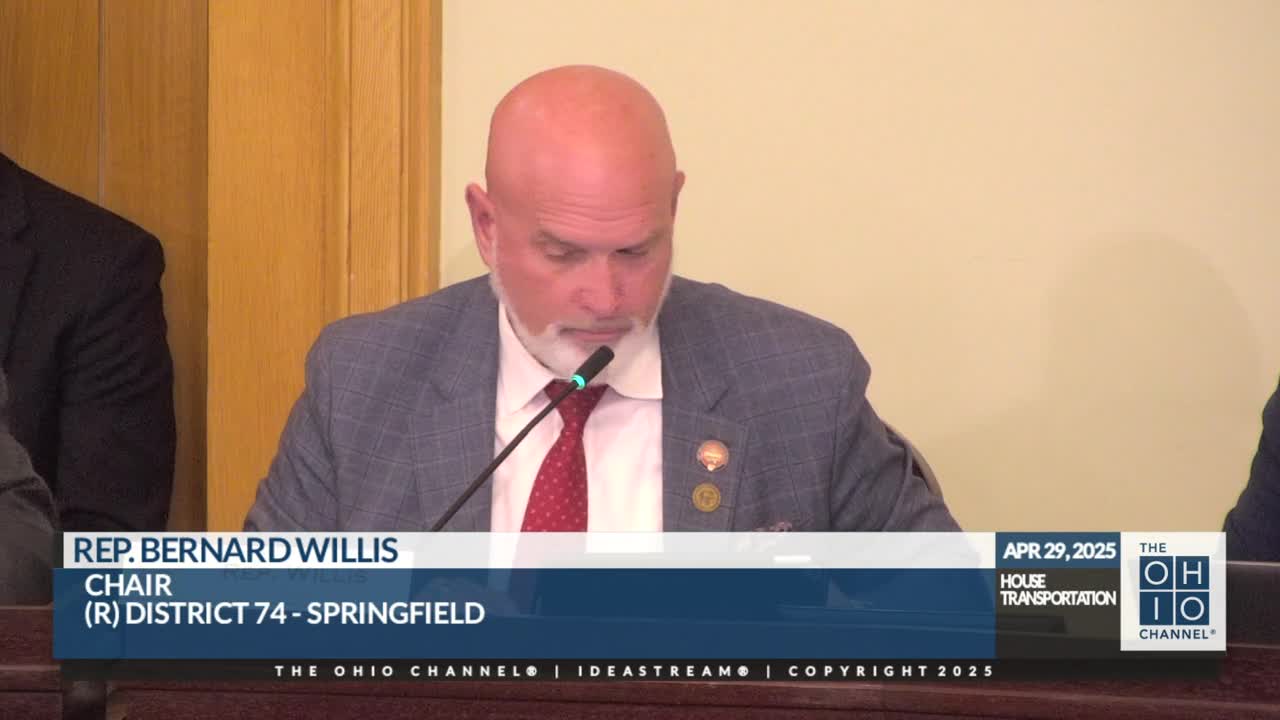
Sponsors of House Bill 199 told the House Transportation Committee the bill would create a uniform framework for registering and operating UTVs on township and county roads if a law-enforcement inspection is passed and local commissioners allow it; the committee heard extensive sponsor testimony and questions but took no final vote.
Sponsors of House Bill 199 told the Ohio House Transportation Committee that the bill would create a statewide framework for registering and operating utility terrain vehicles (UTVs or "side-by-sides") on township and county roads, while preserving local control and agricultural exemptions.
"Current laws and regulations surrounding the operation of UTVs are very confusing and have led to inconsistencies in enforcement," Representative Kevin Miller, a sponsor, told the committee during sponsor testimony. The bill would allow registration and on-road operation on township and county roads if two conditions are met: the vehicle passes a safety inspection conducted by a law-enforcement agency and the county board of commissioners passes a resolution allowing their use in that jurisdiction.
Representative Plummer, a joint sponsor, described specific mandatory equipment the bill would require for on-road UTVs: roll cages, two red reflectors, a rearview mirror, a windshield or safety glass and restraining devices for all occupants. "They're gonna have to have mandatory safety equipment such as roll cages, 2 red reflectors, a rear mirror, a windshield, or safety glass, and the occupants must have restraining devices for all occupants in the vehicle," Representative Plummer said.
The sponsors also said plated and insured vehicles would be required for nonagricultural road use; agricultural exemptions currently in place would be preserved. Representative Miller told the committee that Department of Public Safety would establish a standardized inspection form and that drivers would be required to hold a valid driver's license.
Committee members asked about crash statistics, enforcement and logistical burdens. Representative Grimm asked whether data exist separating UTV crash rates from ATV data; Miller said he had not found data that cleanly separates the two vehicle types. Members raised practical questions about how owners without trailers would get UTVs to inspection sites and whether local law enforcement would travel to inspect vehicles. Sponsors said local practice varies and that the bill preserves local control by requiring a county resolution to enable on-road operation.
No vote was taken; the transcript records the sponsors' testimony and committee questions. The chairman initially introduced HB 199 as a second hearing but later—after questioning—said the item would "stand as first hearing," a recording inconsistency the committee transcript reflects. The committee did not report the bill out; the item remains at the hearing stage.
Ending: House Bill 199 received sponsor testimony and substantive questions about safety equipment, inspection logistics and data on crashes. Committee members signaled interest in standardizing inspections through the Department of Public Safety, but the committee took no formal action.