House Education and Labor committee advances Republican student‑aid reconciliation package after day‑long markup
Get AI-powered insights, summaries, and transcripts
SubscribeSummary
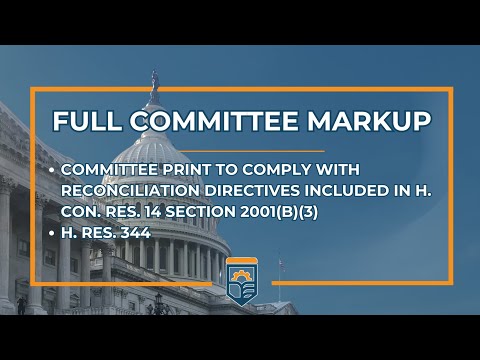
The House Education and Labor Committee met for a day‑long markup of the Student Success and Taxpayer Savings Plan, a Republican reconciliation package that would alter federal student aid, repayment rules and institutional accountability; Committee Republicans adopted an amendment in the nature of a substitute and voted to transmit the measure to the Budget Committee.
The House Education and Labor Committee met for a day‑long markup of a Republican reconciliation package titled the Student Success and Taxpayer Savings Plan, a bill that GOP members say would reduce federal higher‑education spending and “hold colleges accountable.” Representative Tim Walberg (R‑Mich.) offered an amendment in the nature of a substitute that the committee ultimately adopted; the full package was then voted to be transmitted to the House Budget Committee.
Why it matters: The package proposes sweeping changes to student aid and repayment rules that, if enacted, would reshape who can access federal grants and loans and how long borrowers remain in repayment. Members on both sides framed the markup as a test of priorities: whether to reduce federal outlays and impose stricter accountability on institutions or to protect existing federal aid and borrower protections.
Republican framing and actions: Committee Republicans repeatedly said the bill targets waste and unsustainable costs in higher education. In explaining the amendment in the nature of a substitute, Representative Walberg said, “The Biden‑Harris administration took a federal loan system already in need of reform and completely shattered it,” and argued the package would “replenish the Pell program” temporarily and create new accountability metrics for institutions. The committee agreed to the amendment in the nature of a substitute and, after several recorded votes on individual amendments, voted to transmit the committee print and accompanying materials to the Budget Committee.
Democratic objections and amendments: Ranking Member Representative Bobby Scott (D‑Va.) and other Democrats framed the bill as cuts to student aid that would harm low‑income, part‑time, and nontraditional students. Scott opened with: “If you want to see someone’s values, show me their budget,” and said the reconciliation plan “reveals a betrayal of the promise that Lyndon B. Johnson made when he signed the Higher Education Act.” Democrats offered multiple amendments to preserve or expand Pell eligibility, block changes to borrower defenses and closed‑school discharges, protect SNAP/WIC access for students, and exempt certain populations from proposed penalties; most of those amendments failed during the markup.
What the committee voted on and next steps: The committee considered dozens of amendments (many were offered by Democrats and were defeated by recorded or voice votes). The amendment in the nature of a substitute to the committee print was agreed to by the committee, and the committee then voted to transmit the recommendations to the House Budget Committee. A recorded vote on the motion to transmit was completed (committee tally recorded in the transcript). The Budget Committee will receive the committee print and any supplemental views for further action in the reconciliation process.
Context and data cited in the markup: Members cited multiple fiscal figures and program details during debate. Committee Republicans repeatedly cited an estimated $350 billion in savings from their package and called out a projected Pell shortfall (committee discussion referenced CBO estimates of a multibillion‑dollar shortfall). Democrats pointed to proposals they said would reduce Pell coverage for part‑time students and eliminate protections such as borrower defense and the 90/10 rule that limits for‑profit colleges’ reliance on federal student aid.
Ending: The committee concluded after dozens of roll calls and recorded votes. Members on both sides asked that their views be placed in the record and signaled that the debate would continue on the floor and in subsequent appropriations and reconciliation steps.