Get Full Government Meeting Transcripts, Videos, & Alerts Forever!
Get email alerts on the National Security Land Ownership topic
No spam. Unsubscribe anytime.
Proponent urges broad ban on foreign adversary land ownership near military and critical infrastructure
Summary
A representative for State Armour testified in support of Senate Bill 88, urging prohibitions on foreign adversary ownership of agricultural land and property near military and critical infrastructure, citing national-security concerns and examples from other states.
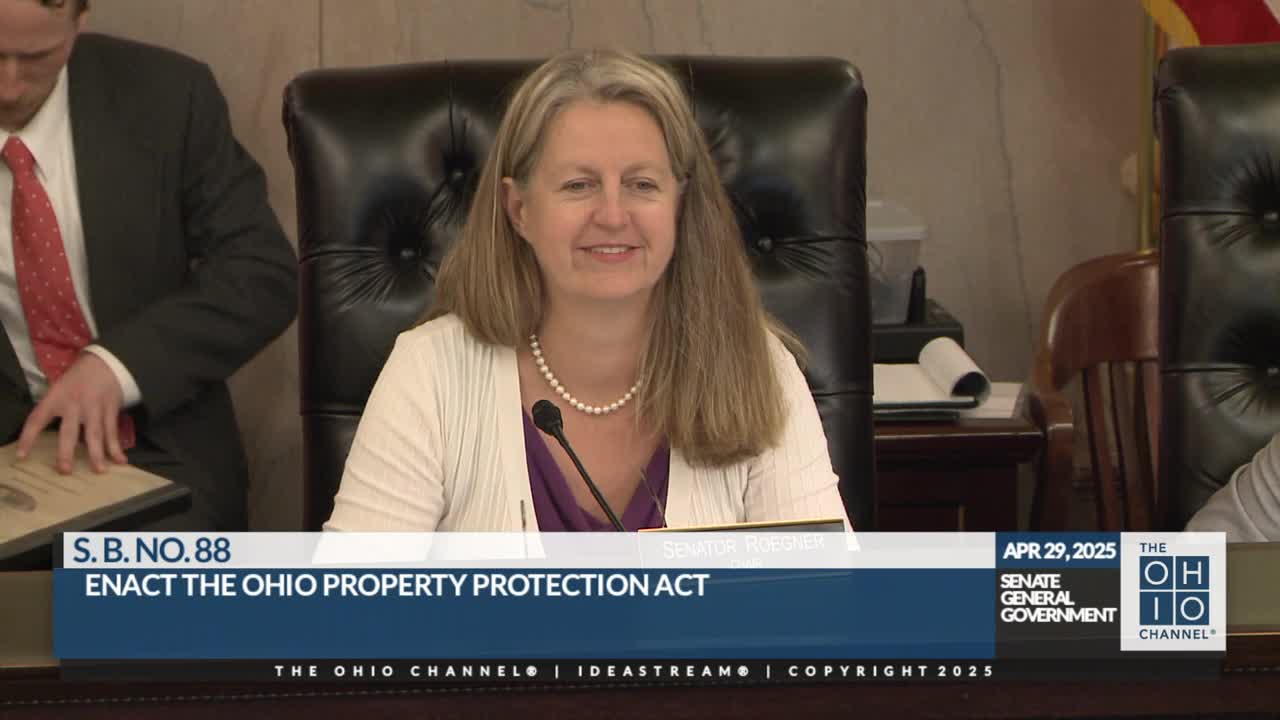
A proponent from an organization identified in the transcript as State Armour urged the Senate General Government Committee to pass Senate Bill 88, saying the legislation would reduce risks from foreign adversary ownership of land and certain property near sensitive military and critical infrastructure installations.
The witness said the bill should prohibit foreign adversary ownership of agricultural land, of property near military installations and of property near critical infrastructure. The witness described a series of national-security concerns and cited examples from other states where foreign-owned purchases raised alarms: a large Texas land purchase near Laughlin Air Force Base that included a runway and proposed wind turbines; a land purchase near Grand Forks Air Force Base by a company identified in the testimony as Fu Feng Group; and attempted purchases near a major industrial rail line in northwest Indiana. The witness also referenced a federal investigation of a China-owned factory in Ohio.
The proponent linked those examples to China’s national intelligence law and argued that Chinese-owned entities may be subject to state-directed intelligence or surveillance activities. He cited public statements by national-security officials and studies to support those claims. He asked the committee to prohibit foreign adversary ownership in the categories outlined and to move the bill forward.
During questions, Senator DeMora asked whether the governor had indicated willingness to sign similar measures after a previous veto in the last budget; the proponent said he did not know and offered to look into it. The chair noted five additional pieces of written testimony were available on committee iPads. The committee concluded the third hearing on Senate Bill 88 after that testimony.