Get Full Government Meeting Transcripts, Videos, & Alerts Forever!
Get email alerts on the Developmental Disabilities Budget topic
No spam. Unsubscribe anytime.
Department of Developmental Disabilities seeks to sustain DSP wage gains, expand technology and crisis supports
Summary
Director Kimberly Houck presented the DODD budget request, citing continued state investments to sustain direct support professional wages, maintain waiver enrollments, expand technology pilots and fund multidisciplinary assessments for youth with complex needs.
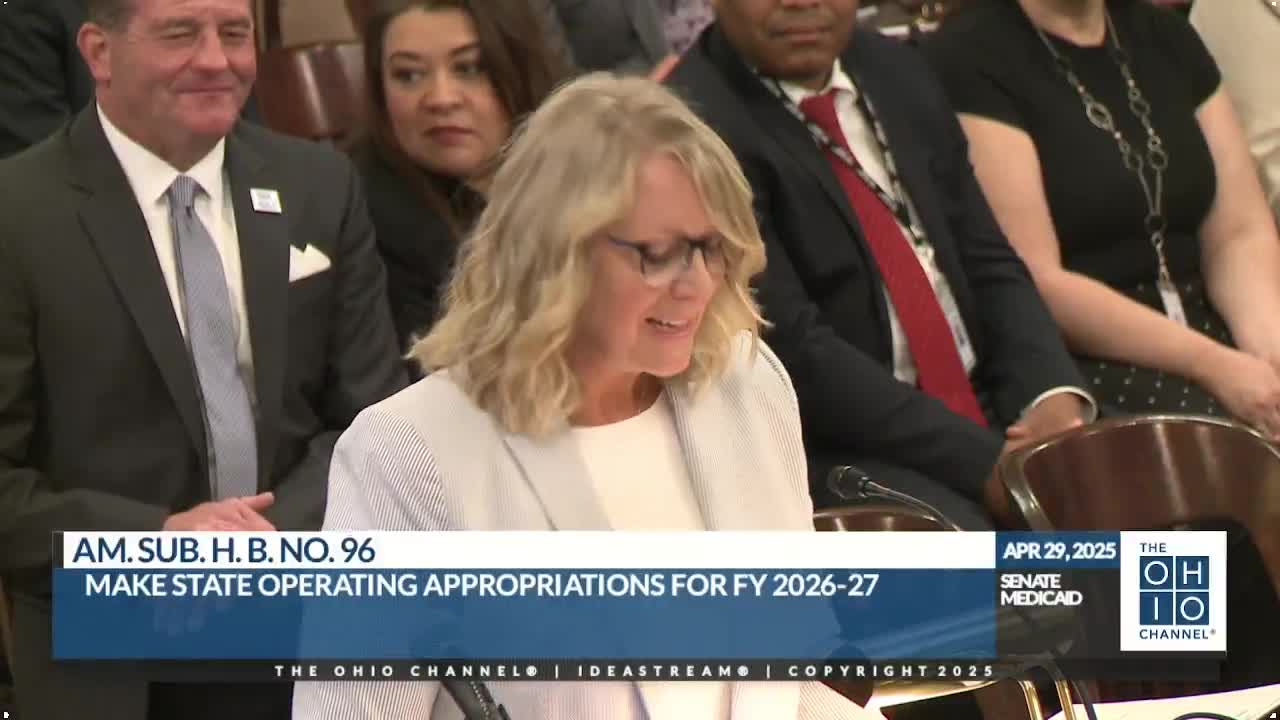
Kimberly Houck, director of the Ohio Department of Developmental Disabilities, told the Senate Medicaid Committee the governor—s biennial budget would preserve recent rate increases aimed at improving direct support professional (DSP) wages, continue investments in waivers and expand technology and crisis supports for people with developmental disabilities.
Houck said the department supports more than 100,000 Ohioans with developmental disabilities and requested $5.51 billion in all funds and $1.18 billion in state GRF for fiscal year 2026, with $5.75 billion all funds and $1.19 billion GRF in fiscal year 2027. The department said the requested funds would maintain provider rate increases and meet projected demand for Medicaid services.
Houck described several budget priorities: sustaining rate increases to maintain DSP wages after prior one-time and timing-based funding; funding technology initiatives (a $3.2 million per year line to support assistive and remote supports); continuing funding for short-term stabilization and supports for youth with complex needs (the MCAT multidisciplinary assessment team); and maintaining supports for intermediate care facilities (ICFs) and waiver providers.
She told senators the average starting DSP wage rose to about $16.04 after prior investments and that the department expects an average state DSP wage of at least $18 an hour when full data are available. Houck said the department used one-time federal and state funds in the prior budget and needs additional GRF in fiscal 2026 to sustain wages long-term because of timing differences and the mix of one-time funding used previously.
Houck also described statewide supports including county board partnerships, the expansion of universal changing tables and plans to keep family voices on county boards, and investments in regional technology support teams that help people test assistive devices.
Senators asked about the electronic visit verification (EVV) system and pilot language for innovative projects; Houck deferred EVV details to the Department of Medicaid and said DODD had requested less prescriptive stakeholder lists for pilot consultations to avoid exhaustive enumerations.
The testimony concluded with the director thanking the committee and reiterating the department—s workforce and community-inclusion priorities.
No committee votes were taken during the hearing.