Get Full Government Meeting Transcripts, Videos, & Alerts Forever!
Get email alerts on the Disability Services Ood topic
No spam. Unsubscribe anytime.
Opportunities for Ohioans with Disabilities highlights employment gains, requests $43.9M GRF for biennium
Summary
Director Kevin Miller told the Senate Medicaid Committee that Opportunities for Ohioans with Disabilities expanded services and reported employment and credentialing gains; the agency asked for state general revenue to continue those investments.
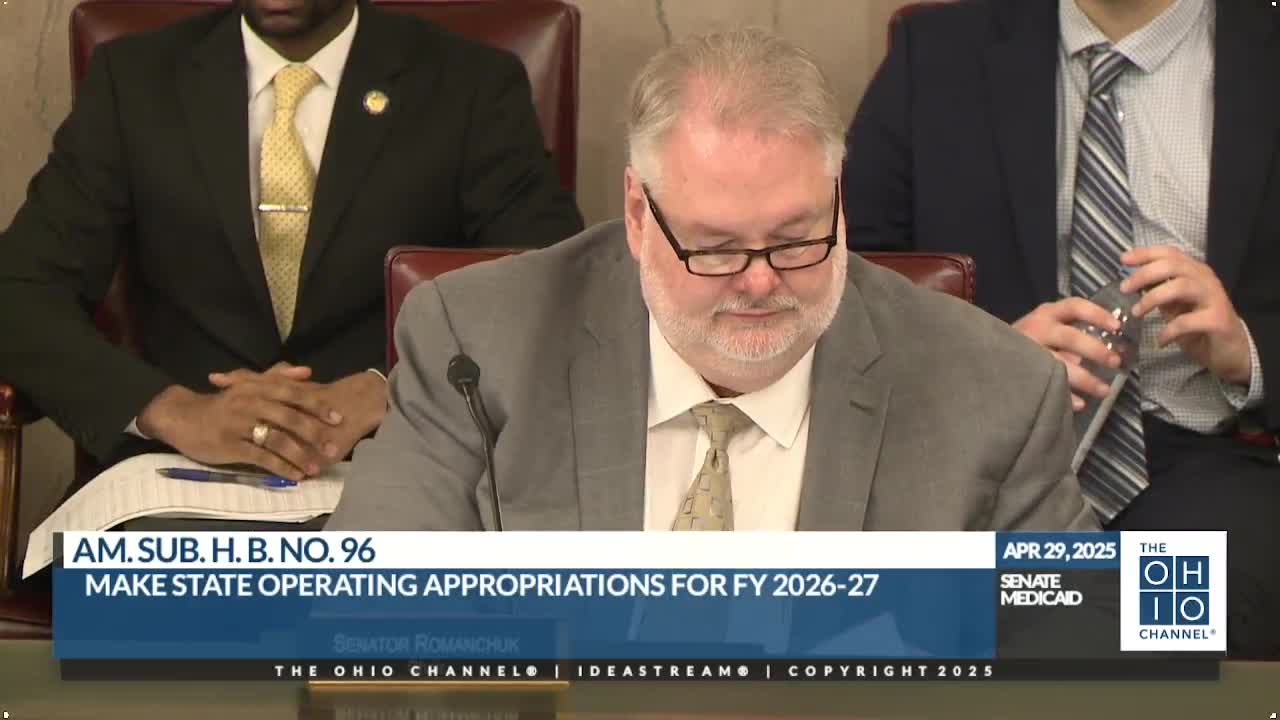
Kevin Miller, director of Opportunities for Ohioans with Disabilities (OOD), presented the agency’s 2026–27 budget request and performance metrics to the Senate Medicaid Committee, saying the budget would continue workforce and education supports that, he said, yield higher employment for Ohioans with disabilities.
Miller told senators that in federal fiscal year 2024 OOD provided services to more than 42,000 Ohioans — an increase of about 14.8% from the prior year — and that outcome metrics place Ohio among the top states in several measures of vocational rehabilitation success. He said 59.4% of individuals who exited the program were still employed one year later and nearly half of those enrolled in training programs earned a credential.
The agency seeks state investment of $43.9 million in general revenue for the biennium to continue programs and leverage a federal match, Miller said. He described several programs funded or expanded in the last biennium: Jobs for Recovery (supporting court‑involved individuals with mental‑health or substance‑use disorders), Employment First (a partnership with the Ohio Department of Developmental Disabilities), the Ohio transition support partnership for students, and a division that performs federally funded disability determinations.
Miller said OOD invested about $14 million in post‑secondary educational expenses for students in the most recent fiscal year and launched a branded mobile unit that has attended events in underserved and rural communities to connect job seekers to services. “Our rehabilitation services are getting results for Ohioans with disabilities,” Miller said.
On federal funding issues, Miller said the agency continues to process disability determinations within target timeframes despite national staffing changes at federal regional offices, and noted uncertainty in Washington could affect federally funded parts of OOD’s work. He described barriers that remain between Social Security benefit determinations and vocational rehabilitation referrals, saying the federal process can limit direct referrals even when state services could help.
Miller asked the committee to support the budget investments to expand credentialing and long‑term supports rather than focusing solely on entry‑level placements. The committee asked clarifying questions about federal interactions, continuous eligibility implications and whether new state GRF increases are primarily intended to support credentialing and long‑term services; Miller said the requested increases support continued full federal drawdown and more credentialing opportunities.