Get Full Government Meeting Transcripts, Videos, & Alerts Forever!
Get email alerts on the Hospital Financing topic
No spam. Unsubscribe anytime.
Ohio Medicaid hospital financing package would expand hospital fees, tighten 340B eligibility
Summary
The Ohio Department of Medicaid outlined a hospital financing package that would raise the hospital franchise fee and create standardized state-directed payments for hospitals while seeking to curb growth in non-rebatable drug spending tied to 340B participation.
The Ohio Department of Medicaid outlined a hospital financing package that would raise the state—s hospital franchise fee and create a standardized set of state-directed payments for hospitals, while limiting some hospital participation in the 340B drug discount program.
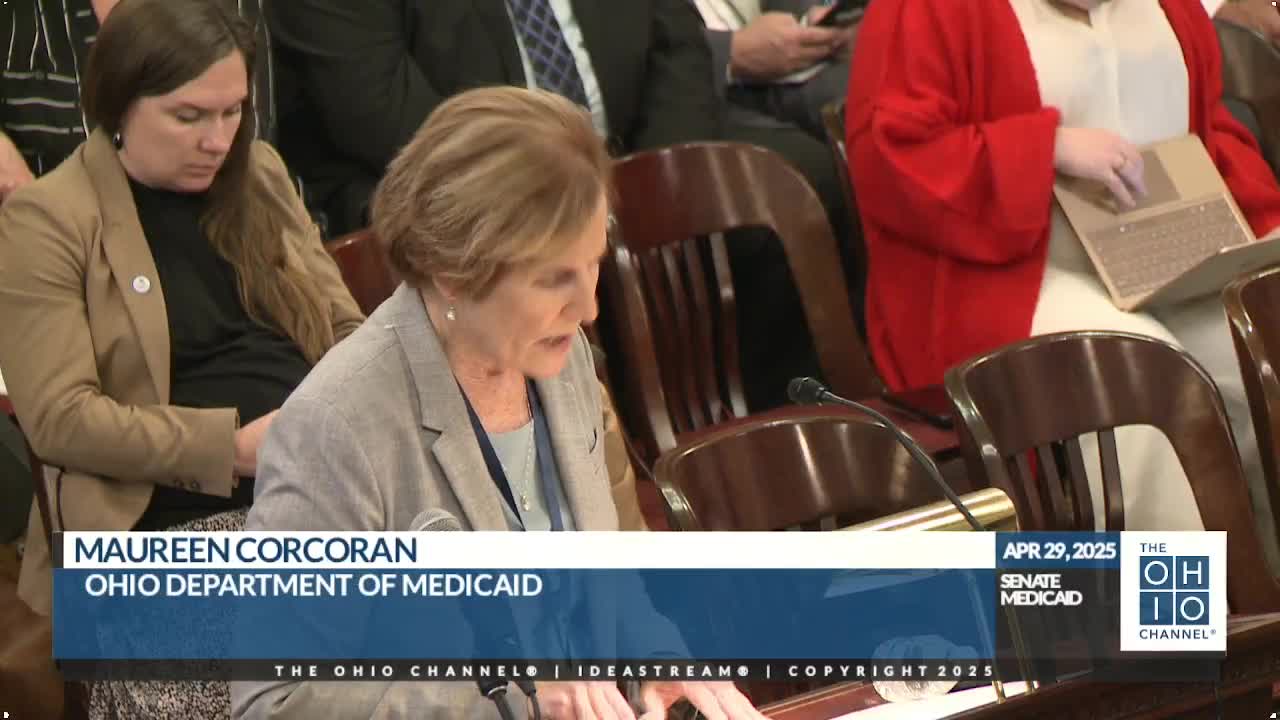
The package, presented by Medicaid Director Maureen Corcoran, would increase the franchise fee to generate roughly $900 million in new revenue in the first year and about $1 billion in the second year, the department said. That revenue would be matched with federal funds and split between state priorities and targeted hospital payments, with the administration proposing a 60/40 split between state-directed uses and hospital-directed funds.
Corcoran said the proposal also seeks to curb rapid growth in non-rebatable drug spending tied to hospital participation in the 340B program. "Our projections are that in 02/1927, we would be up to about $500,000,000 per quarter of non rebatable spend or a loss of $250,000,000 per quarter," Corcoran said, describing the potential annual erosion of manufacturer rebate revenue if participation patterns continue.
The administration proposes limiting contract pharmacy participation for certain hospital-based covered entities while allowing federally qualified health centers and similar traditional 340B entities to keep their contract pharmacy arrangements. Corcoran said that change would try to preserve federal rebate capture the state relies on to offset General Revenue Fund pressure.
Under the package, hospitals that seek state-directed payments would submit proposals that use a common set of metrics and standardized timeframes. Corcoran said the administration and hospitals agreed to group projects into three "buckets" (physician services, inpatient/outpatient services and children—s outcomes) to streamline audits and monitoring. The department said roughly 47 hospitals had expressed interest in participating, and hospitals have asked that the money be targeted to priorities such as rural hospital support, obstetric care and behavioral health.
The proposal also includes a local-tax pilot for some rural counties seeking additional, locally raised intergovernmental transfers to leverage federal match; the department said that pilot would likely take longer to implement and might not start during this biennium.
Senators on the committee pressed Medicaid staff about program fairness and durability. "If there is not tax money, local tax money, public tax generated money, then there is no opportunity for this additional state directed payment option," Deputy Director Nick Strawn said, noting that hospitals must provide an intergovernmental transfer or other public funding to participate.
Corcoran and staff said the package is designed to be revenue-neutral for the state—s General Revenue Fund because the franchise fee dollars are matched; they also argued standardized metrics and conditions would protect the long-term viability of the payments and improve measurable quality outcomes.
The administration officials provided spreadsheets showing net impacts by hospital and said they would correct and publish a version that includes hospitals in some other existing programs. No committee vote occurred during the hearing.
The hearing did not produce a final policy change; the department said the package requires federal approval and further legislative action.
The administration asked legislators to weigh the tradeoffs of increasing fee-based revenues to shore up hospital finances while preserving federal rebate revenue that funds Medicaid services.