Get Full Government Meeting Transcripts, Videos, & Alerts Forever!
Get email alerts on the Public Safety Ordinance topic
No spam. Unsubscribe anytime.
Raymore council advances code changes tightening domestic assault, ID and neighborhood-vehicle rules
Summary
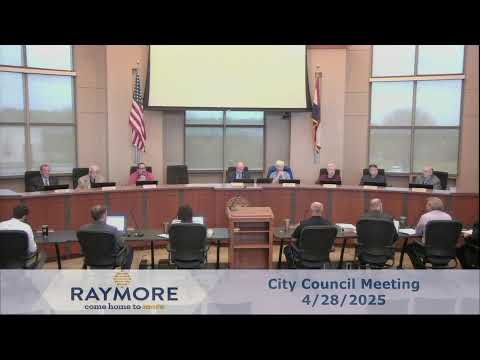
The Raymore City Council on April 28 gave first reading to Bill 3963, a package of amendments to the city's criminal and traffic code covering domestic assault enforcement, false-ID hindering prosecution provisions, neighborhood-vehicle rules, sidewalk/driveway obstruction, and vehicle equipment.
The Raymore City Council on April 28 gave first reading to Bill 3963, a package of amendments to the city's criminal and traffic code that staff said addresses five topics: domestic assault enforcement, false-identification/hindering-prosecution charges, operation and registration of low-speed neighborhood vehicles, obstruction of pedestrian access at driveways/sidewalks, and vehicle equipment requirements.
City Attorney Mark Zuhr (staff) told the council the changes break into five primary categories and provide clearer enforcement options for officers and municipal prosecutors. "Basically, it's adopting in provisions for jail time, fines, and required classes for those individuals who are found to be offenders of domestic assault," Zuhr said during his staff report. He added the amendments include updated definitions for domestic assault.
City Manager Fearborn said the revisions also add a new Class A misdemeanor for individuals who "refuse to give their name or date of birth or give a false report of their name or date of birth," a provision used to hinder prosecution.
The draft ordinance would also regulate low-speed neighborhood vehicles: it creates enforcement language to cite operators who lack a license or who are under the minimum age and permits revocation of a city-issued registration when violations occur. The code change would prohibit obstructing pedestrian travel across driveways or sidewalks and would remove an internal reference to chapter 307 to create a stand-alone provision governing vehicle equipment (lights and similar equipment).
Zuhr and staff thanked municipal court and code staff for formatting fixes in the draft ordinance. Council approved the first reading by unanimous roll call; additional readings would be required before final codification.
Why it matters: The changes give local law enforcement and municipal court clearer statutory language for enforcement in domestic assault cases, simplify prosecution of false-identification or hindrance, and create direct enforcement paths for issues related to neighborhood vehicles and pedestrian access.
Next steps: The ordinance passed first reading; staff and the city attorney indicated they would return for subsequent readings and final adoption.