Get Full Government Meeting Transcripts, Videos, & Alerts Forever!
Get email alerts on the Wildlife Management topic
No spam. Unsubscribe anytime.
USDA Wildlife Services requests $5,000 from Bonner County to fund local depredation response
Summary
A USDA Wildlife Services county representative asked Bonner County officials for $5,000 in operating support and described the agency’s local work on livestock depredation, beaver removal and other wildlife conflicts; the meeting record does not include a commission decision.
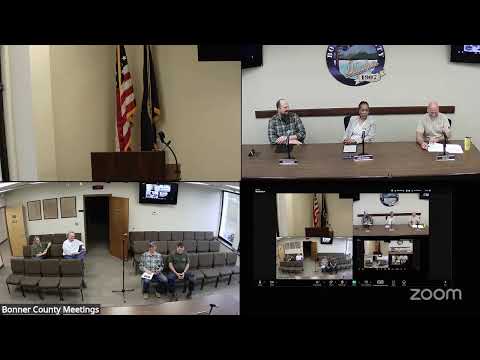
At a Bonner County meeting, a county representative for USDA Wildlife Services described the program’s local activities and asked county officials to increase a routine contribution to $5,000 for the coming year.
The request matters because the county contribution helps fund a federal wildlife specialist’s local response to livestock depredation, beaver-related road and culvert work, and preventive trapping. The representative told commissioners that the program is funded from multiple sources — federal and state funds, livestock head/wool taxes and county contributions — and that the county share helps cover a local district position’s wages, vehicle and fuel costs.
The county representative said the program “stays within our district,” noting the specialist travels widely and responds to calls across several northern counties. The representative added, “We’re requesting $5,000 as opposed to $4,” to reflect increased local use of the service. Shane, a USDA Wildlife Services specialist, identified his employer during discussion as the U.S. Department of Agriculture’s Wildlife Services (formerly called Animal Damage Control) and described when federal authority allows his unit to act directly on animals causing livestock depredation.
Speakers described how the service is typically requested: landowners or local fish-and-game offices refer incidents, and agricultural extension agents also make referrals; the USDA specialist said most referrals come through Fish and Game. The USDA specialist told the meeting that his role is focused on livestock depredations and public-safety situations rather than routine removal of wildlife not killing livestock. He said, "I can use a thermal for wolves, for lions, for bears, but only when they're killing livestock." He also recounted capturing and euthanizing two grizzly bears in past years that were causing problems, saying that removal addressed the immediate depredation in those cases.
Program staff and meeting participants discussed other services the specialist provides: preventive coyote control on ranches, beaver removal for county road crews to clear culvert blockages, and selective charged work for some urban or private requests (for example, a homeowner’s waterfront beaver removal). The representative said private trappers generally handle recreational or seasonal trapping, while the federal program focuses on depredation and emergency response.
Funding details and next steps were not resolved on the record. The representative said a written request for $5,000 had been submitted both to the county commissioners and to the county clerk. The transcript does not show a motion or vote by the commissioners at that meeting; no formal decision or appropriation appears in the recorded discussion.
The representative advised landowners to contact Fish and Game for referrals and said he often receives calls directly from ranchers and extension agents. He urged residents with ongoing or recent depredation problems to report incidents promptly so staff can confirm damage and respond.
Requests for county funding, the representatives said, are typically considered during the regular budgeting process. The meeting record ends with the representative offering to provide business cards and follow-up contact information to commissioners and staff.
(Reporting note: The meeting transcript used for this summary contains no recorded vote or formal county action approving or denying the $5,000 request.)