Get Full Government Meeting Transcripts, Videos, & Alerts Forever!
Get email alerts on the Healthcare Coverage topic
No spam. Unsubscribe anytime.
House committee backs bill to require insurer coverage for histotripsy for certain liver cancers
Summary
The House Insurance Committee reported House Bill 622 favorably with amendments after testimony from a rare-cancer specialist describing histotripsy as a noninvasive liver-directed therapy and insurers and regulators warning about guideline timing and fiscal effects.
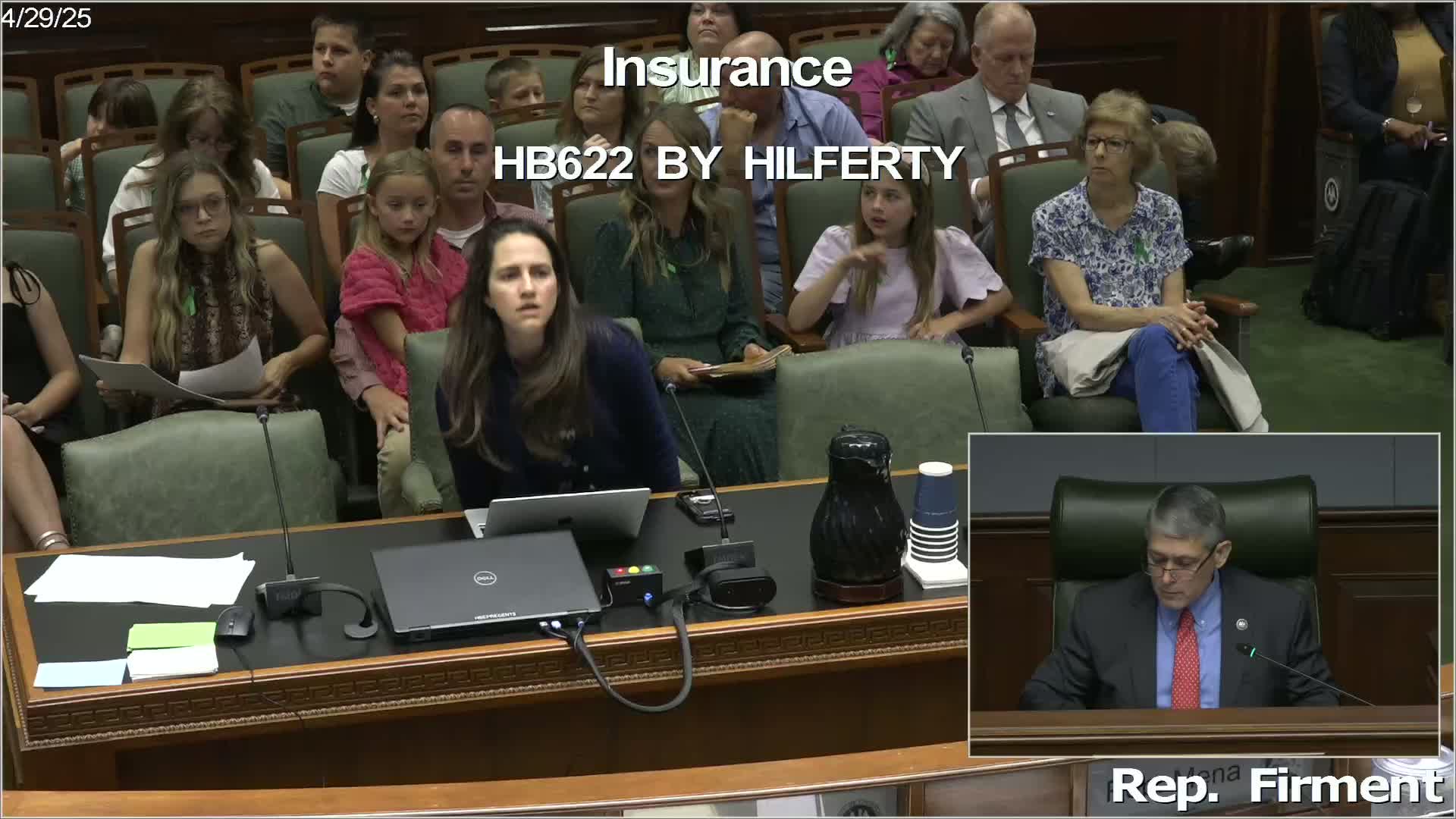
House Bill 622, which would require health-insurance coverage for histotripsy procedures in specified cases, was reported favorably from the Louisiana House Insurance Committee on April 29 after testimony from physicians, insurers and regulators.
Representative Sarah Hilferty introduced the bill and said the measure arose after constituent appeals and insurer denials. Hilferty said the procedure can be less invasive and less costly than standard liver surgery and that some patients had been denied access under current insurer medical policies.
Dr. Mary Maluccio, neuroendocrine cancer specialist at East Jefferson General Hospital, described the institution’s experience offering histotripsy. “We have done, since we’ve had it probably for around nine months, we’ve done around 44 cases. We haven't had a single patient require hospitalization,” Dr. Maluccio told the committee. She said histotripsy is nonthermal and not radiation-based, and that the technology has been approved by FDA and by CMS for some uses but is not yet widely incorporated into national clinical practice guidelines.
Jeff Drazda of the Louisiana Association of Health Plans said plans generally follow nationally recognized clinical practice guidelines—for example National Comprehensive Cancer Network (NCCN) guidance—and independent review organizations (IROs) routinely find procedures investigational when guidelines aren’t yet updated. Frank Opelka of the Louisiana Department of Insurance told the committee the department assigns appeals to independent review organizations; a standard appeal takes about 15 days, an expedited appeal two to three days. Opelka said most denials for this procedure were sustained because national guidelines do not yet list it as standard care.
Hilferty offered and the committee adopted an amendment package (Amendment Set 1791) that (1) lists diagnostic criteria to define covered cases, (2) extends the coverage requirement into Medicaid for enrollees who meet the criteria, and (3) phases application so new policies issued on or after Jan. 1, 2026, must comply and existing policies must conform by Jan. 1, 2027. The committee chair ordered the bill reported with the adopted amendments.
Why it matters: Committee members and clinicians said the bill is intended to close a gap where FDA- or CMS-approved, less-invasive options are not being covered because national guidelines lag. Insurers cautioned that adding coverage requirements before guidelines and broader evidence exist can raise premium costs and urged continued industry–physician dialogue; physicians urged faster, clearer appeal timelines for time-sensitive cancers.
What’s next: HB 622 will go to the House floor for further consideration with the adopted amendment set. The committee record includes multiple stakeholder offers to continue negotiations on implementation details.