Get Full Government Meeting Transcripts, Videos, & Alerts Forever!
Get email alerts on the Judicial Review Deference topic
No spam. Unsubscribe anytime.
Committee advances bill to remove judicial deference to agency statutory interpretations
Summary
House Bill 99 would require judges and hearing officers to interpret statutes and rules de novo rather than deferring to agency interpretations; committee members debated checks and balances, potential impacts on specialized agencies and the role of expert testimony before voting to report the bill favorably as amended (9–1).
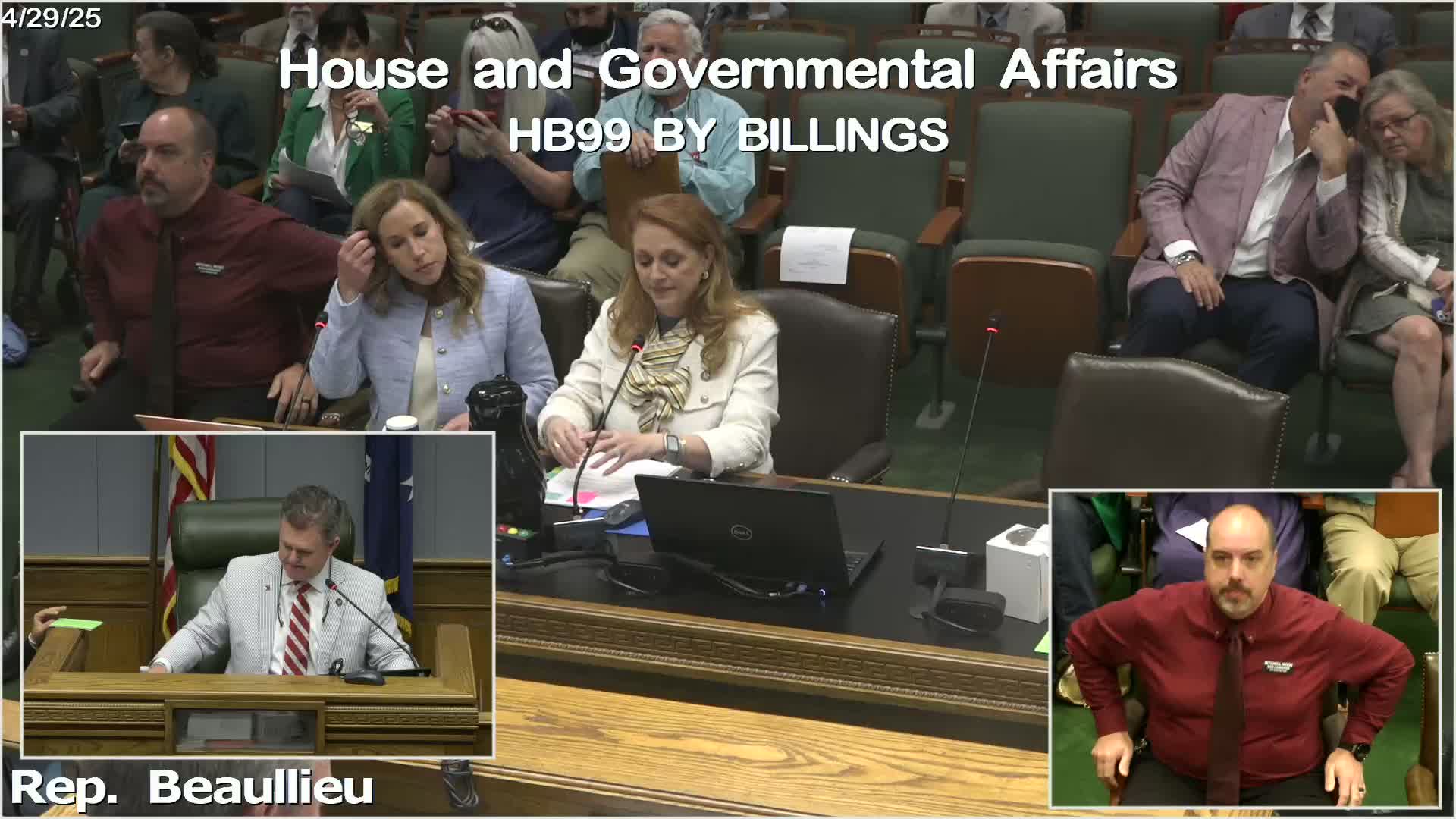
The House Committee on House and Governmental Affairs voted to report House Bill 99 favorably as amended on April 29, 2025, after extended debate over judicial deference to administrative agencies.
Representative Billings, the bill sponsor, described HB 99 as a change to how courts review agency interpretations during adjudications and judicial review. Under the proposed law, judges, administrative hearing officers and courts would not give deference to an agency’s statutory or regulatory interpretation; instead, they would review such interpretations de novo, meaning from the beginning. Representative Billings said the change follows the U.S. Supreme Court decision he cited as “Loper, Bridal,” which he described as overruling Chevron-style deference and restoring independent judicial judgment.
The committee debated the practical effects of removing deference. Vice Chair Lyons and Representative Newell asked how judges would compensate for technical expertise agencies currently provide through testimony. Supporters, including the Pelican Institute’s Sarah Harbison, said courts could still hear expert testimony and receive agency evidence — the change would simply prevent courts from giving agencies a built‑in advantage. Opponents and skeptical members cautioned that some agency decisions involve highly specialized or sensitive matters (for example child welfare or medical regulation) where agency expertise can matter to protect vulnerable people.
Representative Billings offered a set of amendments (amendment set 1190) during committee consideration; members adopted the technical and substantive changes, including one that removed a specific prohibition that had previously prevented agencies from appealing adjudications (the amendment instead removed the blanket prohibition so agencies could appeal generally). Representative Billings also explained an amendment that would prevent a decisionmaker that issued a contested administrative order and then sat as the adjudicator on appeal from later appealing that same decision — a measure the sponsor said was intended to prevent unfair self-appeal in rare boards that act as both prosecutor and adjudicator.
After debate, the committee called the roll. The transcript records nine yeas and one nay; Representative Newell voted no and the bill was reported favorable as amended.
Supporters characterized the bill as restoring the judiciary’s independent role and increasing transparency and accountability; critics warned the change could invite inconsistent judicial rulings and complicate cases that rely on agency technical expertise. The bill will proceed to the House floor with the committee’s amendment set.