Get Full Government Meeting Transcripts, Videos, & Alerts Forever!
Get email alerts on the Dana Bussard Retrospective topic
No spam. Unsubscribe anytime.
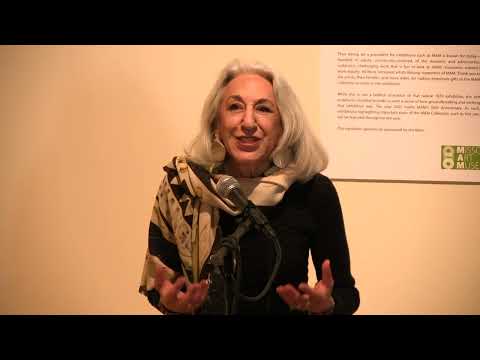
Artist Dana Bussard reflects on 50 years of work at Missoula Art Museum program; upcoming exhibit planned
Summary
Artist Dana Bussard spoke about her career, early exhibitions that helped found a Missoula museum, public commissions, and an upcoming fall photographic project. Laura Millen introduced the program and recalled the museum’s grassroots origins.
Artist Dana Bussard recounted her career, early exhibitions and activism, and several public commissions during a public program introduced by Laura Millen at the Missoula Art Museum.
“From day 1, that's the kind of people we were,” Bussard said of her collaborators during the 1960s and 1970s. The artist described how a grassroots effort that included the Missoula Festival of the Arts led to early purchases that became the museum’s first objects and how a show in an empty Carnegie library helped crystallize the idea of a local museum.
Bussard traced her career from an MFA program in the late 1960s through a period in New York, public-art commissions and a long record of exhibitions. She described early political activism (an artist group she called GASP — “Gals against smog and pollution”) and recalled working with fellow artists Nancy Erickson and Leila (surname given in remarks) to create opportunities for women artists in Missoula. Laura Millen noted those early, grassroots efforts also involved a county mill levy that provided initial support for the museum’s governance.
Bussard described several large public works and projects included in her long career. She said she created a 27-foot piece for the University of Oregon in 1970, later completed a 50-foot commission for Boise City Hall, and produced a multi-piece installation at the airport in Anchorage that included fourteen 10-foot-high panels. She also described a studio fire that damaged and scorched earlier pieces and the process of restoring or reworking work for the current show.
Bussard spoke about materials and process: sewing machines and fabric were central to much early work; later periods produced smaller pieces when she lived in tighter quarters and larger works again when she returned to Montana and had more studio space. Audience members asked about specific parts of the exhibition and about Bussard’s technique; she invited attendees to inspect the works and the exhibition catalog for further detail.
She also recounted controversy around a stained-glass commission for Christ the King Catholic Church in Choteau: she said her family paid for a set of fourteen windows depicting a series she described as the “seven days of creation,” and that some parishioners criticized the nontraditional treatment before the pastor, she said, supported the project.
Millen acknowledged Bussard’s late husband, Stan Bridal, as a frequent collaborator and essential part of her career. Bussard said of him, “I would not be where I am today without him.” She described him as a designer who helped with stretching, framing, packing and installing large works and as a partner in the practical work of exhibiting art.
Bussard announced an upcoming fall exhibit at the library with photographer Stan (credited as photographer in her remarks) titled Like Mother, Like Daughter. She described the photographic project as responding to a large show on hate and white supremacy; Bussard said the project will include staged photographs showing a progression from innocence to painted bodies covered with hateful texts. She said the project is scheduled for display in the fall; no precise opening date or admission details were provided at the program.
The event concluded with audience questions about technique, collaboration and the history of the pieces. Bussard repeatedly invited attendees to examine the catalog and the works on display for additional context.