Get Full Government Meeting Transcripts, Videos, & Alerts Forever!
Get email alerts on the Traditional Chinese Medicine History topic
No spam. Unsubscribe anytime.
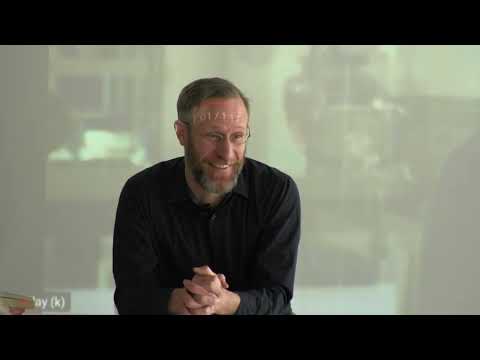
Gavin McClure traces history and practice of Chinese medicine in Missoula lecture
Summary
Acupuncturist Gavin McClure gave a roughly 84-minute public lecture in Missoula outlining the historical origins, philosophical roots and key practices of Chinese medicine, promoted an upcoming hands-on class at Good Medicine Clinic, and answered audience questions about acupuncture and herbs.
Gavin McClure, an acupuncturist and Chinese medicine practitioner at Good Medicine Clinic in Missoula, told a Saturday morning audience that “history is not simply the study of the past. It is an explanation of the present,” and used that line to introduce a lecture tracing Chinese medicine from animistic origins through classical texts to modern practice.
The lecture reviewed major historical periods and texts—including the Huangdi Neijing (Yellow Emperor's Inner Classic), the I Ching, the Shang Han Lun and the materia medica attributed to Shennong—and outlined how Chinese ideas about seasons, yin-yang and meridians shaped acupuncture, herbalism and related therapies. McClure described the meridian system, moxibustion and the development of acupuncture needles, and discussed later developments such as the compendium work associated with Li Shizhen and the codification of Traditional Chinese Medicine (TCM) in the 20th century.
McClure said the lecture series is sponsored by Good Medicine Clinic and recorded by MCAT. He announced a hands-on class focused on practice, including acupuncture, moxibustion and herbs, to be held at Good Medicine; he initially mentioned May 29 as the date but later corrected that the next practical class would be April 29. He said the practical session carries a $20 supplies fee and that recordings of the lecture and the next session will be posted on MCAT’s YouTube channel.
The presentation included philosophical context: McClure summarized animism (the idea that landscape and ancestors are animate), Daoist and Confucian influences on Chinese thought, and how those worldviews informed medical approaches that emphasize patterns, seasonal cycles and individualized treatment. He described the historical roles of itinerant practitioners, the influence of Buddhism and Silk Road exchanges, and 20th-century political shifts in China that altered how Chinese medicine was taught and institutionalized.
During a brief question-and-answer period, an audience member asked whether acupuncture was effective for heroin addiction. McClure replied, “what auricular acupuncture does is it helps to reduce the cravings,” and described its role in lowering stress and sympathetic nervous-system activity. He also recommended consulting a trained practitioner before using herbs or formulas, noting that herbs can be potent and must match an individual’s constitution.
McClure cited a mix of scholarly and popular sources in his bibliography and named practitioners and historians such as Liu Ming and Paul Unschuld. He closed by reminding attendees that the next lecture will cover theory — yin-yang and five-element concepts — and that the recording would be available online.