Get Full Government Meeting Transcripts, Videos, & Alerts Forever!
Get email alerts on the Transportation Access Medical Tourism topic
No spam. Unsubscribe anytime.
Tour operator says taxi service gaps hurt visitors; MediCab owner warns new carrier could harm medical transport
Summary
At the Montana PSC hearing in Missoula, a local tour operator said tourists often cannot rely on taxi service at peak times and has lent business vehicles to clients; MediCab owner testified that granting authority to Green Taxi would harm his medical-transport business and could reduce capacity for non-emergency medical trips.
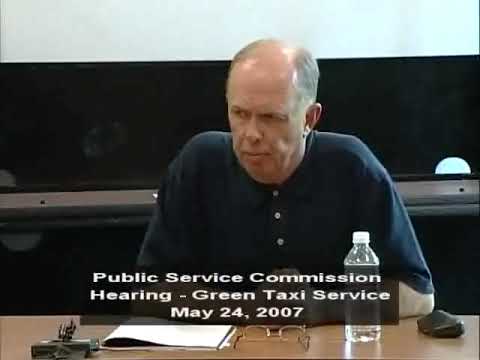
Two witnesses offered contrasting perspectives on Missoula’s taxi market at the May 22 hearing before the Montana Public Service Commission.
Nate Fairchild, owner of Lewis and Clark Trail Ventures, told commissioners his company carries roughly 2,000 tourists a year and that many arriving visitors rely on local taxi service at peak hours. “We get back to town 5, 6:00. During the day they're always asking… so we suggest areas and towns to go to and, we try to get Yellow Cab over to our place to pick up guests,” Fairchild said. He said guests will not wait 35–45 minutes for a cab during dinner and that, as a result, he sometimes lends tour vans to customers, which he described as an inconvenient but necessary workaround.
Brian Parks, owner-operator of MediCab and Malibu Express Taxi, testified that his company transports non-emergency medical and wheelchair passengers and that a grant of authority to Green Taxi would reduce his revenue and the number of vehicles available to serve medical trips. Parks said roughly 90% of MediCab’s customers are served under contracts with government agencies and that his company has added vehicles and wheelchair services in response to demand. “There would be harm in the general public” if his fleet were reduced, Parks said.
Parks also said non-wheelchair sedan providers who meet the state's qualifications can secure those contracts, but he warned that if a new carrier entered the medical-appointment market it would conflict with his authority and business. Both witnesses were asked whether existing carriers could meet additional demand; Fairchild said one vehicle from a new entrant would be “better than none,” while Parks said existing carriers could meet needs but that direct competition for medical trips would cause harm to his operation.
The commission did not render a decision at the hearing; it set a schedule for briefs and closed the day’s testimony.