Get Full Government Meeting Transcripts, Videos, & Alerts Forever!
Get email alerts on the Higher Education topic
No spam. Unsubscribe anytime.
House panel hears bill to standardize dual-credit pathways for agriculture, forestry and natural resources
Summary
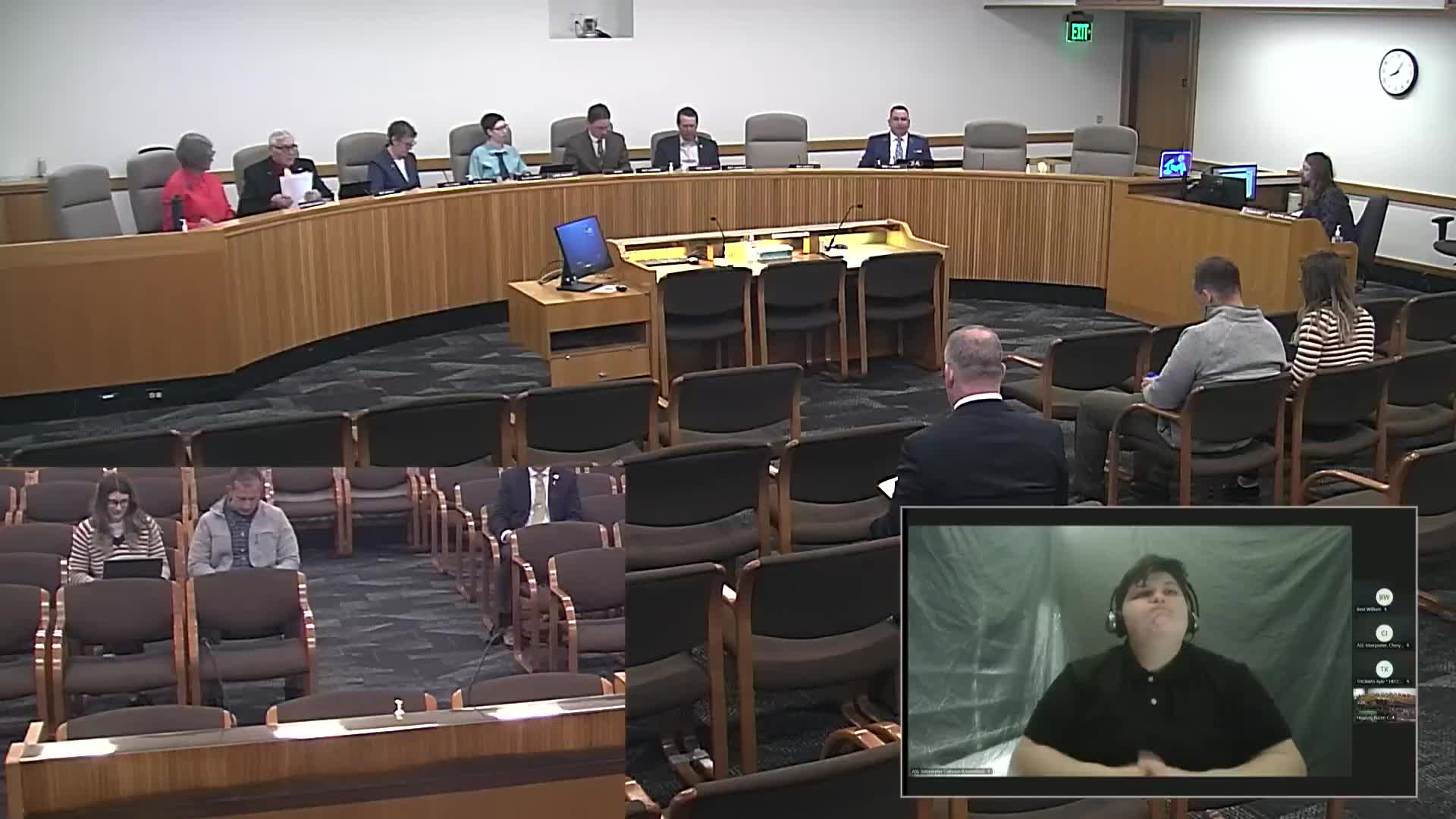
Senate Bill 784, which would direct the Higher Education Coordinating Commission to develop statewide standards for dual‑credit programs in agriculture, forestry and natural resources, drew support and questions during a public hearing before the House Committee on Higher Education and Workforce Development on April 29.
Senate Bill 784, which would direct the Higher Education Coordinating Commission to develop statewide standards for dual‑credit programs in agriculture, forestry and natural resources, drew support and questions during a public hearing before the House Committee on Higher Education and Workforce Development on April 29.
Proponents told members the bill aims to make college credit earned in high‑school agricultural and natural‑resource programs more uniformly accepted across Oregon. Jake Pelroy, chief of staff to Sen. Todd Nash, said SB 784 “specifies a statewide standard that that allows students participating in agricultural forest forestry and natural resource programs to follow an aligned educational pathway to college degree and credential.” Representative Bobby Levy added the bill would expand access to “practical, career oriented education that keeps Oregon’s economy strong.”
The bill’s supporters included Chloe Holler of the Associated Oregon Loggers, who said the organization and a natural‑resource coalition back the effort and pointed committee members to written testimony. Kyle Thomas, director of legislative and policy affairs at the Higher Education Coordinating Commission (HECC), told the committee that HECC already maintains general dual‑credit standards that govern how courses are developed and administered and that faculty must meet the qualifications required by the college offering credit.
Committee members pressed on how the bill would change current practice and whether it would create new obligations. Representative Fingerh McDonald and Representative Ragland noted dual credit arrangements already exist where high schools and community colleges partner, and asked whether SB 784 creates a “should” or “must” requirement. Thomas said HECC does not view the bill as giving career‑technical organizations an automatic “inside track” for credit and that the bill would not change HECC’s current standards. He also said HECC does not expect a staffing impact from the bill.
Several lawmakers raised access issues. Committee members and witnesses identified two primary impediments to wider availability of dual‑credit technical programs: local funding to support courses and a shortage of qualified instructors at the high‑school level. Representative Fragula and others cited examples where community colleges and universities already partner successfully with some districts—Eastern Oregon University and Blue Mountain Community College were named as partners in District 58—but said access is uneven across the state.
The hearing record shows no committee vote on SB 784; the committee opened and closed the public hearing and did not take formal action on the bill during the session.
The bill passed the Senate nearly unanimously, according to testimony, and backers asked the House committee for its support.
If approved and implemented by HECC, supporters say, the measure is intended to give students—particularly in rural and natural‑resource dependent communities—clearer pathways to postsecondary credentials that feed regional workforce needs.
No formal committee direction to staff or a vote was recorded during the hearing.