Get Full Government Meeting Transcripts, Videos, & Alerts Forever!
Get email alerts on the Employment Access topic
No spam. Unsubscribe anytime.
Bill would codify "employment first" policies, require employment data and ban sheltered work settings for people with IDD
Summary
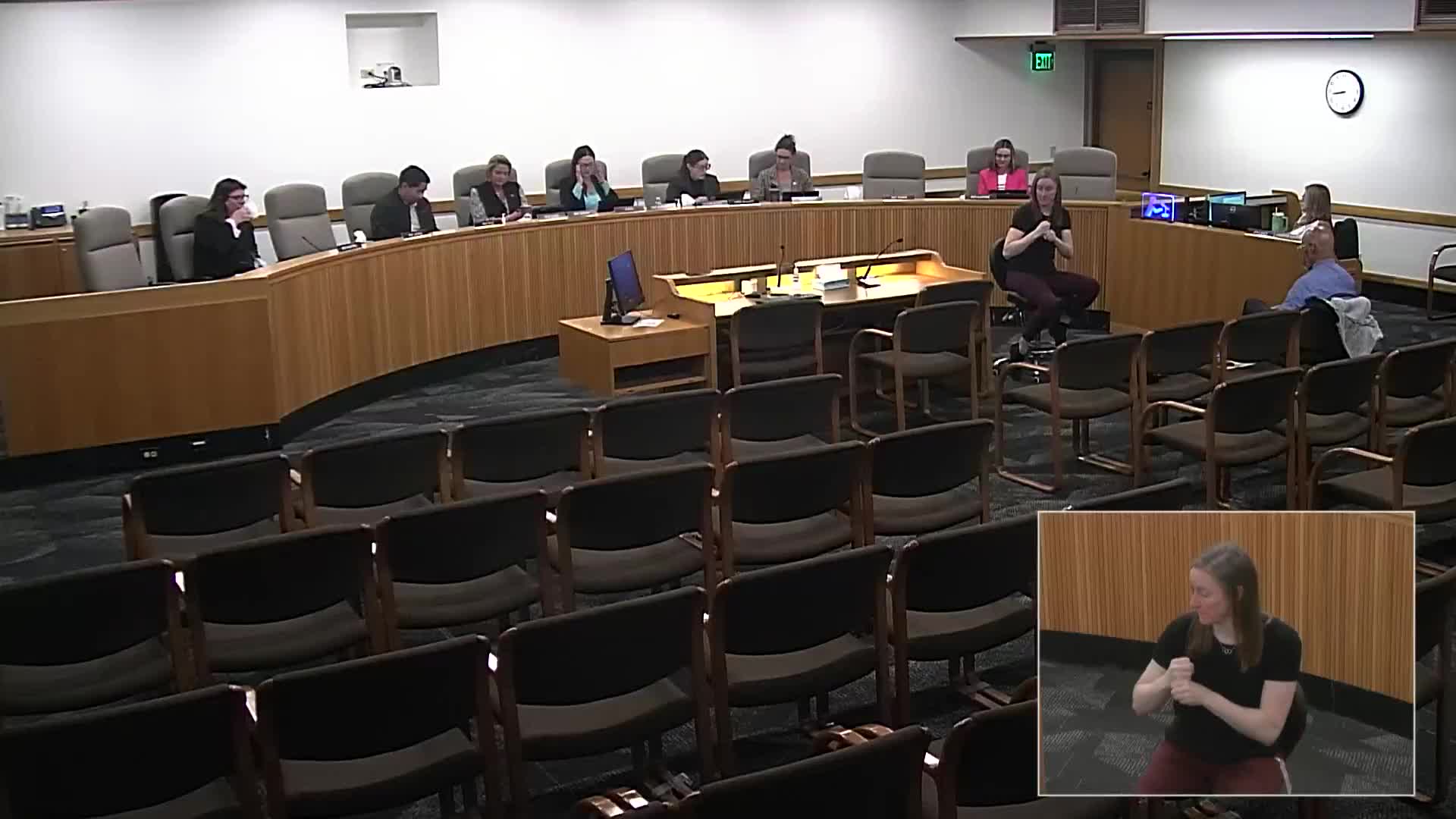
The House Committee on Early Childhood and Human Services held a public hearing April 29 on Senate Bill 810, which would require state agencies to adopt "employment first" policies for people with intellectual or developmental disabilities and to collect and report employment outcome data.
The House Committee on Early Childhood and Human Services held a public hearing April 29 on Senate Bill 810, a measure that would codify Oregon's "employment first" approach by directing the Department of Human Services (DHS) and the Department of Education (ODE) to appoint statewide and regional advisory committees, collect annual employment outcome data, and ensure employment services aim for competitive integrated employment rather than sheltered work settings.
Dana Hittle, interim director of the Office of Developmental Disability Services at DHS, told the committee the bill "will ensure that Oregon continues to prioritize competitive integrated employment for Oregonians with intellectual and developmental disabilities, building on a decade of work." Hittle reviewed the history behind the proposal, noting that a 2012 lawsuit, Lane v. Brown, and its settlement prompted a shift away from sheltered workshops toward services that support work in integrated community settings at competitive wages.
Why it matters: Supporters said codifying the policy prevents a rollback to sheltered, segregated work settings and keeps state agencies accountable for employment outcomes. Hittle said the measure describes work that is already funded in DHS's continuing service level budget and that the bill is intended to "ensure the investment and progress that we have made are codified into law and will help us continue to build on the progress made over the last decade." The bill also directs DHS to collaborate with other agencies to establish a "state as model employer" program and to annually report employment outcome data to the state advisory committee.
Committee members asked how codification differs from existing practice and whether enshrining services in statute creates new legal or fiscal obligations. Representative McIntyre and others asked why a statute was necessary if the work is already budgeted; Hittle replied the statutory language is intended to prevent backsliding amid uncertainty in federal and state funding streams. When asked whether codification could expose the state to legal risk if Medicaid funding were lost, Hittle said she would consult the Department of Justice and could not provide a legal opinion during the hearing.
The committee also discussed the meaning of "sheltered" versus person‑centered placements. Hittle described sheltered workshops as settings that historically isolated workers with disabilities from the broader community and paid sub‑minimum wages; she said the bill does not prohibit person‑centered placements that an individual requests and where the person has access to non‑disabled peers and choice.
No formal committee vote was recorded after the hearing; the public hearing was closed and the committee moved on to other business.
Ending: Supporters framed SB 810 as a statutory guardrail to preserve a decade of policy change toward integrated employment; committee members pressed the administration on reporting, the proposed "state as model employer" program and potential fiscal and legal implications, and Hittle offered to provide additional written details.