Get Full Government Meeting Transcripts, Videos, & Alerts Forever!
Get email alerts on the Health Access topic
No spam. Unsubscribe anytime.
Bill would bar public bodies from denying mental‑health care to people with intellectual or developmental disabilities
Summary
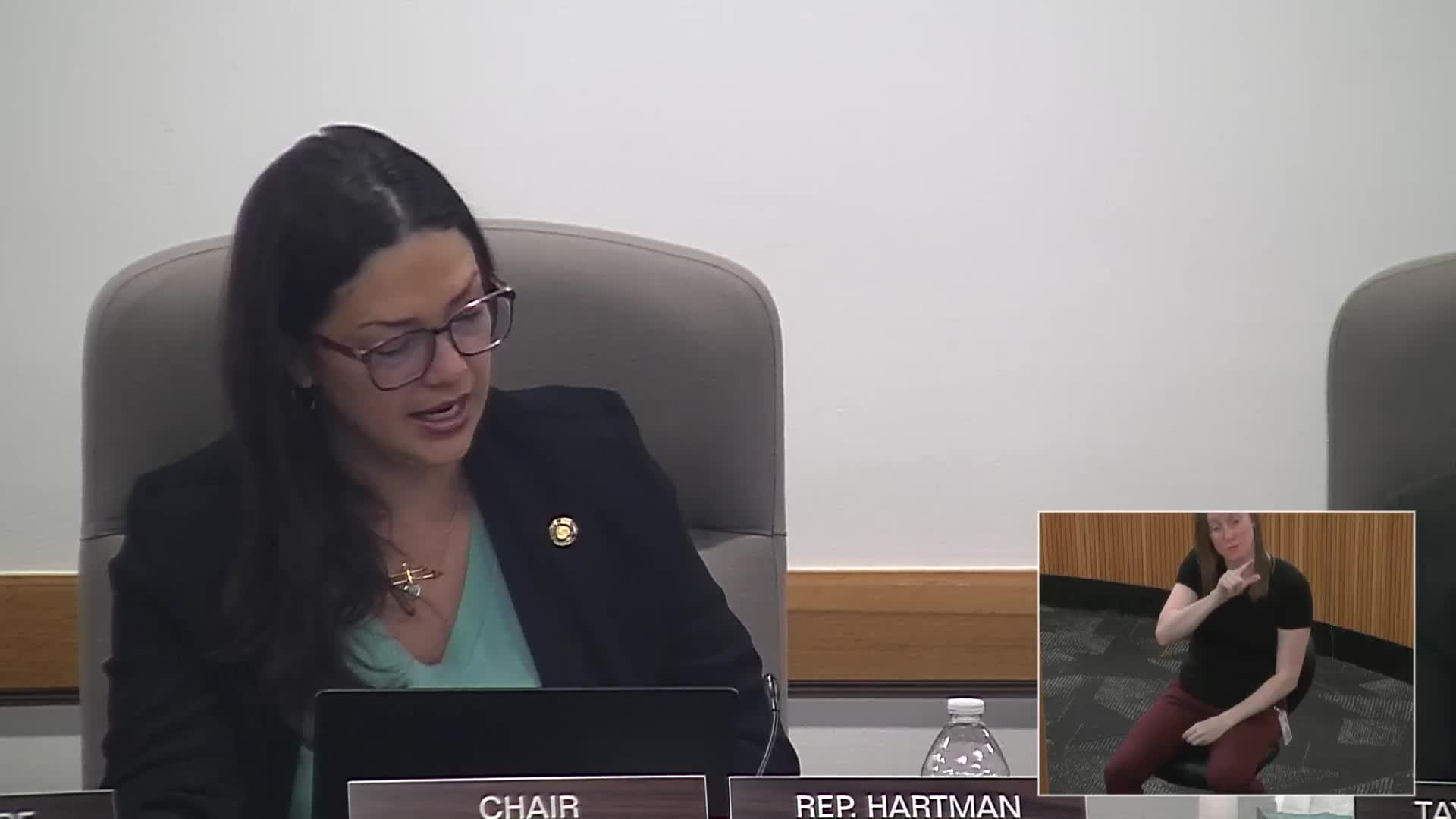
The House Committee on Early Childhood and Human Services held a public hearing April 29 on Senate Bill 729, which would prohibit public bodies from denying access to mental‑health services solely because an individual has an intellectual or developmental disability and would extend protections to all ages.
The House Committee on Early Childhood and Human Services opened a public hearing April 29 on Senate Bill 729, a measure that would expand an existing prohibition on denying mental‑health services to people with intellectual or developmental disabilities to all public bodies and to all ages.
Supporters say SB 729 would close a gap that leaves many adults with intellectual or developmental disabilities (IDD) unable to get mental‑health care. "Intellectual disability is a natural part of the human experience," said state senator Sarah Gelster Bluhin, the sponsor, recounting years of constituent reports and a personal family crisis to illustrate how people with IDD can be denied care. "You can't just say we won't treat you because you have an intellectual or developmental disability." The bill would extend the current prohibition — which applies to the Oregon Health Authority, education providers, licensed medical providers, community mental health programs and coordinated care organizations — to all public bodies and remove the current age cap that limits the rule to individuals up to age 21, according to the committee summary presented to the panel.
Why it matters: Testimony from disability advocates and provider groups said denial of care can produce worse medical outcomes and unnecessary crises. Elise Brown of Oregon Community Brokerages, reading testimony from executive director Katie Rose, told the committee the bill "opens the door for learning and discovery for both patients and practitioners." Matthew Sears of the Oregon Developmental Disabilities Coalition cited a study that found "stigma and discrimination against individuals with IDD and mental health conditions can create barriers to accessing quality crisis management services."
Committee members probed practical concerns. Vice Chair Scharf and Representative Elmer asked whether the bill's wording — which committee members discussed using "may not deny" in some sections — would create a workable expectation for providers that lack training or capacity. Gelster Bluhin and panelists said the purpose is to set a clear expectation and to push institutions to build capacity, not to require a provider to perform procedures outside its licensed scope. As Gelster Bluhin put it, the law would not force, for example, a pediatrician to perform open‑heart surgery; it would bar a provider from refusing to assess or treat a condition within their professional scope solely because the patient has an IDD diagnosis.
Panelists and legislators discussed existing resources and gaps: several witnesses noted there are specialists and psychiatric nurse practitioners who do treat people with IDD but that those clinicians are not available uniformly across the state. The committee also heard that federal civil‑rights law — specifically Section 504 of the Rehabilitation Act — already prohibits discrimination on the basis of disability; supporters said SB 729 restates that principle in state law and extends enforcement expectations to a broader set of public bodies.
No formal vote occurred during the hearing. The committee closed the public hearing on SB 729 after receiving testimony and questions and will consider next steps in future committee work.
Ending: Supporters framed SB 729 as an initial, targeted change intended to remove a categorical refusal to treat people with IDD and to prompt further work on training and capacity; committee members sought clarifications about implementation, enforcement and how the state would support smaller or rural providers in meeting the expectation.