Get Full Government Meeting Transcripts, Videos, & Alerts Forever!
Get email alerts on the Homelessness And Public Safety topic
No spam. Unsubscribe anytime.
Salem council advances amendment to camping ordinance after heated public testimony
Summary
After extensive public comment opposing changes, the Salem City Council voted to advance amendments to chapter 24, section 31 (the city's camping ordinance) for first passage as amended. Supporters said changes give the city tools for public-safety responses; opponents said the changes would criminalize people experiencing homelessness.
Salem City Council moved the proposed amendments to the city's camping ordinance (chapter 24, section 31) forward for first passage on a vote after a lengthy public-comment period in which multiple speakers urged the council to reject or rethink the changes.
Why it matters: The amendments alter how the city defines when shelter is available and what personal property qualifies as "eligible property" during enforcement actions. Supporters said the changes add clarity and enforcement tools for safety-critical situations; opponents and multiple public speakers said they narrow protections for people experiencing homelessness and risk pushing people into more dangerous situations.
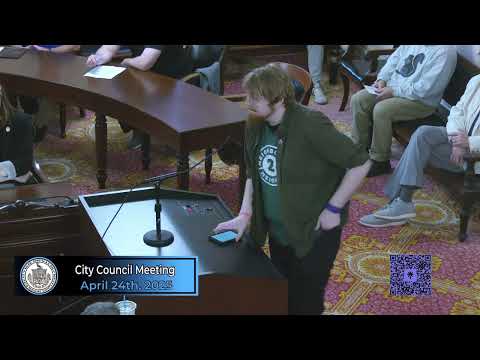
Public comment: More than a dozen speakers used the meeting's public-comment period to oppose the draft changes. Caitlin Halapa, who identified herself as a Salem resident, said the city should instead focus on housing supply and mounting economic distress. "Where are they supposed to go?" she asked, warning that job losses will increase homelessness.
Resident Trevor Baum said the amendments, "while framed as public safety measures will significantly harm our unhoused neighbors by narrowing protections and expanding punitive enforcement." Pamela Geyser urged the council to "please prove your humanity, vote no on the amendment to section 24 31 of Salem's camping ordinance and instead focus resources on informing all of our neighbors about available shelter, meals and other basic human necessities." Skyler Clark said cutting the required notice before removal from 72 hours to 12 hours was "needlessly cruel," adding that the city currently lacks enough shelter beds.
Committee report and council action: Councilor Brian Cohen reported that the Council's Committee on Public Health, Safety and Environment, co-posted with the Committee of the Whole, considered the mayor's proposed language and accepted most changes 4'to'1, while reversing a proposed modification to the personal-property definition. Cohen told the council the committee directed city departments (including the solicitor, police, fire and health inspection services) to draft regulations to determine when a campsite constitutes a public-health or safety hazard; those regulations will be published when completed and potentially returned to the council before second passage.
On the council floor, the measure advanced for first passage "as amended," carrying after the committee changes. The transcript does not include a complete roll-call tally for the final first-passage motion; the detailed vote count was not specified in the meeting record provided.
What was not decided: The council advanced the ordinance for first passage; additional amendments and the second-passage vote (final adoption) will follow later. The committee indicated it may publish regulatory guidance defining when encampments are public-health or safety hazards prior to the next council vote.
Context: Councilors and members of the public repeatedly emphasized the limited local authority to solve homelessness alone and urged more state and federal support. Several speakers credited existing local services (including a transition center and outreach teams) while warning that fewer beds and stricter enforcement would displace people without housing alternatives.
Next steps: The ordinance will return for further consideration and a second-passage vote after the committee and city staff complete the promised implementing regulations and any additional amendments.