Get Full Government Meeting Transcripts, Videos, & Alerts Forever!
Get email alerts on the Fisheries Governance topic
No spam. Unsubscribe anytime.
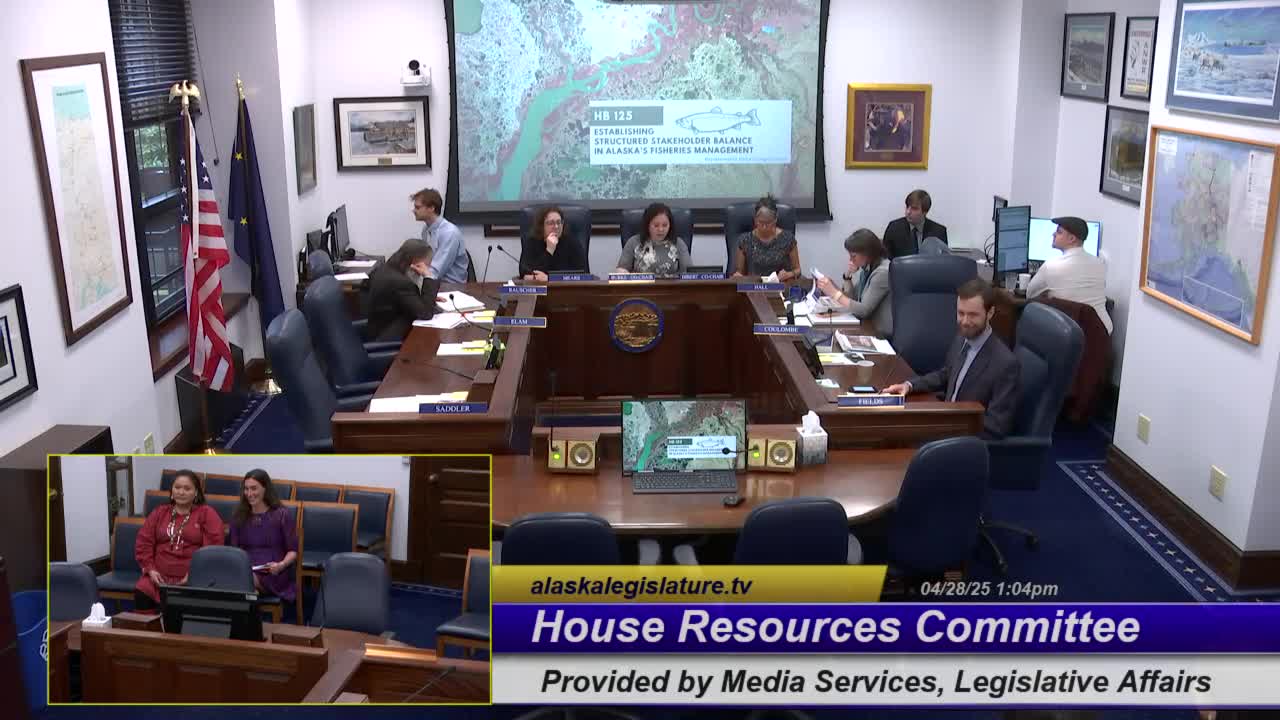
House Resources hears HB 125 to formalize Board of Fisheries seats for subsistence, commercial and sport users
Summary
Representative Jimmy, sponsor of House Bill 125 and representative for District 38, presented the bill during a House Resources Committee hearing on April 20, 2025, proposing a seven‑member Alaska Board of Fisheries with a fixed composition: two seats for commercial fishing expertise, two for sport fishing, two for subsistence fishing and one for a fishery scientist.
Representative Jimmy, sponsor of House Bill 125 and representative for District 38, presented the bill during a House Resources Committee hearing on April 20, 2025, proposing a seven‑member Alaska Board of Fisheries with a fixed composition: two seats for commercial fishing expertise, two for sport fishing, two for subsistence fishing and one for a fishery scientist.
Rachel Gunn, staff to Representative Jimmy, told the committee that HB 125 "proposes a structural reform to the composition of [the] Alaska Board of Fisheries to ensure a decision‑making body that reflects the full spectrum of fishery use and expertise." Gunn said the change was intended to reduce perceptions of imbalance as fisheries face ecological stress: "The science is unequivocal. Resilient management systems are those that integrate diverse ecological knowledge, commercial realities, traditional harvest practices and sport‑based economic drivers."
The bill does not remove the governor's appointment authority, Gunn and the sponsor said. "It simply directs that within the seven‑member composition, all major stakeholder categories are represented," Representative Jimmy said, according to committee testimony. The legislature would continue to ratify governor appointees and could judge whether nominees meet the user‑group definitions codified by the bill.
Committee members probed how the bill would treat overlapping roles and personal use fishing. Representative Fields asked whether someone whose primary income is not from subsistence — for example, a person who uses fish for personal use but would not starve without it — could be appointed to a subsistence seat. Gunn responded that existing statutory definitions would guide determinations and that the clerkship intended the subsistence seats to protect the oldest user group in Alaska, adding that input came from multiple stakeholder groups during bill drafting. Representative Rauscher and Representative Mears raised similar concerns about people who "wear multiple hats" and whether multiple members could still represent the same user group in practice; staff noted the bill's 2‑2‑2‑1 breakdown aims to provide clearer guidance than current statutory language that emphasizes "interest in public affairs, good judgment, knowledge and ability."
Representative Sadler asked whether the subsistence seat should be prioritized for Alaska Natives. Representative Jimmy declined to set such a requirement in committee testimony, saying the governor would nominate and the legislature would determine whether nominees fit the statutory category when ratifying appointments. Staff referenced the Alaska Federation of Natives (AFN) as having been discussed in early drafting as a potential nominating source and noted other legislation under consideration addressing conflicts of interest on the Board of Fisheries.
During discussion members cited local impacts: Representative Divert described years without fishing on the Yukon River and emphasized the cultural and food‑security stakes for rural communities. Committee members repeatedly described the intent as "codifying the vibes" — i.e., formalizing the user‑group balance currently intended but not spelled out in statute.
The committee did not vote on HB 125. The chair set an amendment deadline of "May 2 at noon" (per committee announcement) and scheduled public testimony for a later hearing; the committee "set House Bill 125 aside" for further consideration and said it would hear public testimony on the bill at a subsequent meeting. The hearing opened at 1:04 p.m. and concluded at 1:30 p.m.
Next steps: the committee set an amendment deadline (May 2 at noon, per the committee announcement) and said public testimony would be scheduled at the next available hearing day; staff will accept amendments and the bill will return to the committee for additional questions and possible amendment before any floor action.