Get Full Government Meeting Transcripts, Videos, & Alerts Forever!
Get email alerts on the Housing topic
No spam. Unsubscribe anytime.
Council adopts co-living standards to expand housing options; 5-2 vote
Summary
City Council approved new co-living definitions and standards intended to broaden affordable housing options, including raising the definition of a household to six unrelated adults; the ordinance drew a 5-2 council split and will be summary-published.
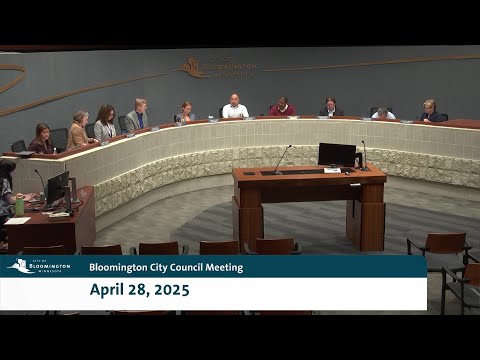
The Bloomington City Council voted 5-2 on April 28 to adopt an ordinance establishing co-living units and co-living development standards, changing the city's definition of "family" and removing obsolete congregate-living and boarding-house categories from the zoning code.
Planning staff presented the ordinance as a tool to expand housing options at lower cost, noting co-living developments typically provide shared kitchens and flexible leases and can help produce housing affordable near the 30% area median income (AMI) level. "Coliving would help to provide a range of affordability where Bloomington is lacking in the 30% AMI area," planner Emily Hesbeck said.
Key provisions approved by council include: allowing co-living developments defined as five or more co-living units in locations where multifamily housing is permitted; defining a co-living unit as a private sleeping area with access to shared kitchens (kitchens must be on the same floor as co-living units); parking requirements set at 0.5 vehicle spaces per co-living unit and one bicycle space per four co-living units; and modifying the definition of "family" to "six or fewer adults, or any number of related adults with children in their care."
During the public hearing several residents raised concerns about how increased occupancy limits could affect single-family neighborhoods and about the enforcement and licensing of rental properties. One caller asked whether the ordinance would allow a non-owner to buy or rent a house and then rent out multiple rooms; planning staff clarified the change increases the permitted number of unrelated occupants in a dwelling from four to six, and that existing rental licensing and building-code requirements still apply.
Council member D'Alessandro said the ordinance had two distinct components: a change to occupancy limits applicable to existing dwellings and a new category of purpose-built co-living developments. "I'd like to at least get something on the books, and then we can come back and revisit parking and related details," he said. Council member Rivas and council member Muir voted against the ordinance, voicing concerns about implementation and neighborhood impacts.
After approval, the council directed summary publication of the ordinance and staff said they would continue to monitor implementation, engage on Moyer Park and other projects, and return as needed to refine parking and licensing details.
The ordinance amends Chapters 9, 14 and 21 of the city code; the council also removed the terms "boarding house" and "congregate living facility" from the use table.