Get Full Government Meeting Transcripts, Videos, & Alerts Forever!
Get email alerts on the Agriculture Strawberries topic
No spam. Unsubscribe anytime.
Strawberry farmers tell Senate committee H-2A, insurance and fungus threaten Louisiana crop
Summary
Strawberry growers told the Senate Committee on Agriculture on April 29 that federal H-2A guest‑worker rules, unaffordable crop insurance, import competition and a new fungal disease are putting Louisiana strawberry production at risk.
On April 29, the Senate Committee on Agriculture heard from strawberry growers who said federal labor rules, crop‑insurance gaps, import competition and a fungal disease are threatening the state’s strawberry industry.
Committee sponsor Senator Wheat said growers brought the concerns to the committee after tours of local farms and that the industry’s survival hinges in part on how the federal H‑2A guest‑worker program operates. “The cost of hiring those individuals … has increased tremendously over the past few years,” Senator Wheat said, adding that the resolution he plans to file on the Senate floor would ask Congress to review the program.
Nut graf: Farmers and growers asked state lawmakers to lift the profile of their concerns as they seek federal fixes and state help for marketing and insurance. Growers said many Louisiana strawberry operations are small, weather‑sensitive and rely on H‑2A workers; they reported that current federal wage and contract rules, crop‑insurance rules built for row crops, and competition from imports make local production financially precarious.
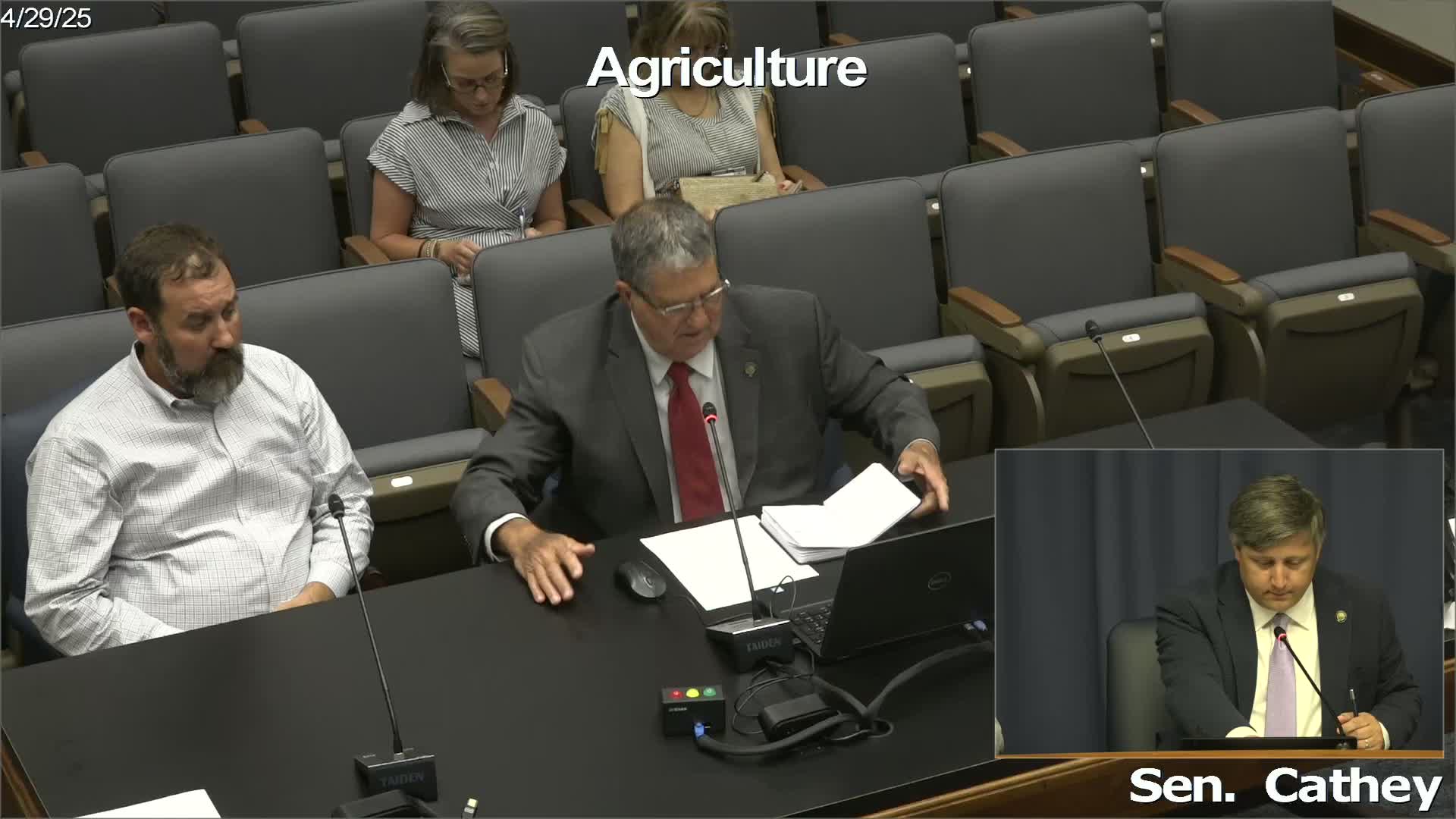
Growers described labor as the industry’s top short‑term constraint. Joey Laitl, who identified himself as a fourth‑generation grower, told the committee that the H‑2A program is “our only option” for reliable harvest labor and that administrative and prevailing‑wage rules make participation increasingly costly. “If you can’t figure out a way to mitigate those labor costs and to be super efficient, it’s gonna put you out of business,” Laitl said. He said H‑2A legal fees run about $5,000 for even a single petition and that contract changes or workers who do not appear force farms to refile and pay again.
Farmers and presenters also criticized how the H‑2A prevailing‑wage determination is set. A witness summarized the committee’s concern about the Department of Labor process and its survey sample, saying the current adverse wage effect rate for field hand work is $14.83 per hour and that the survey underpinning the rate does not reflect the industry’s structure.
Insurance was another major topic. Presenters told the committee that federal crop‑insurance programs are calibrated to single‑planting row crops (corn, soybeans, cotton) and that the multi‑planting, multi‑variety calendar for strawberries makes insurance coverage impractical or too costly. One witness described insurance that requires very high loss thresholds before payment and said small or partial‑season losses often leave growers uncompensated.
Growers also described other pressures: seasonal import competition, especially when strawberries arrive from Mexico at peak Louisiana season; rising liability and truck insurance costs that affect farm distribution; and a recently observed fungal disease in purchased planting stock from out of state that growers say is reducing yields and may be difficult to control.
Farm size, market and adaptation: Committee testimony said most Louisiana strawberry farms are small. Witnesses estimated roughly 100 acres of strawberry production statewide, with only a handful of farms near 15–30 acres and many under 5 acres; two decades ago, growers said, about 200 acres were in production. Farmers described diversifying with u‑pick, festivals and agritourism to reduce paid‑labor needs.
What lawmakers said: Senators on the committee asked clarifying questions about the specialty‑crop designation, insurance mechanics and supply. Senator Womack asked why strawberries are classed as a specialty crop and what that means for federal assistance. Senator Bass asked about insurance and trucking costs; a presenter linked rising premiums in part to liability judgments and called for tort‑reform discussion at the state level.
Next steps and context: Senator Wheat told the committee he would bring a Senate resolution to the floor asking Congress to consider reforms to the H‑2A program. Committee members flagged upcoming state insurance bills they said could affect farmers’ liability and trucking costs. The growers left the committee with a request for help getting state marketing resources and clearer labeling for “Louisiana” strawberries to increase consumer preference for local fruit.
The committee briefly adopted minutes and later adjourned; there was no committee vote recorded on the proposed resolution during the April 29 meeting.
Ending: Growers concluded by offering strawberries to staff and committee members and asked the legislature to follow the industry’s federal and state policy requests as bills move through the session.