Get Full Government Meeting Transcripts, Videos, & Alerts Forever!
Get email alerts on the Pay Transparency topic
No spam. Unsubscribe anytime.
City Council adopts pay-transparency ordinance to require salary information in job listings
Summary
Cleveland City Council adopted Ordinance 1 04 20 25, enacting new sections addressing unlawful and discriminatory salary practices; supporters said the ordinance will require employers to disclose pay ranges and help reduce historic pay gaps.
Cleveland City Council on (date not specified) passed Ordinance 1 04 20 25, which supplements the codified ordinances by enacting new sections relating to unlawful and discriminatory salary practices.
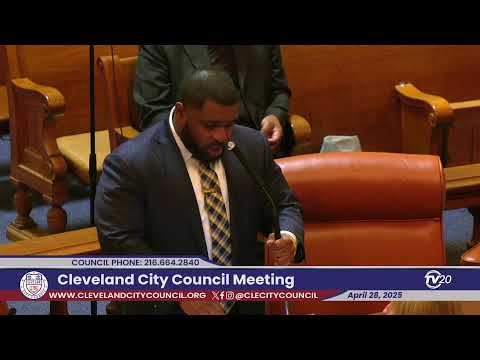
Supporters said the measure requires employers to provide pay-range information to job applicants and creates a local mechanism to address historical pay disparities. "When people in Cleveland are applying for a job, it gives them the information upfront about what that job's looking to pay," Councilman Charles Slife said during remarks to the council. "We've all... applied for a job only to find out after going through all that effort that it's not going to meet where we need to be."
Councilman Richard Starr framed the ordinance as a tool to reduce racial and gender pay gaps, citing the ordinance's potential effect on workers historically underpaid. "When you break it down to Black women, on average, they make 66 cents on the dollar compared to white men," Starr said. "For Latinas, it's even lower at 58 cents." Councilman Michael Polensek recalled family experience with pay discrimination and said the ordinance is a step toward fairer pay locally. Councilwoman Jasmine Santana described the measure as a concrete local step that could help women and families build wealth over time.
The ordinance was introduced as Ordinance 1 04 20 25, with the mayor and multiple council members as sponsors. The measure was placed on final passage after the council suspended the rules and was adopted by roll call. The clerk recorded the final vote as a unanimous approval by present members (roll call listing recorded in the minutes).
Council members and administration staff acknowledged outside partners and city staff who worked on the ordinance, including labor and advocacy groups and city personnel who participated in hearings and drafting.
The ordinance text amends the codified ordinances to add new sections addressing unlawful and discriminatory salary practices; detailed implementation steps, enforcement mechanisms, and timelines were not specified in the council discussion recorded in the transcript. The council indicated that administrative staff and partner agencies would assist with implementation.
Members of the public and several council members urged continued attention to related issues — including enforcement and outreach to employers — but the ordinance itself was adopted during the meeting.
The council did not specify an effective date in the remarks recorded in the transcript; implementation details were left to administrative action and subsequent staff work.