Get Full Government Meeting Transcripts, Videos, & Alerts Forever!
Get email alerts on the Transportation Budget topic
No spam. Unsubscribe anytime.
House and Senate negotiators spar over $300M-plus gap in transportation funding sources
Summary
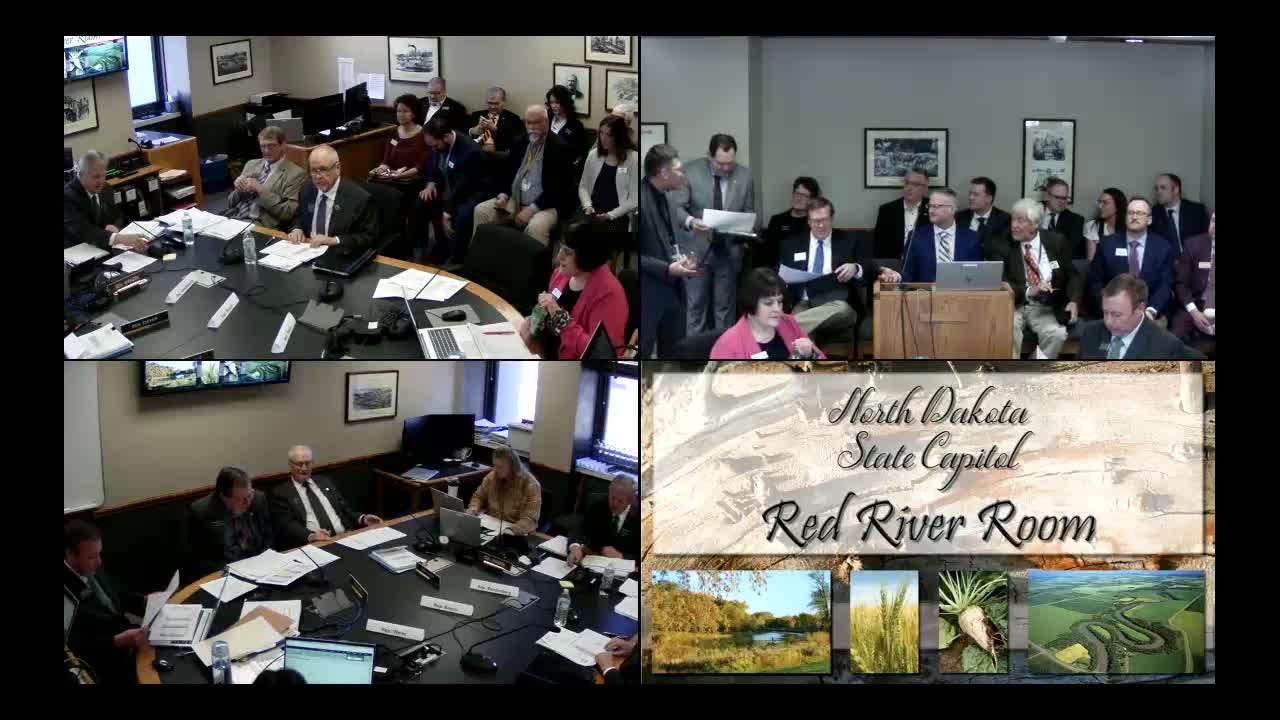
Conference committee members from the House and Senate met to reconcile competing transportation funding proposals, with lawmakers unable to reach agreement on how to fund roughly $300 million to $400 million in program differences and on whether the state can spend the money in the upcoming biennium.
Conference committee members from the House and Senate met to reconcile competing transportation funding proposals, with lawmakers unable to reach agreement on how to fund roughly $300 million to $400 million in program differences and on whether the state can spend the money in the upcoming biennium.
Representative Bosch asked the committee to clarify “what is the actual dollar difference between the house's proposal and the senate's proposal,” after noting he had calculated different totals from the materials in front of him. Chairman Wozik opened the meeting by noting, “We're waiting for 1 member. We're told he's on his way. Hopefully, we can get this done.”
The dispute centers on which revenue sources to use for DOT allocations and for distributions to political subdivisions. Committee discussion repeatedly contrasted the two chambers' mixes: the Senate approach relies more heavily on SIF (referred to in the meeting as “SIF”) and a proposal to use a larger share of motor vehicle excise tax revenues, while the House proposal shifts more dollars to the excise tax, increases legacy earnings allocations to DOT, and moves a larger share into grants and a flexible transportation fund.
Key numeric items discussed (as stated in the committee): a senator or representative's tally that totaled roughly $993 million for the Senate approach and $697 million in the House approach; the Senate including a roughly $175 million motor vehicle excise tax component; SIF figures discussed in the $401.8 million to $551.3 million range depending on the draft; legacy‑earnings allocations discussed in the $87 million to $146 million range; a possible $230 million in so‑called Prairie Dog receipts that might flow to local subdivisions if revenues “fill”; a flex fund amount of about $380 million; and a noted additional $3,551,824 SIF transfer for state airplane operations flagged in bill section 7. Committee members also cited a $92 million shortfall in SIF and a roughly $49 million shortfall connected to legacy/ property tax related funding math.
Lawmakers repeatedly discussed timing and capacity to spend money in the upcoming biennium. Multiple members warned that even if large sums were appropriated—examples cited included a Senate proposal of $100 million for bridges—contractor availability and project readiness could prevent the work from being completed quickly. One legislator observed it is possible “contractors to spend a hundred million in this next biennium on bridges” will be limited, meaning allocations should be realistic about what can be obligated and expended in the period.
Members debated distribution method and equity: the House plan was described as moving more money into grants and a flexible fund to target projects by need and by system significance, while the Senate approach favored larger direct distributions and keeping Prairie Dog receipts in their existing formula. Representative Wise and others argued grants let the state prioritize projects that fit a collector/ system plan, while other members urged that direct distributions address local maintenance needs tied to road miles and immediate repair needs.
Committee members also noted other fiscal pressures tied to the same revenue streams: bonding capacity, lines of credit, three airports and a state hospital that also need SIF support, and ongoing property tax relief legislation (the committee referred to a property tax / “16.50” figure under discussion) that reduces available legacy earnings for DOT. Staff responded during the meeting that under existing law approximate legacy earnings were estimated at $686 million and that current law directs specific buckets (including a legacy highway fund and SIF/general fund splits) though other session proposals would alter those flows.
Several procedural proposals were floated to reduce the apparent scale of new, immediately available spending: subtracting Prairie Dog receipts (the committee discussed subtracting $230 million if Prairie Dog is left in place), converting a $100 million direct legacy distribution into a growing flex or grant pool, or otherwise reducing direct distributions so that the total is more realistically expendable in the upcoming biennium. No formal motion or vote was recorded in the transcript.
The committee agreed to continue work later in the day; no final decisions were entered on the record during this session.
Ending: The meeting recessed with a plan to reconvene at 4:30 p.m. (or later if schedules required), with members indicating they would examine the spreadsheets and proposals further before the next conference session.