Get Full Government Meeting Transcripts, Videos, & Alerts Forever!
Get email alerts on the State Budget topic
No spam. Unsubscribe anytime.
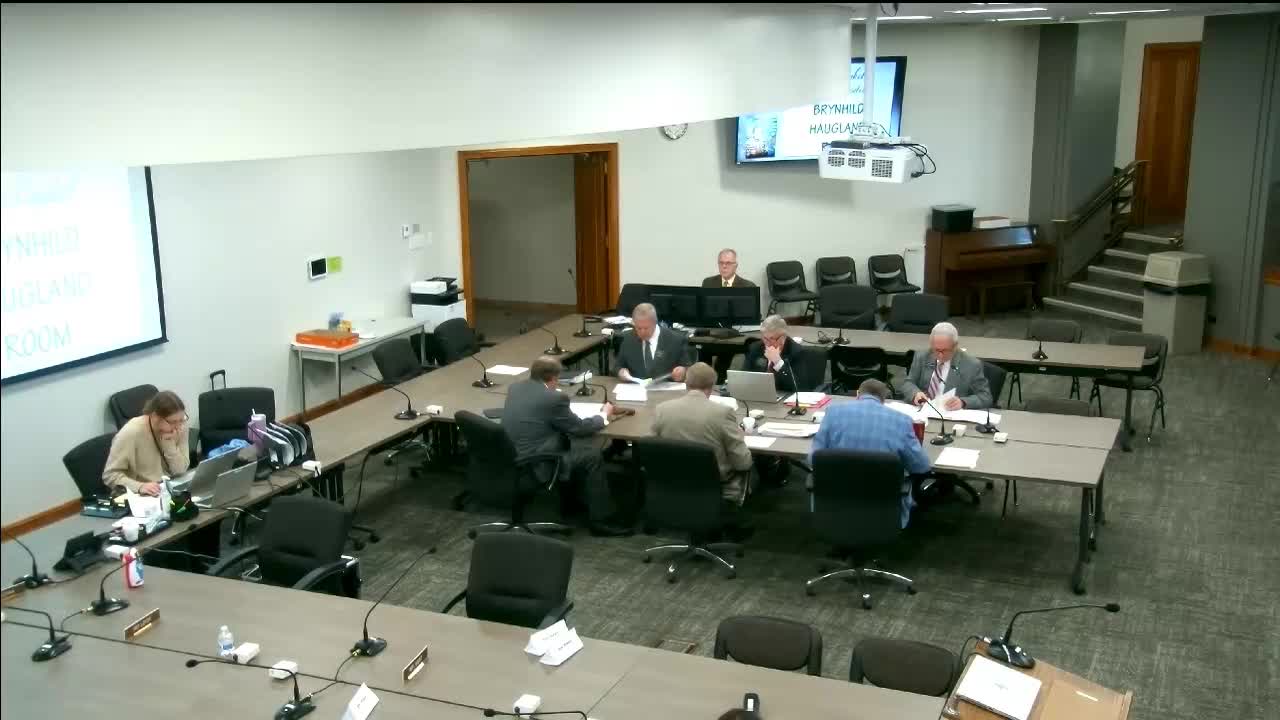
Conference committee backs treasurer budget changes including $100,000 equity pay, $185,000 IT and $1M cut to CO2 PILT line
Summary
A legislative conference committee agreed to three adjustments to the state treasurer's budget: a $100,000 salary equity increase for fiscal staff, $185,000 in one-time IT funding from the SIP fund, and a $1 million reduction to a carbon pipeline payment-in-lieu-of-taxes (PILT) appropriation. The House accepted the Senate amendments by roll call.
A conference committee on the state treasurer's budget on Oct. 1 advanced a package of changes that includes a $100,000 salary-equity increase for fiscal staff, $185,000 in one-time information-technology funding and a $1 million reduction to a CO2 pipeline payment-in-lieu-of-taxes (PILT) line.
The committee’s adjustment to the salary line was described by a treasurer's office representative as an equity payment included in the governor’s budget and supported by Office of Management and Budget Human Resources Management Services (HRMS) data. The treasurer’s office representative told the committee that treasury fiscal positions average more than seven years in grade and earn about $1,400 per month less than the starting salary for the same job class in other agencies. "The first is, a hundred thousand dollars was added to salary's line for equity dollars," the treasurer's office representative said.
Why it matters: committee members said the $100,000 is intended to reduce turnover in the treasurer’s office by improving pay for fiscal positions that lag similar classifications in other agencies. The treasurer's office estimated the $100,000 would cover five of six classified fiscal positions and bring those five up toward the median for their pay grades, but acknowledged it would not fully close the roughly $1,400 monthly gap for all incumbents. Committee discussion indicated the increase would cover roughly $800 per position of that gap on average.
IT and CO2 PILT changes: committee members also approved $185,000 in one-time ITD dollars from the SIP fund to cover implementation costs tied to session directives and bill changes. Treasury staff said the additional IT dollars reflect bills tracked during the session and represent implementation work that may involve mapping or system changes; any unused funds would be returned at the end of the biennium.
The committee reduced the CO2 PILT appropriation by $1 million from a $2 million estimate. The treasurer's office representative said the PILT payment is required by statute for qualifying CO2 gathering-line projects and was created in the 1990s to hold counties harmless for incentives tied to enhanced-oil-recovery and related projects. The treasurer's office said the committee judged the initial estimate higher than likely needed for the upcoming biennium; if actual payments fall short, the office said counties could seek relief through the Emergency Commission or a deficiency appropriation in the next legislative session.
Discussion and clarifications: members asked for detail about which positions would be affected and whether they were auditors or accountants; the treasurer's office characterized them broadly as fiscal services positions (auditors/accountants). The committee discussed procedural concerns about mixing distributions administered by the Department of Transportation (DOT) with other flexible-transportation funds and described a preferred mechanical flow that would transfer distribution dollars into a separate fund to ease reconciliation and reduce future audit risk.
Vote and procedural outcome: the House moved to accept the Senate amendments to the treasurer's budget and the motion passed on a roll-call vote with the chairman and all listed members voting yes. The conference committee then adjourned.
Ending: Committee members said the items are expected to be resolved through the conference process and that unused IT funds would be returned at the end of the biennium; members also noted that if CO2 PILT payments exceed the reduced estimate, the Emergency Commission or a future deficiency request would be the fallback.