Get Full Government Meeting Transcripts, Videos, & Alerts Forever!
Get email alerts on the Rapid Dna Pilot topic
No spam. Unsubscribe anytime.
Senate committee advances hearing on Rapid DNA pilot to speed DNA matches from booking stations
Summary
Senators discussed a pilot program that would allow rapid DNA analysis at booking stations so an arrestee's DNA could be searched in CODIS in roughly 90–120 minutes. Supporters said the pilot would speed investigative leads and help identify repeat offenders; resource witnesses described vendor platforms, error handling and quality controls.
The Senate Committee on Criminal Justice heard testimony on Senate Bill 17 23 and a related committee substitute to enable a Rapid DNA pilot in Texas booking stations, aimed at giving law‑enforcement faster DNA matches against national databases.
Sponsor Senator Brandon Creighton said the pilot would deploy rapid DNA instrumentation in two counties selected by the Department of Public Safety so that a cheek swab taken at booking could be analyzed in 90 to 120 minutes and searched against CODIS the same day. "Rapid DNA technology allows for DNA analysis from a simple mouth swab to be completed in just 90 to 120 minutes," Creighton said.
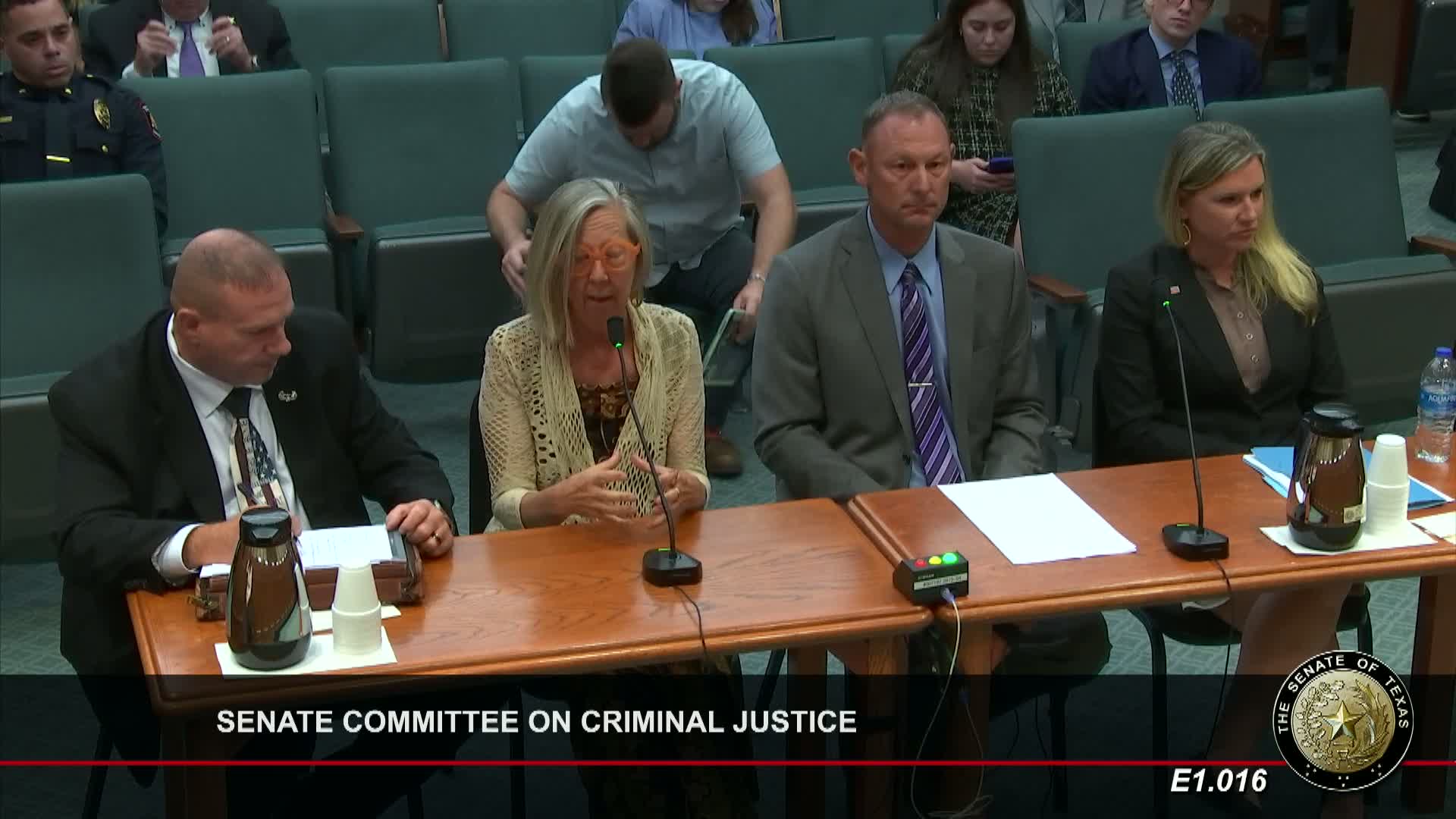
Supporters including Chambers County District Attorney Cheryl Leake, DNA Justice Project advocate Ashley Spence, and Brady Mills of the DPS laboratory testified in favor. Spence recounted her own assault case, where a DNA match in a national database led to the arrest and a long sentence for her perpetrator; she said a rapid turnaround could prevent further violence.
Brady Mills, chief of DPS crime laboratory division, described operational details: two commercial instrument platforms are available (one runs single samples, another runs batches of up to five); the jail would have designated technical leads; the rapid instruments are intended for investigative leads, not evidentiary testing. Mills said when a rapid instrument produces a "no result," the secondary sample is sent to the forensic lab for standard evidentiary processing. He estimated current per‑sample consumable cost at roughly $250–$300 and noted costs should decline with increased deployment.
Senators asked about admissibility and chain‑of‑custody: Mills and DAs said rapid DNA results in the pilot would be used for investigative purposes and confirmed that evidentiary confirmation testing would follow traditional lab procedures before trial.
The committee also considered a companion bill (SB 24 60) to align statutory definitions and FBI quality requirements for rapid DNA in booking contexts. The chairs held the bills pending and asked DPS and stakeholders to help craft implementation details and select pilot sites.
Ending: No vote; the committee left the pilot and enabling language pending to work out costs, quality controls and site selection.