Get Full Government Meeting Transcripts, Videos, & Alerts Forever!
Get email alerts on the Human Trafficking Penalties topic
No spam. Unsubscribe anytime.
Survivors, prosecutors press Senate committee to elevate human trafficking penalties
Summary
Senate Bill 1212 would raise human trafficking to a first-degree felony across the board in Texas; survivors, anti‑trafficking advocates and law enforcement described low sentences and repeat offenders and urged the committee to pass the bill.
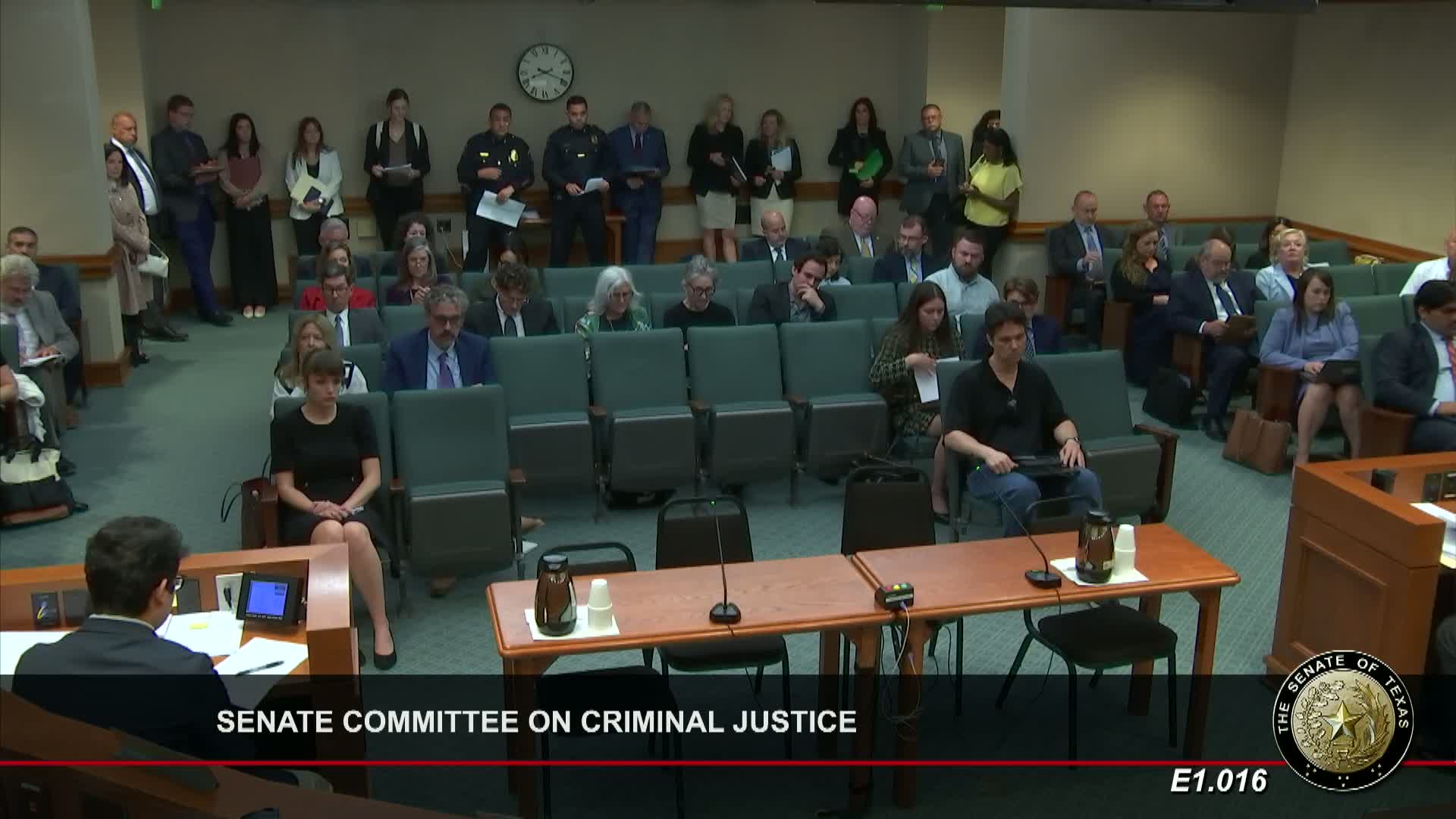
Senate Bill 12 12, which would generally elevate the penalty for human trafficking to a first‑degree felony in more circumstances, drew testimony from survivors, anti‑trafficking advocates and law‑enforcement officials at the Senate Committee on Criminal Justice.
Sponsor Senator Ken Paxton said Texas historically has led on anti‑trafficking measures but remains behind some states when applying the highest penalties to all trafficking offenses. "This bill elevates the penalty for human trafficking offenses across the board to a first degree felony where it is not already," he told the committee.
The proposal's supporters said current sentences are often too light for repeat traffickers and that longer terms would deter organized networks. Mary Wells, who testified for Breaking the Chains of Human Trafficking, recounted that her daughter was the victim of trafficking and urged passage so victims can get justice.
Natalie Treviboon Chaikul, president and co‑founder of Texas Counter Trafficking Initiative, described operations in which a repeat trafficker served only three years despite multiple prior charges; she said stronger penalties and sentencing ranges up to 25 to 99 years would better reflect harms inflicted on victims.
Michael McDaniel, director of the Houston High Intensity Drug Trafficking Area and a 38‑year law‑enforcement veteran, told the panel cartel activity and widespread exploitation make trafficking a major revenue stream and argued tougher penalties would be a deterrent.
Committee members and the sponsor discussed statutory details and the need to balance enforcement tools and prosecutorial practice. The chair held SB 12 12 pending after public and invited testimony.
Ending: The committee took no vote; the bill remains pending for further drafting and consideration.