Get Full Government Meeting Transcripts, Videos, & Alerts Forever!
Get email alerts on the Inclusive Education topic
No spam. Unsubscribe anytime.
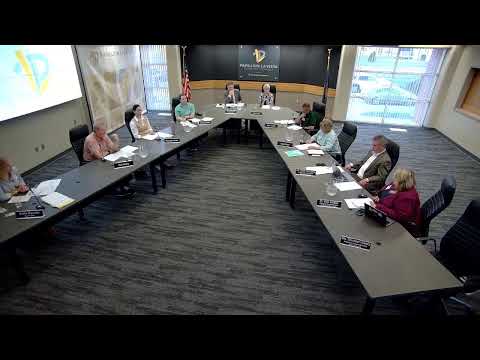
Papillion La Vista Title I schools describe Unified Sports, classroom inclusion at April board meeting
Summary
Principals and special-education staff from Papillion La Vista Community Schools’ five Title I elementary buildings described Unified Sports, co‑teaching models and other inclusion practices at the district board meeting April 28, and invited families to spring events including a May 16 array kickball tournament.
At the April 28 meeting of the Papillion La Vista Community Schools Board of Education, principals and special‑education staff from the district’s five Title I elementary schools presented examples of inclusive practices they said have expanded student belonging and participation.
The presentation focused on Unified Sports programs, peer‑buddy activities, in‑school vocational experiences such as a student‑run “tea cart,” and co‑teaching models that place special‑education staff and classroom teachers together for daily instruction.
"We have our target athletes, and they are paired up with buddies in the school buildings," said Natalie Diaz, special education teacher and team manager for Unified Sports at G. Stanley Hall, describing the district’s approach to preparing students for interschool tournaments. Diaz said buildings have run unified basketball and kickball tournaments and are working toward formal Unified Clubs next year.
Presenters described practical classroom adaptations that support inclusion. "We start early with AAC. Every week in preschool, we have a core word of the week that is for the entire class," said Katie Moon, speech‑language pathologist at Parkview Heights. Moon said that approach normalizes use of augmentative and alternative communication devices across preschool and elementary settings.
Kelsey Hollenbach, a related‑services provider, described the tea cart program: students take orders, handle money and follow visual recipes to prepare drinks, which staff said builds communication, hygiene and vocational skills. "We started as a snack cart and decided to go full scale with a tea cart this year," Hollenbach said, adding that related‑service staff help students with data collection and communication practice.
Carriage Hill learning‑center teacher Jenny Yuall described daily co‑teaching routines used in a third‑grade classroom. "Sherry and I co teach every day on the new CKLA curriculum," Yuall said, and explained that the pair uses multiple co‑teaching models (station teaching, small‑group pullouts and whole‑group instruction) depending on lesson needs.
Board members asked about next steps and family engagement. Presenters said district and building arrays coordinate fundraising and logistics: some schools cover initial participation costs for newer buildings, then those schools seek community fundraising (Polar Plunge, sponsorships) so other schools can join. Presenters and board members invited the public to upcoming events: an array kickball tournament on May 16 at All Play Field (5–7 p.m.) and school‑level activities such as a staff vs. unified team game on May 15.
Board members praised the programs and the parent participation presenters described. The presenters credited Special Olympics resources and local school leadership for expanding opportunities.
The presentation emphasized the district’s view that inclusion is both instructional practice and community culture: presenters said routines, peer relationships and repeated conversations with students and families reinforce acceptance and the development of friendships across classrooms.
The board did not take formal action on these programs at the meeting; presenters encouraged other buildings interested in starting unified activities to reach out to existing Title I schools or the district foundation for grant funding.