Get Full Government Meeting Transcripts, Videos, & Alerts Forever!
Get email alerts on the Legal Opinions Release topic
No spam. Unsubscribe anytime.
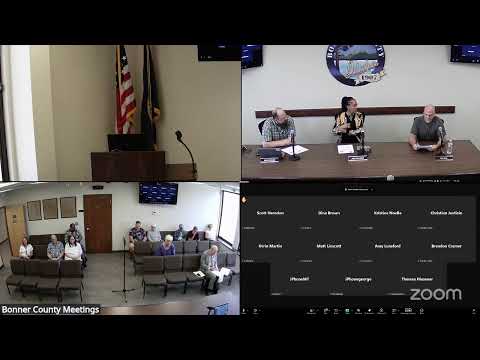
Bonner County commissioners debate rule requiring board approval to release legal opinions
Summary
At a special Bonner County Board of County Commissioners meeting, a commissioner moved to require a board vote before legal opinions prepared for the board are released; commissioners expressed concerns about vagueness and legal authority and agreed to revisit the proposal after staff provides statute and privilege guidance.
A commissioner moved at a special Bonner County Board of County Commissioners meeting that all legal opinions provided to the board require a formal board vote before they may be released outside the organization.
The motion was presented as a way to protect attorney-client privilege and to avoid inadvertently disclosing legal work product that could harm the county's litigation or negotiation positions. Lewis Marshall of the Prosecutor’s Office told commissioners, "I support the idea," according to material provided to the board.
County staff said the prosecutor’s office routinely circulates written legal advice to all three commissioners when one asks a legal question. The motion seeks to make release of those written opinions an affirmative board decision rather than something an individual commissioner can forward. The motion text offered at the meeting read: "I move that all legal opinions require a board vote prior to release outside of the organization." The motion was seconded and went to public comment; no members of the public spoke on the agenda item.
Commissioners raised several concerns during deliberation. One commissioner asked how the county will define "legal opinion," noting that copying an attorney on an email does not by itself create attorney-client work product and asking whether the county should rely on a written form to request formal legal opinions. Another commissioner said the proposal was "too vague" as written and worried it could reduce transparency. A separate commissioner asked staff to identify the specific Idaho statute or other legal authority that would allow the board to adopt such an internal rule.
Board members also described practical problems that prompted the proposal. Commissioners and staff recounted cases in which written legal analysis had been forwarded outside the county or where outside attorneys hesitated to produce written opinions because the county had no clear process for protecting work product. One commissioner said that, because third‑party attorneys sometimes decline to put analysis in writing if they fear it will be broadly released, the county is losing useful legal guidance.
Several commissioners and staff outlined alternatives and clarifications: routing public requests through the county's public records process, marking opinions clearly as confidential when appropriate, or having requesters complete a standardized form when requesting a written legal opinion. Legal staff said that opinions protected by attorney-client privilege or relating to ongoing litigation are within a recognized narrow class of confidential information and that a board-level check can help avoid inadvertent disclosures.
The board did not adopt the motion at the meeting. A roll-call was begun and two commissioners recorded "no" votes (listed in the meeting transcript as Commissioner Donkey and Commissioner Quarles). Commissioners agreed to continue discussion and to bring the item back at the next regular meeting with additional information: statutory citations, a clear definition of "legal opinion," and proposed procedures (for example, a form or guidance for staff and outside counsel) to implement any rule.
The discussion reflects competing priorities for the county: preserving attorney-client privilege and legal strategy versus maintaining openness and transparency in county government. The board asked the prosecutor’s office and staff to return with more precise legal authority and a draft process so the board can consider narrower, statute‑based language before voting.
The special meeting opened at about 10:03 a.m. and concluded after the commissioners agreed to revisit the proposal at the next meeting.