Get Full Government Meeting Transcripts, Videos, & Alerts Forever!
Get email alerts on the Airport Leases Hangars topic
No spam. Unsubscribe anytime.
Bonner County board debates lease terms, RFPs and hangar strategy as demand grows
Summary
Board members and airport staff discussed lease policy, FAA grant assurances, revenue limits and planned hangar development at Sandpoint and Priest River airports; two applicants presented proposals for Lot 33 and the board agreed to delay a formal recommendation to a later meeting.
Bonner County airport officials and board members spent the bulk of a regular meeting debating how the county should lease airport land and encourage new hangar development as local demand increases.
Airport manager Dave Shook framed the discussion, calling leasing “a business transaction” the county uses to generate revenue for operations and maintenance while meeting Federal Aviation Administration (FAA) grant-assurance obligations. He said current leases are structured so buildings constructed under county leases revert to county ownership at the end of the lease term, and that the county relies primarily on leases and fuel revenue to fund airport obligations.
Shook said the county’s leases typically have a 30-year initial term with a 20-year option (50 years total) and noted that four early leases out of roughly 40 allow lessees to remove improvements on lease expiration; newer leases do not. He described the county’s approach to periodic increases and FAA guidance: the FAA recommends annual CPI adjustments and market-rate resets every five years; the county currently applies CPI increases every five years.
Why it matters: county lease policy affects who can afford to build hangars, how quickly structures revert to county ownership and how the airports pay for capital projects. Shook told the board that lease and hangar revenue “just about covers the cost of operations” but does not fund major improvements the county must help finance for FAA-funded projects.
Board members and pilots pressed on three linked concerns: (1) should lease terms be shortened to get hangars back sooner and increase turnover; (2) how to prioritize “local” pilots versus commercial/developer builders in the RFP matrix; and (3) how to structure lots so smaller general aviation (GA) pilots can afford hangar space in a high-cost construction environment.
Several suggestions surfaced. Some board members and aviation stakeholders proposed shorter terms for smaller, lower-cost buildings and longer terms for large, high-investment structures; others suggested using the RFP scoring matrix to favor owner-occupant or locally based operations. The board discussed encouraging pilots to form LLCs to build shared “condominium” hangars where density and site constraints make standalone lots impractical.
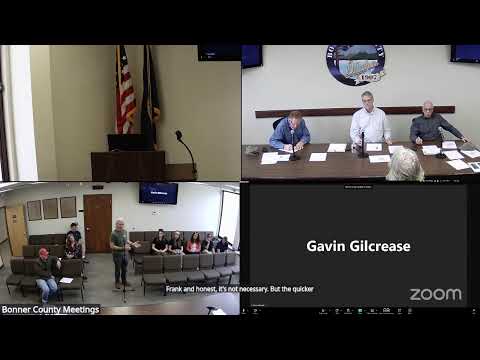
Two applicants who responded to the county’s Lot 33 RFP presented plans while the board discussed scheduling a decision. Scott Dempsey (self-identified as a developer/applicant) described a triplex of three roughly 50-by-50-foot units with 48-foot doors, engineered wood columns and 200-amp electrical service for each unit. Johnny Smith of 7B Aviation said his proposal is for a 50-by-60 hangar to be used as an active flight training base, with a full bathroom, workshop space and aircraft lift; Smith asked the board to consider a temporary rent reduction for five years and an additional 20-year extension on the lease as an incentive while the business matures.
No immediate award: with a reduced quorum present the board took a procedural vote to postpone issuing a recommendation on Lot 33 and to schedule a follow-up meeting that includes absent board members. The board clerk said the decision would be rescheduled and that members hoped to reconvene within a week or two.
Context and constraints: Shook and other staff emphasized several FAA- and grant-related constraints on lease policy and airport funding. He cited three FAA grant assurances by number that affect leasing and airport self-sufficiency: sponsor funds availability (grant assurance #3), pavement preventive maintenance (grant assurance #11) and fee/rental structure (grant assurance #24). Shook also reported that Sandpoint Airport has roughly 27 acres of pavement to maintain and that the county’s capital improvement program (CIP) for Sandpoint lists projects totaling roughly $19.3 million, with an estimated county share of about $1.5 million; Priest River’s project list was estimated at about $8.5 million with a county share near $700,000 (estimates provided by staff).
What’s next: staff said they will re-run the RFP decision with a fuller quorum, adjust the RFP matrix and scoring per board guidance to better balance developer proposals and smaller-owner opportunities, and pursue surveying and design work for Executive Row hangars at Sandpoint if budget savings allow.
Ending: board members asked staff to draft lot-specific RFP matrices that can be tailored to favor owner-occupant or small-pilot priorities on parcels intended for that purpose, while preserving options for larger developer-led hangars where the site layout makes that the best use of limited airport land.