Get Full Government Meeting Transcripts, Videos, & Alerts Forever!
Get email alerts on the Code Enforcement topic
No spam. Unsubscribe anytime.
Council presses staff to tighten enforcement on trash‑can storage, property maintenance and trials daytime street sweeping
Summary
Council members raised repeated complaints about trash cans left in rights‑of‑way, high grass and property maintenance repeat offenders during committee meetings. Staff outlined current enforcement procedures; council asked staff and law director to produce proposed ordinance changes with stronger enforcement and a timeline to present by May 27.
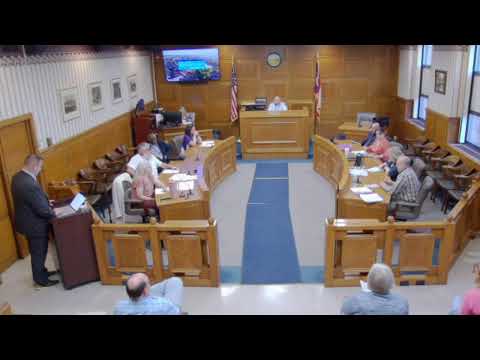
Multiple committee meetings on April 28 featured extended discussion about property maintenance enforcement — primarily trash cans left in the right‑of‑way, recurring code violations (high grass, accumulations) and a proposal to trial daytime street sweeping.
Council members and staff described a pattern of repeat offenders who leave trash containers on the curb beyond collection day. Staff explained how current enforcement operates: property maintenance inspectors issue warning tickets first, and if violations persist the city moves to citations, court proceedings and, in some cases, abatement with charges assessed to property tax bills. The codified ordinance language cited in committee requires that “trash containers and receptacles must be removed from the city right‑of‑way within 24 hours of trash pickup,” but committee members said the language is loose and enforcement lacks sufficient “teeth” for serial offenders.
Council asked staff to develop options for stronger, progressive enforcement that could include: removing or eliminating initial warnings in certain repeat situations, escalating fines or administrative assessments, clearer ordinance language about placement (for example, out of sight or behind a fence), and communication to residents via utility bill inserts. Staff said they will review the ordinance (codified as Title 6, Chapter 1060 in the municipal code) and coordinate with the law department to draft proposed changes. Several council members asked that the mayor, law director and relevant staff meet with council to agree on language and enforcement procedures and to present proposals at the May 27 rules and utilities meeting (council set that date to continue the work).
The committees also discussed street sweeping operations. Staff proposed a pilot shift to daytime sweeping on certain roads to increase safety and operational effectiveness and to avoid imposing nighttime parking bans; the city will run a trial period and evaluate whether code changes would be needed if daytime sweeping becomes permanent.
Why it matters: Council framed the discussion as an issue of neighborhood quality of life, recurring staff time and enforcement costs, and public safety. Council members said that stronger enforcement would improve curbside aesthetics, reduce flooding/roadway debris during storm events and reduce repeated staff responses to the same addresses.
Next steps: Staff will check current ordinance language, compile enforcement options and proposed penalty schedules and coordinate with the law director. Council asked for a draft proposal and a schedule for implementation discussion on May 27. Staff also said they will continue to run targeted enforcement sweeps in problem wards and add utility bill communication for residents.
Ending: Council directed staff to return with draft ordinance language and enforcement options; members emphasized the need for progressive enforcement for repeat offenders and for cross‑department coordination if the city pursues more aggressive remedies.