Get Full Government Meeting Transcripts, Videos, & Alerts Forever!
Get email alerts on the Public Safety Policing Mental Health topic
No spam. Unsubscribe anytime.
Decatur residents press council for mental‑health crisis response and police accountability after recent deaths
Summary
Public commenters at Decatur City Council’s work session urged immediate changes to how the city handles mental‑health crises and demanded police accountability after recent deaths.
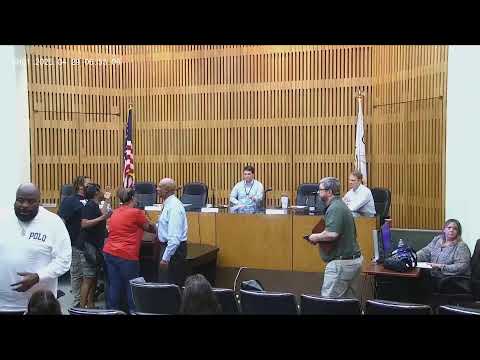
Public commenters at Decatur City Council’s work session on Monday pressed the council and mayor to overhaul the city’s response to mental‑health crises and to hold the police department accountable after recent deaths involving local officers. Speakers called for a licensed, non‑police crisis response team, faster personnel changes in police leadership and greater transparency about ongoing investigations.
The plea came during the meeting’s public‑comment period, where residents used allotted time to recount details from body‑camera footage, cite repeated failures to follow department policy and demand concrete reforms. Amanda Anthony, who identified herself as a resident, urged a new city‑run mental‑health response unit and said it should be staffed by licensed clinicians and emergency medical workers traveling in non‑law‑enforcement vehicles. "Hire employees with ... work experience as social workers, EMTs, paramedics ... to ensure that there's 24/7, 365 coverage," Anthony said.
Why this matters: commenters tied the need for a licensed crisis team to two recent deaths that have heightened public scrutiny of Decatur Police Department tactics in mental‑health calls. Several speakers said existing policies were not followed in encounters that preceded the deaths and asked the council to act faster than it has in past cases.
Speakers described the case of John Daniel Scott Jr., referring to excerpts from released video and social media posts. One public commenter said Scott repeatedly told officers, "I don't want to die," and quoted lines from the footage and social posts as evidence that the encounter was a mental‑health crisis that should have been handled differently. Another commenter repeatedly referenced the 2023 death of Steve Perkins and said the pattern of deaths shows systemic failure rather than isolated incidents.
Speakers demanded immediate steps: creation and funding of a licensed mental‑health crisis response team; an independent, transparent accounting of whether involved officers remain on patrol; and a faster process to install new police leadership. Amanda Anthony offered a specific model: rotating three‑person teams combining clinical and emergency medical skills, uniforms distinct from police and non‑law‑enforcement transport vehicles to take patients to hospitals when needed.
Council members and staff responded that the criminal investigations into recent deaths have been turned over to other law‑enforcement agencies. At one point a council member said the investigation is being handled by Madison County and that the city cannot comment further while the probe is active. Mayor and specific council statements were limited in the session record; no formal votes or policy changes were adopted during the work session.
Public commenters also criticized city communications and the police department’s internal handling of evidence. One speaker said body‑camera footage had been left accessible on a city server and expressed concern about how footage had been disseminated for review and editing.
Several speakers urged personnel changes in the police department and asked the council to expedite background checks and other clearances to bring new leadership into place quickly. One commenter proposed bringing a named candidate, described as “Tory” in public remarks, back before the council next week once administrative checks were completed.
The session included repeated calls for concrete accountability and for a licensed crisis team to reduce police involvement in mental‑health calls. No formal council direction, ordinance or budget appropriation—such as a motion to create a new city department or to fund an outside provider—was recorded in the work session minutes. The council will consider agenda items and possible formal actions at the scheduled council meeting next week.
Ending: Speakers said they will return to future meetings until the council adopts reforms; council staff and some members said they would continue to coordinate with outside investigators and consider administrative options, but the work session record contains no final decisions or adopted resolutions on the policing or mental‑health proposals.